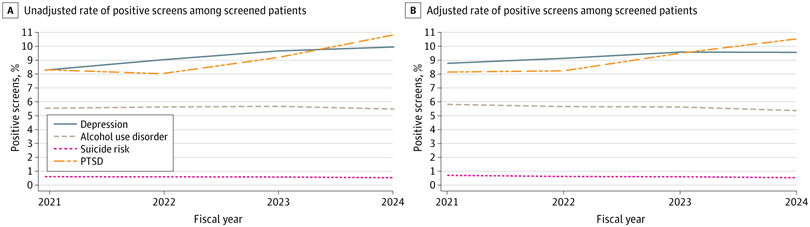
A recent study involving over 3.6 million veterans receiving care through the VA has revealed an increase in the rates of depression and post-traumatic stress disorder (PTSD) diagnoses. Conducted by researchers from Stanford University School of Medicine and the VA Palo Alto Healthcare System, the findings were reported in JAMA Network Open.
Read More
The study analyzed trends from fiscal years 2021 to 2024, revealing a 9% rise in depression screening rates, from 8.8% to 9.6%, and a nearly 30% increase in PTSD screenings, which rose from 8.1% to 10.5%. While mental health conditions such as PTSD and depression have seen significant upticks, there have been small reductions in suicide risk (from 0.7% to 0.5%) and alcohol use disorder (from 5.8% to 5.4%) within the same timeframe. These reductions were statistically significant, marking a 29% decrease for suicide risk and a 7% drop for alcohol use disorder.
The report underscores the ongoing public health challenges posed by rising mental health issues, particularly against the backdrop of the COVID-19 pandemic, which has exacerbated psychological stress. The researchers highlighted that, despite the improvements in suicide and alcohol-related outcomes, there is an ongoing need for effective management of depression and PTSD among veterans.
The study also identified demographic factors that increased the likelihood of positive mental health screenings, including younger age, higher clinical risk scores, residing farther from medical facilities, and identifying as Hispanic. This highlights potential geographic barriers to care that could affect mental health outcomes.
The authors attributed some of the reductions in suicide and alcohol use disorder rates to the VA’s focused investment in prevention programs. However, they noted the need for further research to clarify the relationship between interventions and the observed declines.
While the rates of positive screening do not equate to official diagnoses, the annual screenings are essential for identifying mental health issues that might otherwise remain unnoticed. The researchers emphasized that the standardized screening tools used by the VA have proven predictive value and correlation with patient symptoms.
They acknowledged that the study aimed at identifying trends rather than causation and highlighted the need for further exploration into the reasons behind the observed increases and decreases in mental health screening results among veterans.