Shift work can negatively affect sleep-wake patterns, often leading to sleep loss of less than six hours following night shifts. This misalignment of circadian rhythms, combined with the nature of work schedules, poses substantial risks, including fatigue-related accidents and chronic health issues. This study aims to assess the effectiveness of a combined sleep education program and biofeedback via a smartphone application on shift workers' sleep quality and alertness. It will also evaluate the prevalence of potential sleep disorders and characterize the sleep behaviors of shift workers in a remote mining setting.
Read More
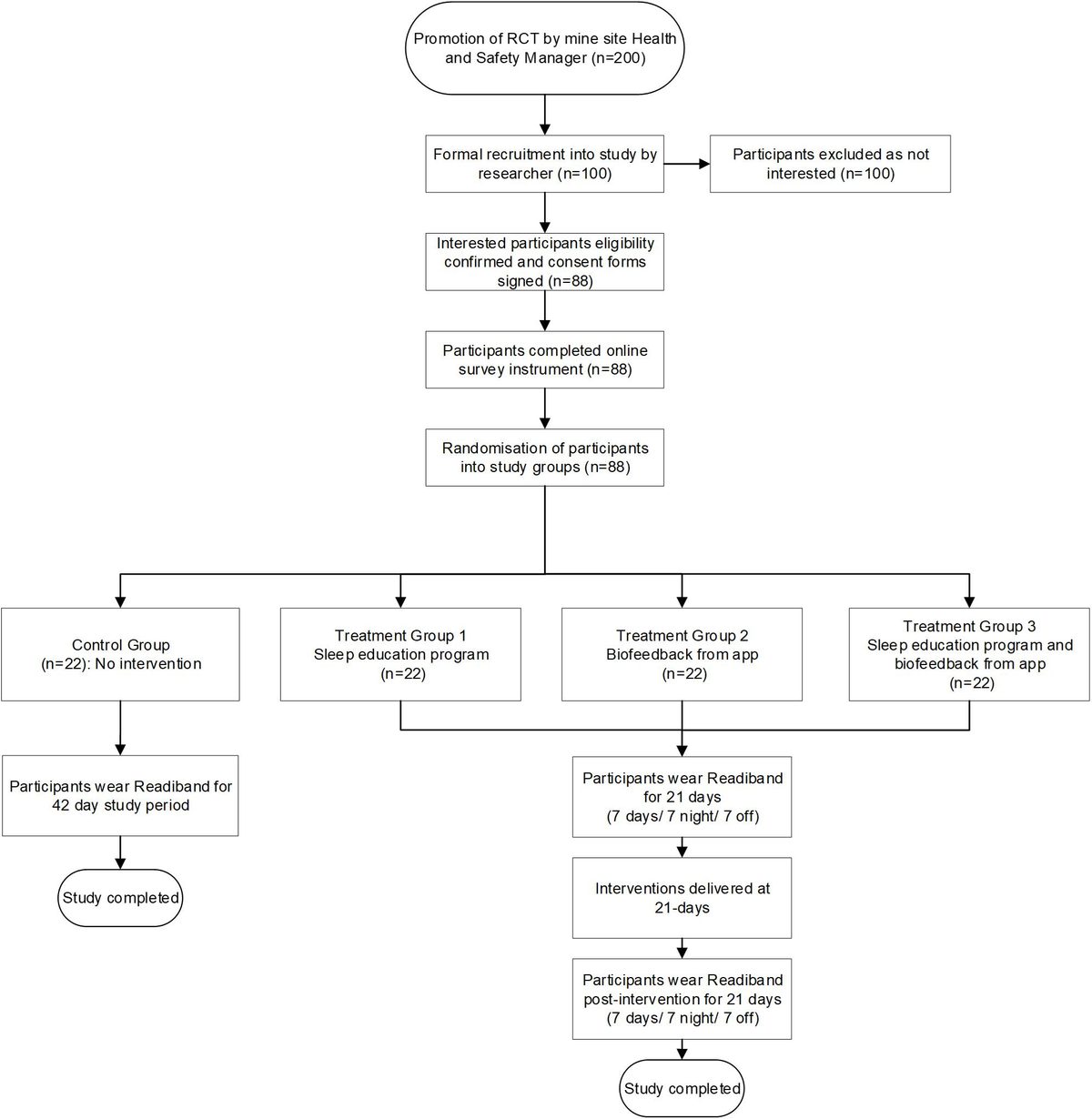
Eighty-eight shift workers from a remote mining operation in Western Australia will participate in this randomized controlled trial, which will divide them among a control group and three intervention groups: one receiving sleep education, another receiving biofeedback through the app, and a third receiving both interventions. Data will be collected using wrist-activity monitors, biomathematical modeling, and surveys to measure sleep quality, quantity, and alertness.
As shift work often involves irregular hours, including night shifts, workers frequently struggle with fatigue. The National Sleep Foundation recommends seven to nine hours of sleep per night, yet many adults experience less, with sleep disorders contributing to these issues. In the mining sector, the prevalence of sleep loss could be even greater due to continuous and demanding work schedules, leading to adverse health and safety outcomes. Sleep loss increases risks for conditions such as cardiovascular disease, diabetes, and can elevate workplace accident rates.
The study will gather sleep data over a 42-day period while participants work a cycle of seven days on, seven nights on, followed by seven days off. Anticipated outcomes include insights on sleep duration variations based on shift type, potential increases in sleep loss, and increased likelihood of developing sleep disorders among shift workers.
In addition to addressing worker sleep issues, the findings may influence fatigue management policies in the mining industry and could be applicable to other industries like healthcare and transportation, where shift work is prevalent. By utilizing objective measures for sleep assessment along with surveys, this research aims to provide comprehensive insights into the sleep challenges faced by shift workers.