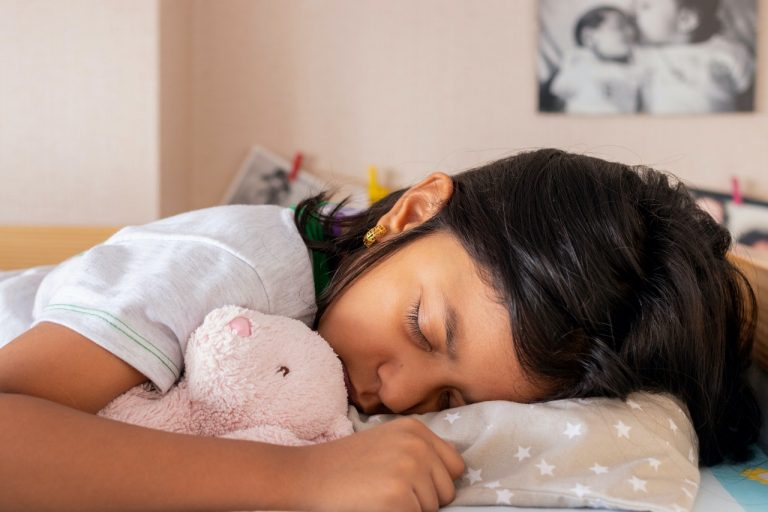
A study from the Stanford University School of Medicine indicates that at-risk children who participated in a mindfulness curriculum gained more than an hour of sleep per night. The findings were published online on July 6 in the Journal of Clinical Sleep Medicine, marking the first use of polysomnography to evaluate how school-based mindfulness training influences children's sleep behaviors.
Read More
According to senior author Ruth O'Hara, PhD, a sleep expert at Stanford, students in the program averaged 74 more minutes of sleep nightly compared to their pre-intervention sleep patterns. O'Hara stated, "That's a huge change," highlighted by a significant increase in rapid eye movement (REM) sleep, crucial for memory consolidation and cognitive development.
The research focused on children from two low-income, predominantly Hispanic communities in the San Francisco Bay Area, with one receiving the mindfulness training and the other serving as a control group. Both communities contended with high levels of crime and family stressors such as food insecurity and unstable housing, conditions that typically lead to poor sleep quality. Principal investigator Victor Carrion, MD, noted that the curriculum was designed to help children manage these stressors.
The mindfulness curriculum included techniques for relaxation, focusing attention, slow breathing exercises, and yoga, taught twice weekly by yoga instructors and classroom teachers over a two-year period. While the program aimed to help children manage stress, it did not specifically include sleep-improvement methods like maintaining consistent bedtimes.
From over 1,000 participating third- and fifth-graders, researchers conducted in-home sleep assessments on 115 children at three points: before the program began, after one year, and after two years. These assessments measured brain activity, breathing, heart rates, and blood oxygen levels.
At the study's onset, children in the control group were sleeping an average of 7.5 hours per night, whereas those in the mindfulness group averaged 6.6 hours. Over the two-year period, sleep among the control group decreased by 63 minutes per night, while participants in the mindfulness program gained a total of 74 minutes of sleep and an additional 24 minutes of REM sleep.
Study lead author Christina Chick, PhD, commented on the expected sleep decline among children who did not participate in the curriculum, attributing it to typical behaviors in older children, such as engaging in homework or social interactions. She noted that the curriculum appeared protective against these sleep reductions.
Despite the improvements, Chick stressed that both groups were still getting less sleep than is recommended for healthy children, which is at least nine hours nightly. Interestingly, although participants reported higher stress levels, they also experienced increased sleep, suggesting that understanding stress through the curriculum might contribute to better sleep outcomes.
Looking forward, the researchers aim to extend these findings and assist educators in implementing similar mindfulness programs. Further studies will investigate how specific elements of the curriculum affect physiological responses associated with sleep improvements. Chick emphasized the potential role of deep breathing exercises in enhancing sleep quality by influencing the body's physiological state.
The research was supported by the National Institutes of Health and the Lucile Packard Foundation for Children's Health, with contributions from several Stanford researchers affiliated with various programs and institutes.