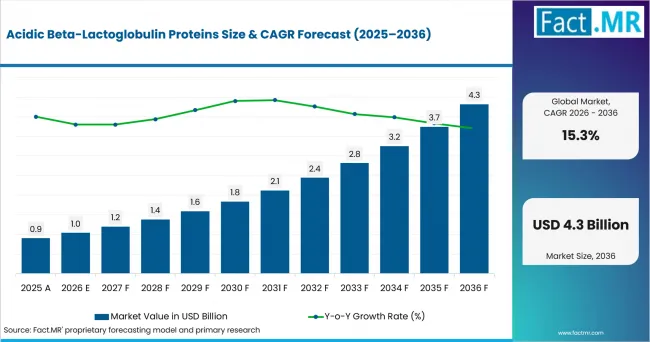
The Acidic Beta-Lactoglobulin Protein Market is projected to grow from a valuation of USD 0.9 billion in 2025 to USD 1.0 billion in 2026, reaching USD 4.3 billion by 2036, representing a compound annual growth rate (CAGR) of 15.3% from 2026 to 2036. This growth is spurred by increasing demand in sports nutrition, medical nutrition, and clear protein beverages, which favor high-purity beta-lactoglobulin (BLG) formats.
Read More
An estimated absolute opportunity of USD 3.3 billion is expected within the market between 2026 and 2036. The rising popularity of leucine-rich proteins among sports nutrition brands, the preference for acid-stable BLG in ready-to-drink (RTD) beverages, and the use of purified whey fractions in clinical nutrition contribute significantly to market dynamics.
Key segments within the market include Native BLG isolate, expected to capture a 29.0% share in 2026 due to its high purity and essential amino acid profile. The protein content segment reflects that 80-85% protein content will account for 36.0% of the market share in 2026, striking a balance between functionality and cost.
By application, sports nutrition is anticipated to represent a 31.0% share in 2026, reflecting the demand for fast-digesting proteins in various formats.
Shambhu Nath Jha, Principal Consultant at Fact.MR, highlighted the unique appeal of acidic BLG in addressing formulation challenges, emphasizing the need for clear, low-lactose proteins that convey high leucine content without heavy mouthfeel.
Regions such as China are expected to lead market expansion with a CAGR of 15.6%, supported by local sports participation and dairy production. France and the USA are also projected to experience significant growth, at 15.5% and 15.1% CAGR respectively, due to established dairy processing and innovations in beverage formats.
Market players, including Arla Foods Ingredients, Hilmar, and Lactalis, are actively engaged in enhancing their product offerings to align with these trends, focusing on high-purity formulations and functional dairy ingredients. The competitive landscape indicates a robust capacity for growth as the demand for acidic beta-lactoglobulin proteins continues to rise.