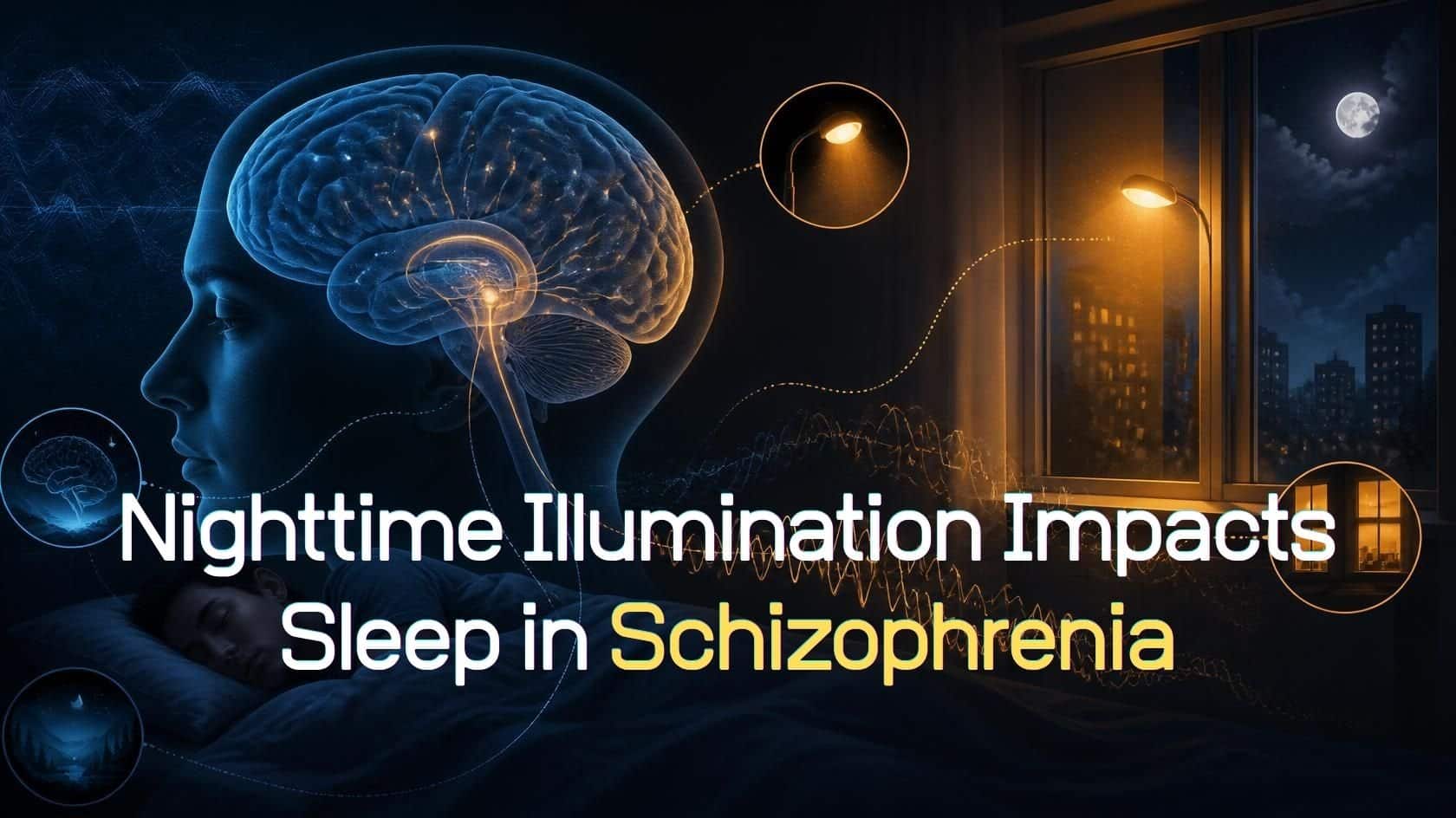
A study conducted by researchers at Fujita Health University has found a significant association between nighttime light exposure and sleep disruption in adults with schizophrenia. The results indicate that patients exposed to higher levels of light at night experience approximately 55.6 minutes less sleep and decreased sleep efficiency compared to those in darker environments.
Read More
The study, to be published in Psychiatry Research, highlights that even low levels of illumination, with a median of just 1.4 lux recorded via wrist actigraphy and 4.1 lux using bedside photometers, are linked to notable sleep disturbances. Patients in the highest exposure group experienced 10% lower sleep efficiency and spent an additional 31 minutes awake after initially falling asleep.
The researchers evaluated data from 225 outpatients as part of the Light Exposure and Neurobiology in Schizophrenia (LENS) study. They utilized wrist actigraphy, bedside light sensors, and daily sleep diaries, noting that many patients did not report these disruptions in their self-assessments using the Pittsburgh Sleep Quality Index (PSQI).
Despite the actigraphy data indicating significant sleep loss, PSQI scores did not show a meaningful correlation with nighttime light exposure. This discrepancy may suggest that individuals with schizophrenia are often unaware of how their sleeping environment affects their sleep quality.
The authors emphasize the potential for simple, low-cost interventions, such as using blackout curtains or eliminating electronic indicator lights, to improve sleep hygiene for patients. They caution that while this study reveals a correlation, further longitudinal and randomized trials are necessary to establish causation.
Lead author Ryota Miyake noted that optimizing nighttime light conditions could play a crucial role in enhancing sleep and overall quality of life for those with schizophrenia, thereby potentially reducing reliance on sedative medications. This research was supported by funding from JSPS KAKENHI and the Takeda Science Foundation.