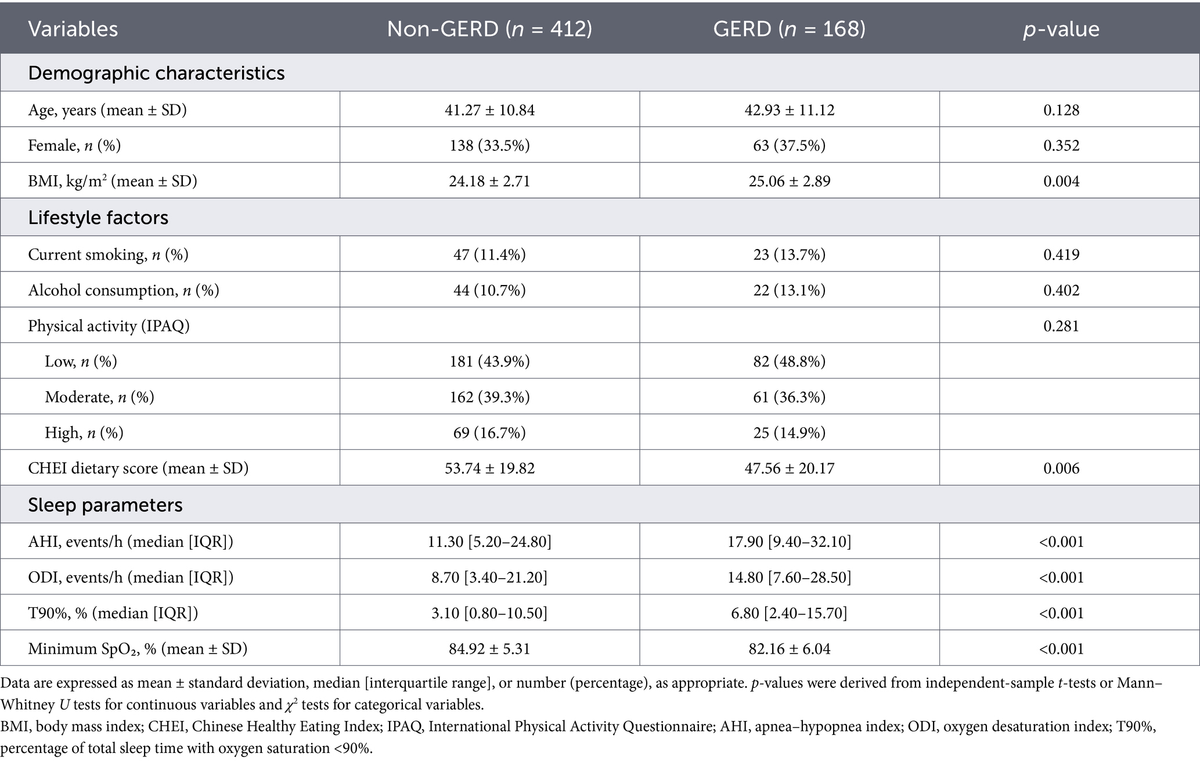
A recent study examined the relationships between obstructive sleep apnea (OSA), nocturnal hypoxia, and gastroesophageal reflux disease (GERD) symptoms using a cohort of 580 adults undergoing polysomnography. The study aimed to clarify how hypoxic conditions associated with OSA contribute to the severity of GERD symptoms and to evaluate improvements in these symptoms following continuous positive airway pressure (CPAP) therapy.
Read More
The research found that GERD was prevalent among 29.0% of participants, with increasing GERD-Q scores correlating significantly with higher OSA severity and nocturnal hypoxemia levels. Notably, hypoxia was a more potent predictor of reflux severity than the apnea-hypopnea index (AHI). Logistic regression analyses indicated that individuals with moderate and severe OSA faced a 1.87 and 2.74 times higher risk of developing GERD, respectively. Furthermore, patients experiencing significant hypoxemia (T90% > 10%) exhibited a 3.42 times higher risk of GERD.
For the follow-up cohort of 150 participants undergoing CPAP therapy, significant improvements in GERD symptoms were observed over six months. The mean GERD-Q score decreased from 10.84 at baseline to 8.92 at three months and further to 7.56 at six months, with clinically meaningful improvements defined as a reduction of at least three points reported by 69.6% of participants at the six-month mark.
This study indicates that both the severity of OSA and nocturnal oxygen desaturation significantly influence the burden of GERD symptoms. It suggests that initiating CPAP therapy can lead to sustained improvements in GERD symptoms among patients suffering from concurrent OSA.