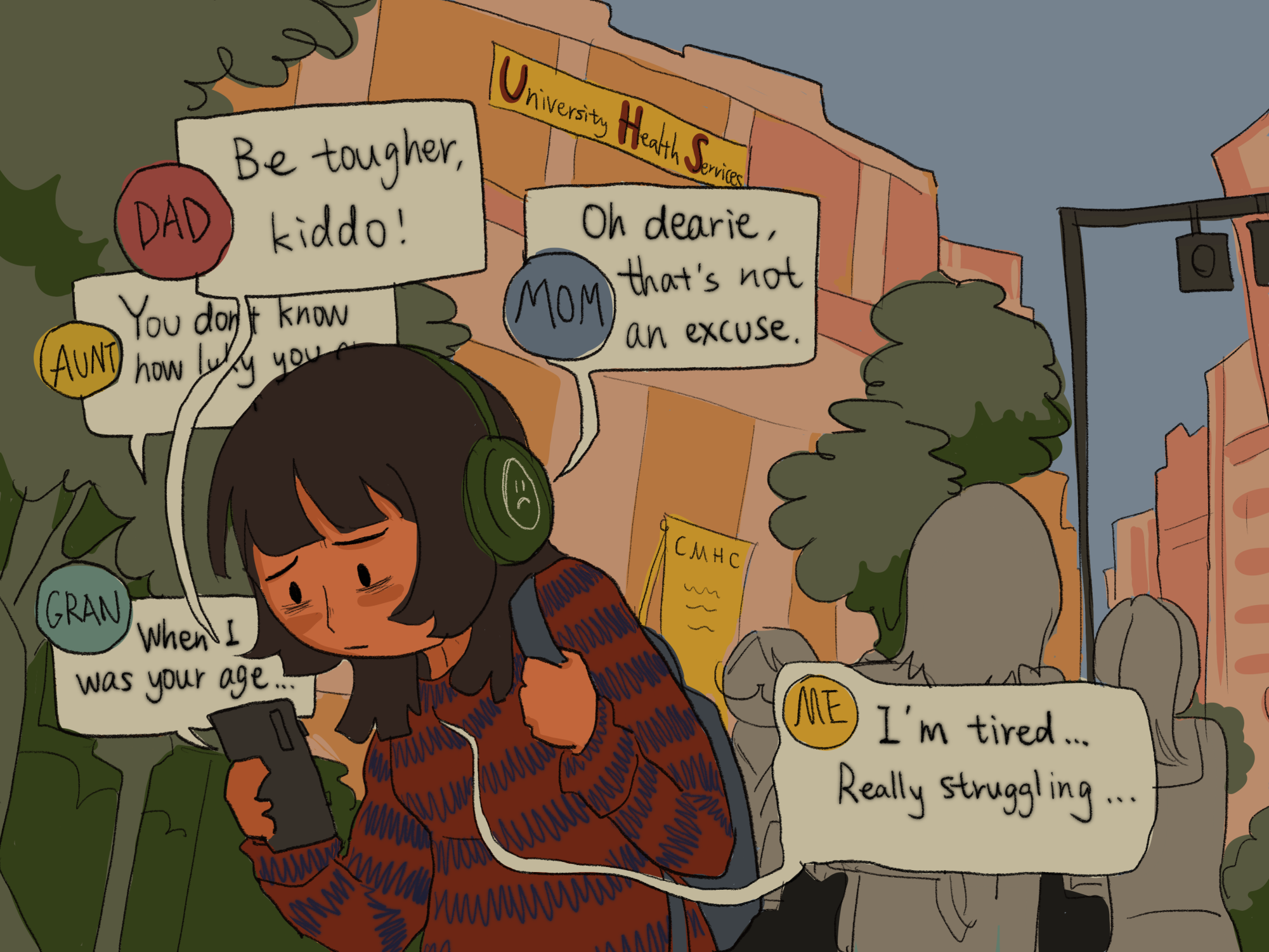
Reema Al-Omari, a junior psychology major, initially hesitated to utilize the University of Texas (UT) Counseling and Mental Health Center (CMHC), feeling that the center was not meant for her. Raised in a culture where mental health is not openly acknowledged, she only considered seeking help after a friend's encouragement.
Read More
For students at UT from immigrant, Asian, South Asian, and Latino backgrounds, accessing mental health care often involves navigating multiple barriers. Cultural stigma can make seeking help feel unacceptable, and a lack of awareness about available resources can leave students uncertain about how to pursue care.
A 2021 study at the University of California, Riverside, surveyed 159 Asian and Latinx college students and found that as adherence to family-oriented values increased, the likelihood of recognizing a need for mental health treatment decreased by 90%. Meanwhile, a 2020 UT Austin study showed that personal stigma plays a significant role in the relationship between perceived stigma and students’ intentions to seek professional help.
Various cultural concepts contribute to this reluctance. A 2021 study at the University of Birmingham found that in some South Asian communities, mental illness can be viewed as detrimental to family honor, or izzat. Filipino communities similarly face challenges with the concept of hiya, which relates to social propriety, leading many to seek informal support first.
Angelie Seno, a former clinical assistant at UT's University Health Services, observed this dynamic firsthand, noting that many immigrant families prioritize mental health care only when issues reach a crisis point. Seno expressed a desire for more accessible information about the costs and types of care available earlier in her own college experience.
Al-Omari initially misunderstood the services offered by CMHC, thinking it primarily addressed academic stress rather than broader mental health issues. Many students lack knowledge of what services are available. A 2026 literature review from the University of Arizona College of Medicine highlighted that despite significant health risks, only 32% of college students use campus health services annually, with health literacy gaps often cited as a key obstacle.
Jessica Hughes Wagner, director of strategic initiatives for Healthyhorns, acknowledged the challenge of reaching a 55,000-person campus and the necessity of personal recommendations in encouraging students to seek help.
Nethra Middela, vice president of the Mental Health Initiative for South Asians, noted that many students are unaware of existing programs and resources, indicating that the issue lies in education rather than lack of desire for help.
Peer support has proven pivotal; Al-Omari credited her friend's encouragement with making it easier to approach mental health services. UT has developed programs, such as the Longhorn SHARE Project and Counselors in Academic Residence, designed to facilitate peer-to-peer interaction and support.
The effectiveness of the new student outreach team remains to be evaluated, but Healthyhorns has reported an increase in CMHC service usage over the past five to seven years, suggesting a growing willingness among students to engage in mental health conversations.
The Mental Health Initiative for South Asians has created a pamphlet titled QuietCare, aimed at assisting students without familial support in understanding how to access professional help.
For Al-Omari, the confidentiality of CMHC eased her concerns about discussing her issues. Healthy Horns staff emphasize that students do not need to know precisely where to turn for help—“There is no wrong door,” said Laura Kinch, Associate Director of Marketing and Communication for Healthy Horns.