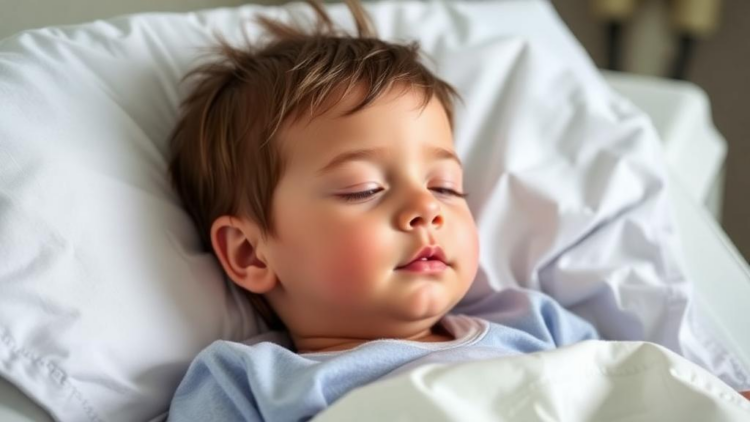
Determining the right time to initiate non-invasive ventilation for children with neuromuscular diseases presents significant challenges in pediatric sleep medicine. Delaying this intervention can result in years of unrecognized nocturnal hypoventilation, restless nights, morning headaches, and decreased daytime functioning. Conversely, starting treatment too early may impose the burden of nightly mask use, along with associated costs and psychological impacts on families without clear benefits.
Read More
A recent letter to the editor in the Journal of Clinical Sleep Medicine, authored by Abdul Basit Munir, Haider Imran, and Nashmia Faraz from Foundation University Medical College in Islamabad, addresses this critical issue. It evaluates the polysomnographic criteria suggested for initiating non-invasive ventilation in children with neuromuscular conditions, responding directly to a prior study by Dannenberg and colleagues that aimed to establish such criteria.
Historically, clinicians have relied on a combination of varying guidelines and expert agreements to interpret sleep studies for these patients, leading to inconsistencies across medical facilities. The letter’s authors recognize the importance of standardizing these thresholds while questioning their foundational methodologies.
Polysomnography, the core of this discussion, measures diverse physiological signals during sleep, including brain activity, eye movements, muscle tone, airflow, respiratory effort, and blood oxygen levels. While healthy children exhibit stable respiratory patterns during sleep, those with weakened respiratory muscles may experience significant physiological changes. A key concern is during REM sleep, where muscle atonia can force the diaphragm to work harder against a floppy chest wall. This results in shallow and ineffective breathing during REM cycles, specifically in conditions like Duchenne muscular dystrophy and spinal muscular atrophy, and can lead to low oxygen saturation and carbon dioxide retention, even without clear apneas.
The choice of polysomnographic criteria, therefore, is critical. Possible triggers for initiating ventilation include thresholds for oxygen desaturation, durations spent below certain saturation levels, or elevated carbon dioxide levels, each with its methodological trade-offs. Desaturation indices drawn from adult obstructive sleep apnea may overlook the gradual respiratory deterioration typical of neuromuscular diseases, where hypoventilation, rather than apneas, is common. Moreover, measuring carbon dioxide can be particularly challenging in children, given issues like signal drift.
The letter highlights the need for careful consideration of these methodological and clinical factors. Sleep studies, being snapshot assessments, may not always reflect a child’s typical sleep patterns, especially in unfamiliar laboratory settings. Factors such as recent illness, nasal congestion, or anxiety can all amplify or obscure abnormalities. Continuous monitoring that correlates sleep study results with daytime symptoms like headaches, excessive sleepiness, and poor academic performance is crucial for making accurate assessments.
Furthermore, the implications of these criteria extend beyond clinical settings. Non-invasive ventilation can significantly alter family dynamics, with research showing its impact on health-related quality of life and mental health for children and their families. Therefore, establishing appropriate thresholds is vital—criteria that are too lenient could burden families unnecessarily, while those that are too strict might prevent children from receiving timely, life-enhancing interventions.
The authors of the letter emphasize a broader principle about evidence-building in pediatric sleep medicine. Randomized trials are difficult to conduct in rare diseases, meaning much practice is grounded in observational studies and expert opinion. Proposals like the one by Dannenberg are valuable for making processes explicit and testable, while critiques such as Munir’s ensure the validity of these methodologies.
For pediatric clinicians, the key takeaway is to interpret sleep studies with a mindful approach to REM physiology, age-adjusted norms, and the limitations of single-night assessments. Decisions regarding ventilation should consider polysomnographic findings in conjunction with clinical symptoms and family dynamics. The dialogue highlighted by this research underscores the need for ongoing studies to refine criteria for initiating non-invasive ventilation in children with compromised breathing, reaffirming that the accuracy of sleep report numbers is inherently linked to the underlying methodologies and the individual context.