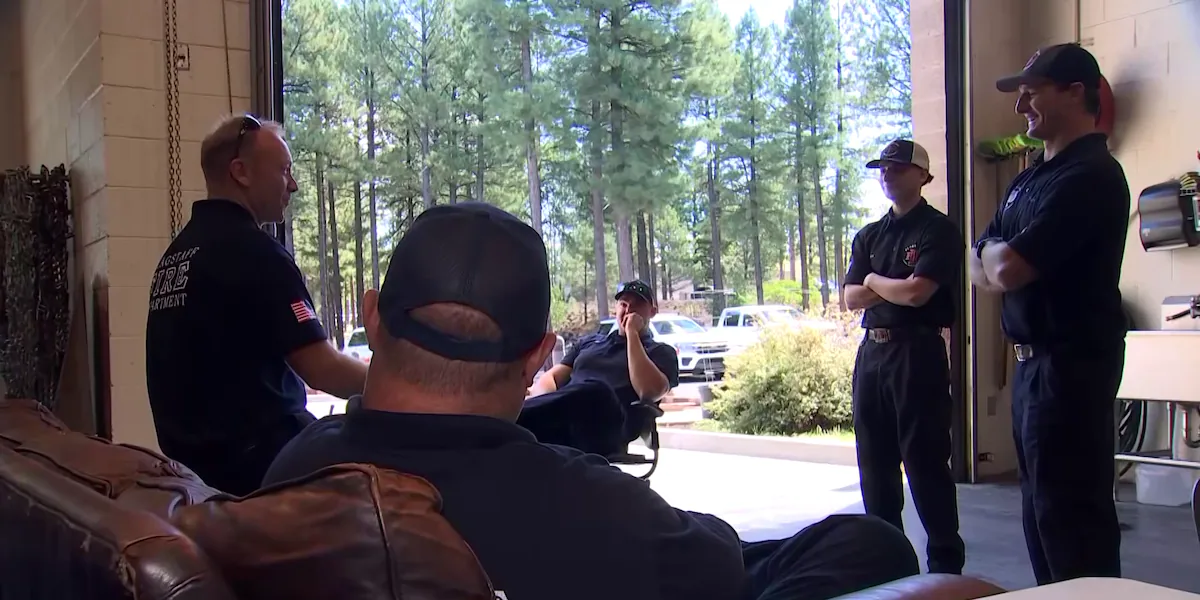
Flagstaff, AZ — During Suicide Prevention Month, firefighters in Flagstaff are actively raising awareness about mental health resources available for first responders. Research from the Substance Abuse and Mental Health Services Administration indicates that 30% of first responders experience depression, significantly higher than the 20% rate found in the general population.
Read More
First responders are exposed to a high volume of trauma; Flagstaff firefighters estimate that over a career span of 20 years, an individual in their field will encounter more than 700 traumatic incidents, compared to just four for the average civilian.
For many years, there was little discussion regarding mental health within the fire service. Flagstaff Fire Chief Mark Gaillard noted, “When I started in the fire service, we spent more time taking care of our apparatus and our equipment than we spent taking care of our people.” Gaillard is also a board member of Stop Our Stigma, a mental health services organization focused on assisting first responders, which reports that suicide risk in this demographic is 39% higher than among the general public.
The department is committed to bridging this gap. Gaillard stated, “For us it’s about really kind of making sure everyone understands that it’s OK not to be OK, but it’s not OK to suffer in silence.”
In recent years, the Flagstaff fire, EMS, and police departments have expanded mental health initiatives, introducing year-round mental health check-ins, unlimited counseling services for first responders and their families, and a critical incident stress debriefing team to support personnel following traumatic events. Mental health and suicide prevention training has also been integrated into the onboarding process for new recruits.
Chris Fennell, the department’s deputy chief and a dedicated mental health advocate, explained the significance of these changes: “We have to be good in order to take care of other people, and the stigma whenever I got into this business, it wasn’t something that you talked about.” He acknowledged the substantial progress made, stating, “Seeing the transition to where we’re at now is light years ahead of where we were when we first started. It’s a lot more beneficial for people.” Fennell noted that many individuals are now happier both at work and in their personal lives.
For anyone in distress, the National Suicide & Crisis Lifeline can be reached by calling or texting 988 for free, confidential assistance available 24/7.