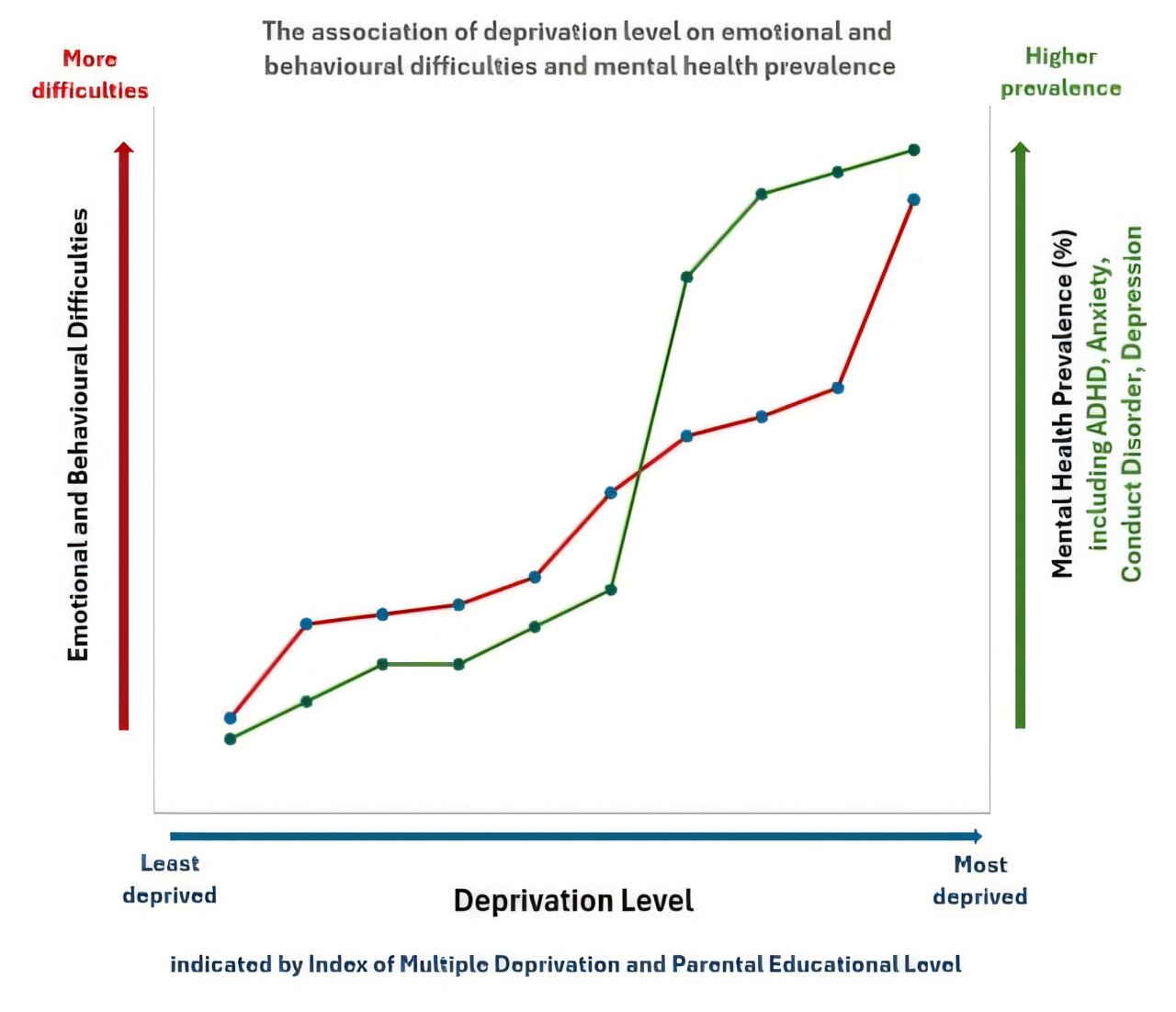
A new study from UCL researchers highlights that children and young people with intellectual developmental disabilities (IDD) from disadvantaged backgrounds face increased mental health challenges. Published in JCPP Advances, the research indicates that these children experience greater emotional and behavioral difficulties and are more likely to report mental health conditions compared to their more advantaged peers.
Read More
Lead author Irene O Lee from the UCL Great Ormond Street Institute of Child Health emphasized the compounded difficulties faced by families in socioeconomic disadvantage regarding access to necessary support. She noted the importance of recognizing family circumstances alongside a child's disability to address the mental health needs effectively, advocating for improved access to mental health and social care support.
The study analyzed data from 2,778 children and young people aged 4 to 25 in the UK, participating in the 'Intellectual Disability and Mental Health: Assessing the Genomic Impact on Neurodevelopment' (IMAGINE-ID) cohort, who had IDD linked to genetic conditions such as Prader-Willi or Angelman syndrome. Parents or caregivers completed detailed surveys regarding their child’s health, development, and behavior, while socioeconomic disadvantage was assessed using neighborhood deprivation, eligibility for free school meals, and parental education levels.
Findings revealed that children with IDD living in deprived neighborhoods or eligible for free school meals exhibited higher rates of emotional and behavioral difficulties. For instance, those eligible for free school meals were found to be 2.5 times more likely to have a diagnosis of major depression and 2.3 times more likely to have conduct disorder compared to their non-eligible peers.
The study found that socioeconomic disadvantage was a consistent predictor of poorer mental health outcomes, although it did not establish a direct correlation between the severity of learning disabilities and mental health challenges. Senior author David Skuse pointed out the necessity of recognizing the broader challenges these families experience, including financial pressures and difficulties in accessing specialist support.
While contributions from researchers at Cardiff University were part of the IMAGINE-ID study, it is important to note several limitations. Much of the data was parent-reported, not independently assessed, and some families did not complete all questionnaires. Additionally, the research only provides a snapshot in time, making it unclear whether socioeconomic disadvantage leads to mental health difficulties or if the stresses of caregiving create financial hardships.
The complete findings can be referenced in the article "Association of socioeconomic factors on mental health in children and young people with intellectual developmental disabilities of genetic origin," published in JCPP Advances.