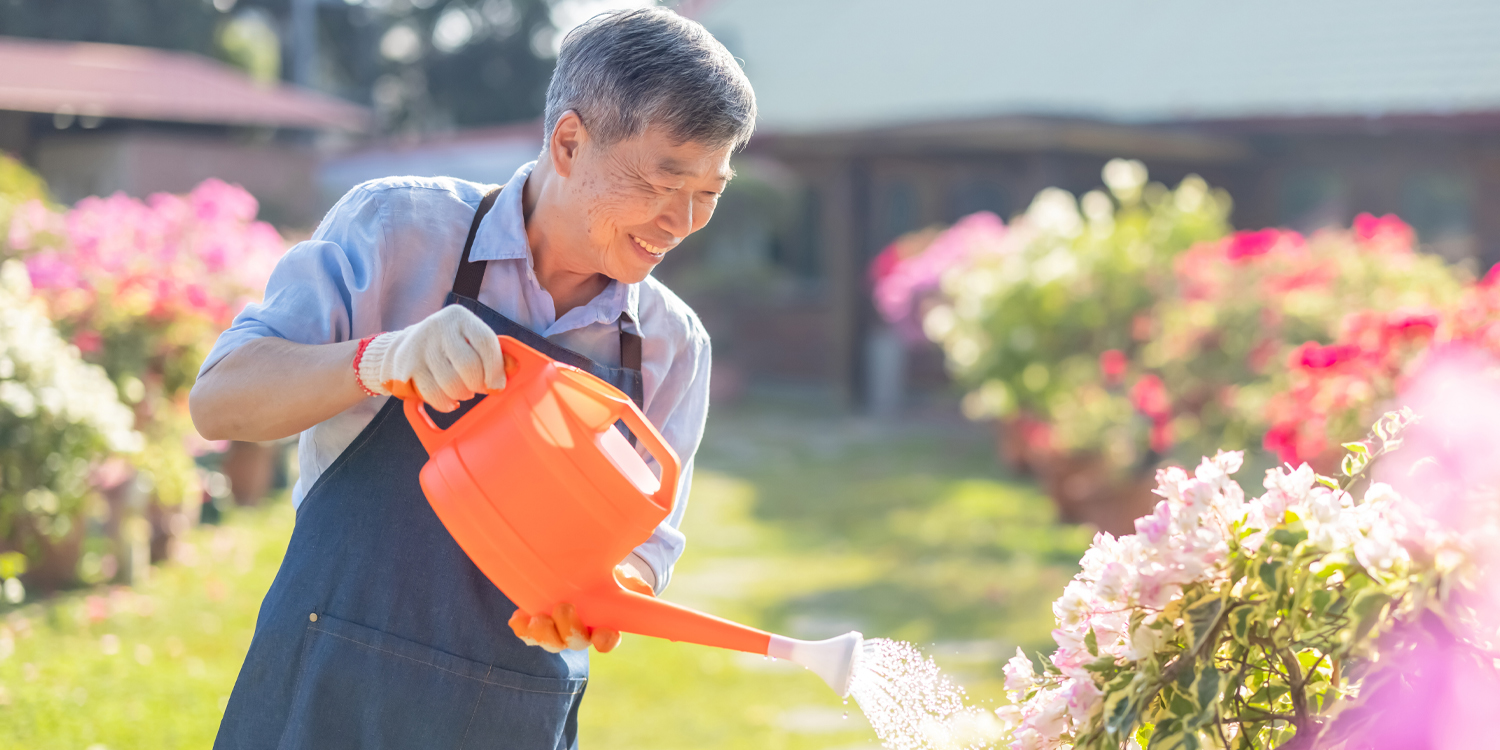
A study published in the Hong Kong Journal of Occupational Therapy reveals that watering indoor plants for just 10 minutes can significantly lower blood pressure and enhance feelings of relaxation in older adults. The research involved a trial comparing this gardening task to playing a computer card game.
Read More
As individuals age, engaging in structured leisure activities becomes crucial for maintaining mental and physical health. Occupational therapists often advocate for non-pharmacological methods like horticultural therapy, which uses gardening tasks to encourage holistic well-being through sensory stimulation and light physical activity.
Previous studies have associated gardening with increased self-esteem, improved hand coordination, and decreased feelings of isolation among older individuals. Traditionally, researchers have relied on self-reported surveys and basic physical metrics, but advancements in wearable technology now provide the ability to monitor brain activity during these tasks.
Researchers Li Xiaoyi from the Henan Institute of Science and Technology and Ahmad Hassan from Tongji University, alongside colleagues Jiang Tao and Zhang Deshun, aimed to assess how brief gardening affects brain and body responses. They conducted their experiment with 100 older women residing in a nursing care facility in Shanghai, China, who had an average age of 68 and no cognitive impairments.
The study utilized a crossover trial design, where each participant engaged in both activities. On the first day, half the women watered 15 potted plants by hand for 10 minutes, while the other half played Klondike Solitaire on a computer. They switched activities the following day.
Blood pressure was measured before and after each session using a standard cuff, while brain activity was monitored through an electroencephalogram (EEG). Participants wore a specialized headband with sensors to detect the brain's electrical signals, focusing particularly on the frontal lobe, which is involved in attention, memory, and emotional regulation. The researchers analyzed alpha and beta brain waves, with alpha waves indicating relaxation and beta waves indicating active concentration or anxiety.
Alongside physiological measurements, participants filled out two questionnaires to evaluate their emotional states: one gauged anxiety levels, and the other assessed their feelings on a comfort scale.
Results showed that watering plants led to reductions in both systolic and diastolic blood pressure, suggesting a calming influence on the autonomic nervous system. In contrast, playing the computer game did not trigger similar physical changes, with participants' heart rates remaining stable.
During the gardening activity, participants experienced a notable increase in alpha wave activity, indicating mental relaxation, accompanied by heightened beta wave activity, suggesting engagement. Women who played the game exhibited a decrease in both alpha and beta activity, correlating with mental fatigue or boredom.
While the overall increase in alpha waves during the gardening task was not statistically significant, the sustained elevation in beta waves was noteworthy. The EEG headsets provided a meditation score that increased significantly during the plant care activity compared to the gaming session.
Subjective reports confirmed these findings, with participants expressing reduced anxiety and greater feelings of comfort and relaxation after handling plants.
However, the study's design has limitations, including only testing a single 10-minute session with one type of indoor plant. The impact of longer gardening periods, various plant types, or outdoor activities remains untested. The study's demographic was also narrowly focused, comprising solely older women from one nursing facility in China, which may not reflect responses from different age groups or cultural backgrounds.
The study was titled “Psychological and physiological benefits of horticultural therapy for Chinese older adults” and aimed to contribute to knowledge about horticultural therapy's effects on well-being.