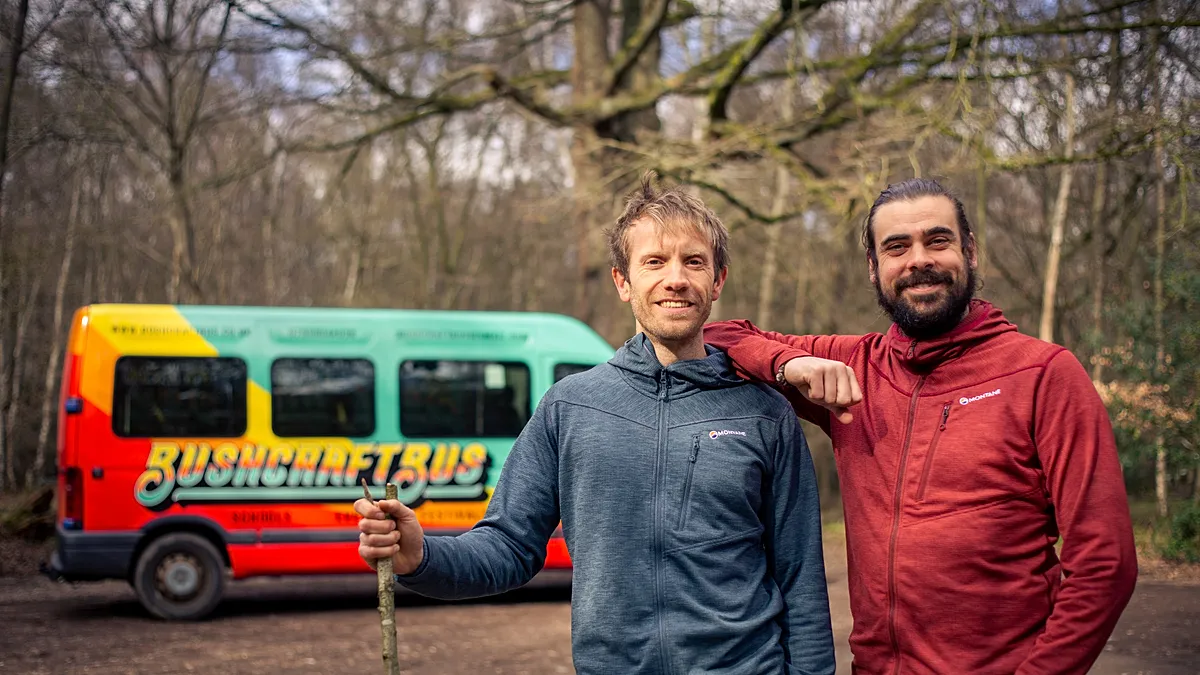
Many individuals feel out of place in nature, according to bushcraft instructor and conservationist Jim Todd. The Bushcraft Bus, a brightly colored mobile space for wilderness education, aims to address this gap.
Read More
“We’re trying to fill that gap in the middle, where you don't have to identify with anything. You just need to have a little bit of kit, and just be up for it,” Jim said. He, along with co-founder Tom Young, offers foraging walks and wilderness skills workshops across southern England. The duo, who met while qualifying as bushcraft instructors in Dorset five years ago, note that in the UK—ranked 55th out of 61 in a global study on nature connectedness—some participants have never visited woods before.
Tom remarked, “The excitement builds through the day.” He noted that participants often start off timid but gain confidence throughout the experience. One particularly popular activity is using King Alfred’s Cakes, a fungus found on fallen trees that can serve as a firestarter.
Although the Bushcraft Bus does not focus on preparing for doomsday scenarios, its teachings remain increasingly relevant. The UK government recently urged citizens to prepare for potential emergencies linked to the climate crisis and geopolitical tensions, including advice to stock up on food supplies. These concerns have motivated some individuals to join the courses, with many leaving feeling more self-assured and connected to nature.
Jim emphasized, “When you start thinking through that lens, you realize how little you actually know to defend yourself or survive.” Skills such as fire-making are emphasized for both survival and enjoyment in the outdoors. Tom carries a ferro rod, a vital tool he used during his 66-day solo hike across the European Arctic in 2018.
Community is often the most valuable asset in wilderness survival, according to Tom. He suggested curating friendships with individuals who possess diverse skills to enhance collective resilience.
This spirit of cooperation is nurtured in off-grid living, extending beyond human relationships to interactions with the environment. Tom pointed out that many people lose connection with nature early in life, but hints of change are emerging. The UK government recently approved a new Natural History GCSE, aiming to inspire the next generation to pursue green careers
Teaching people about nature fosters care and appreciation for the environment. This mindset encourages conserving resources, as exemplified by Jim’s team carrying water up steep trails to minimize waste. Foraging, too, must be practiced mindfully, leaving enough for local wildlife and ecosystems.
Jim likened connecting with nature to cultivating a relationship: “You have to build it—you can’t just expect it to give you everything.” Both instructors acknowledged their past disinterest in outdoor activities, attributing some of today's indoor tendencies to screens. They believe European cultures can learn from countries like New Zealand and Canada, where outdoor skills are integrated into daily life from a young age.
Jim observed, “The outdoors is all around you all the time,” contrasting it with the UK's denser landscapes that often make nature seem less accessible. Yet, he believes most people can quickly feel connected to the natural world when they engage with it. Tom found that exploring the outdoors provided him with purpose and enhanced his mental well-being, fostering confidence in his social interactions.