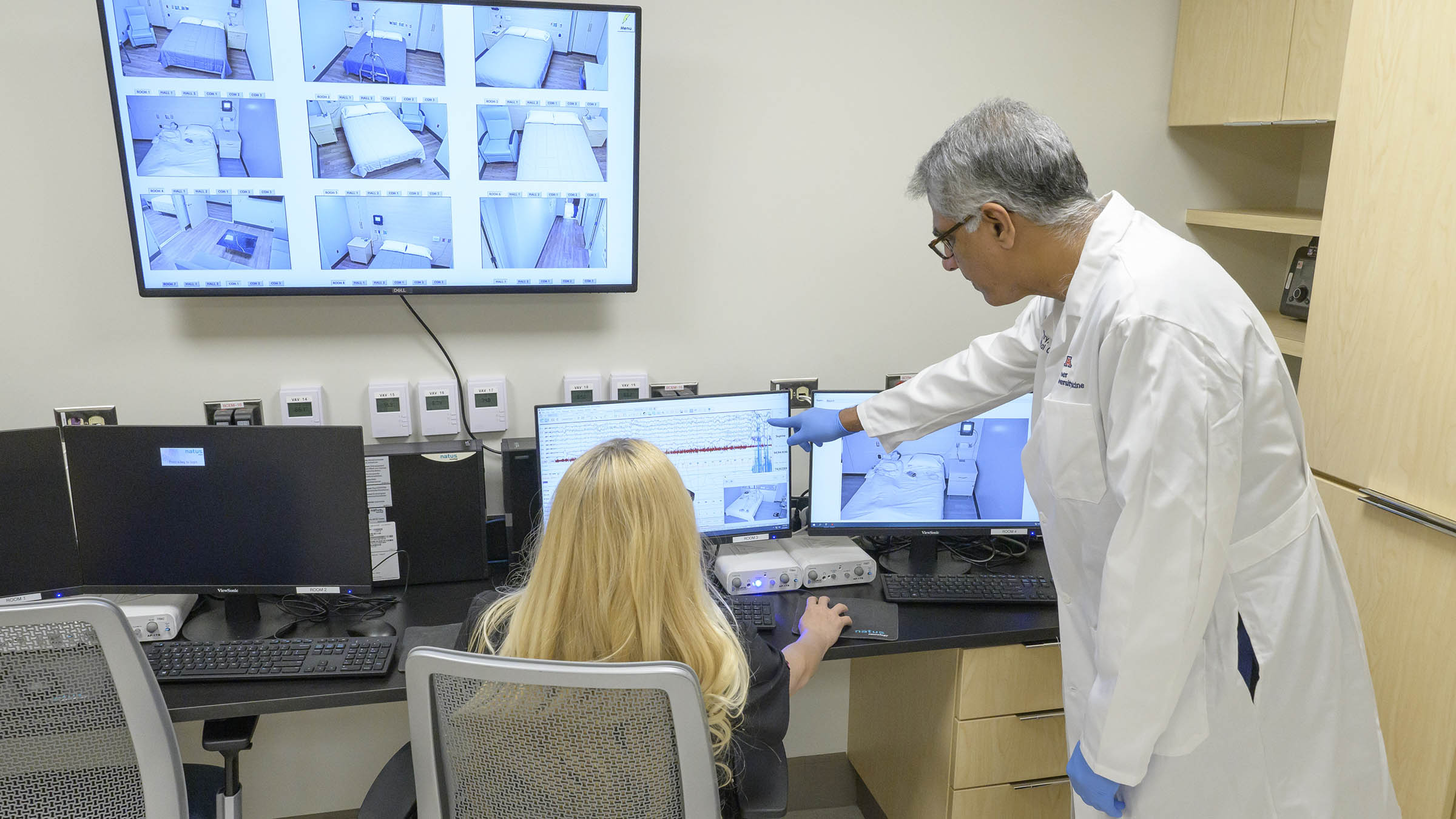
The University of Arizona has inaugurated its Center for Sleep, Circadian Rhythm, and Neuroscience Research, significantly enhancing research capabilities with a facility designed for advanced studies on sleep and circadian rhythms.
Read More
The center’s new facility, which occupies 12,700 square feet, was established with a $5 million construction grant from the National Institutes of Health Office of the Director and opened on May 15. Sairam Parthasarathy, MD, the center director and chief of the Division of Pulmonary, Allergy, Critical Care and Sleep Medicine at the University of Arizona College of Medicine – Tucson, emphasized the facility's unique capabilities. “Our center is one of a kind,” he stated, highlighting its ability to control environmental factors such as temperature, lighting, and inhaled gases with precision.
Michael D. Dake, MD, senior vice president for University of Arizona Health Sciences, remarked that this facility will reinforce the institution’s status as a leader in sleep research, enhancing efforts to understand the influence of sleep and circadian rhythms on various health issues, including mental health and public safety.
The original Center for Sleep and Circadian Sciences, established in 2015, was limited by its environmental controls. The new eight-bedroom space, located in a former Banner – University Medical Center Tucson building, allows for continuous monitoring of environmental conditions in each room and enables non-intrusive blood sampling and medication administration.
Michael Grandner, PhD, associate director, expressed excitement about the new scientific inquiries made possible by the facility. Research projects are underway to study various health-related topics including the relationship between sleep and heart health, the impact of late-night eating, and the potential to reduce sleep disparities.
The name change to include