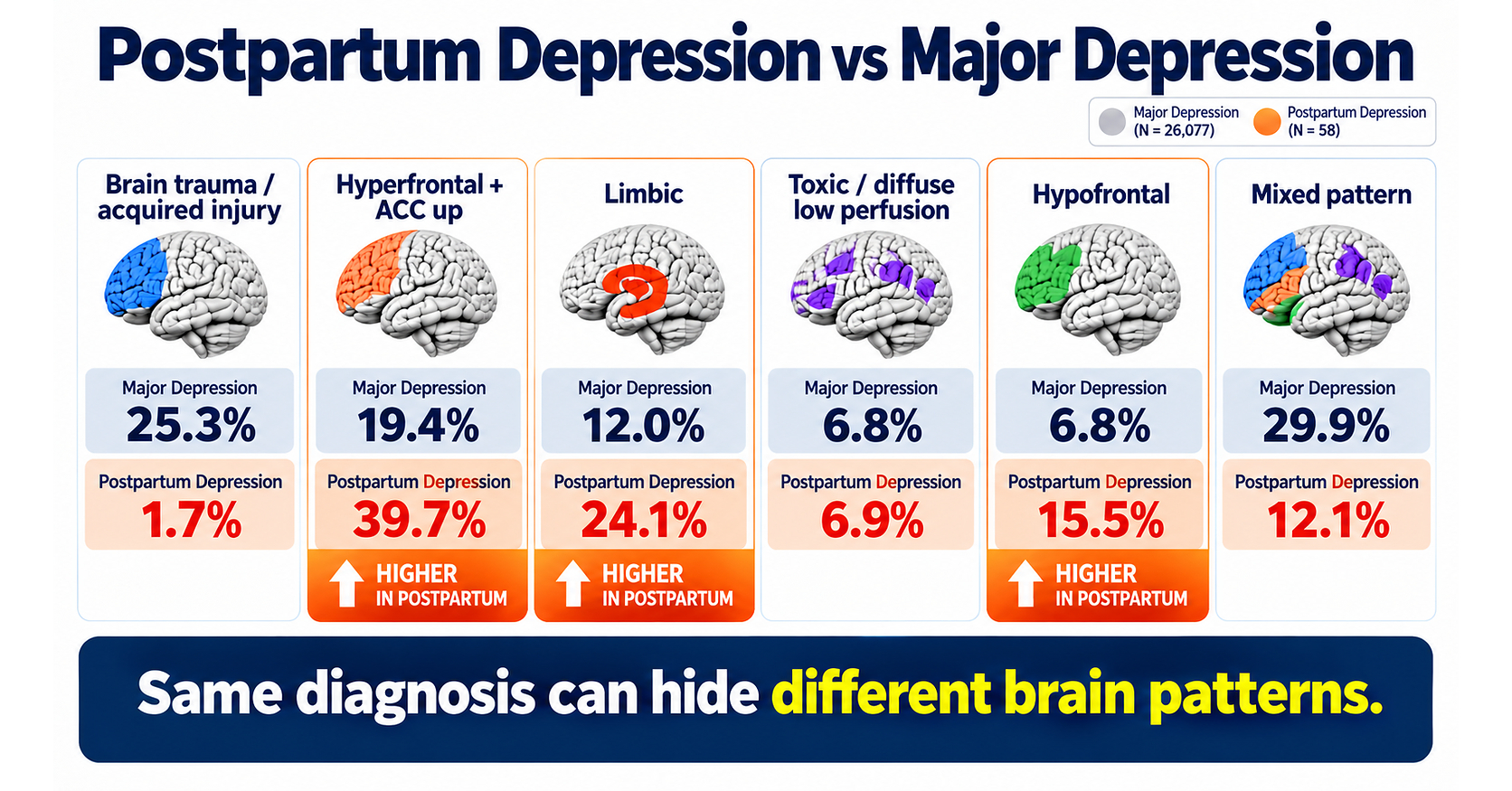
Research from Amen Clinics has discovered significant differences in brain function between women experiencing postpartum depression (PPD) and those suffering from major depression. The analysis comes in light of high-profile cases affecting discussions on maternal mental health, particularly the case of Lindsay Clancy, who tragically killed her three children in 2023. Clancy had sought psychiatric help and was on medication prior to the event, with her defense arguing that she was suffering from postpartum psychosis.
Read More
Dr. Daniel Amen and his team aimed to investigate whether distinct brain patterns could be identified in PPD patients versus those with broader depression. They utilized brain SPECT imaging on 58 women diagnosed with postpartum depression and compared the results to 26,077 individuals with major depression. The evaluation identified six distinct brain function patterns.
Key findings from the study revealed that nearly 40% of women with PPD exhibited a hyperfrontal/anterior cingulate cortex pattern, compared to 19.4% of those with major depression. Additionally, limbic patterns were noted in 24.1% of PPD patients versus 12% in the larger depression group. Hypofrontal patterns were present in 15.5% of women with PPD compared to 6.8% in major depression. The study highlighted a notable difference in brain trauma/acquired injury patterns, found in 25.3% of major depression patients but only 1.7% of those with postpartum depression.
These findings emphasize the importance of recognizing that similar psychiatric diagnoses may reflect different underlying brain functions, which could explain variations in treatment responses. Amen Clinics suggests that a more individualized approach to care might be necessary, as traditional diagnostic methods based solely on symptoms may overlook critical differences in brain activity.
At Amen Clinics, brain SPECT imaging is integrated into broader assessments to guide treatment decisions. The ongoing research underscores the need for a deeper understanding of mental health conditions, particularly how the same symptoms might correlate with distinct brain patterns.
For further details, see the full Amen Clinics article on postpartum depression and major depression.