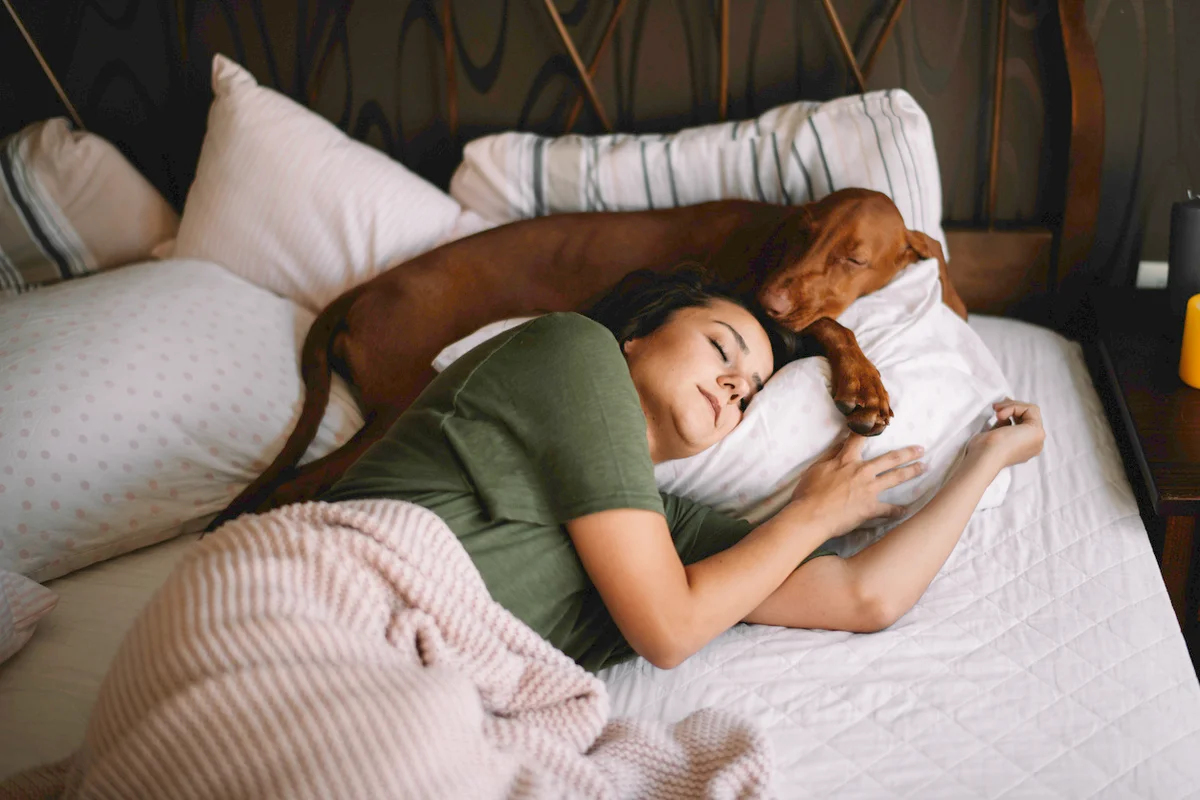
A 2024 research paper published in Scientific Reports indicates that sleeping with pets, particularly dogs, may negatively affect sleep quality. The study involved over 1,500 American adults who completed questionnaires about their sleep habits. Approximately half of the participants reported co-sleeping with pets, defined as sharing a bedroom with animals for part of the night.
Read More
The study found that those who co-slept with pets experienced poorer sleep quality and more symptoms of insomnia compared to those who did not share their bed with animals. This trend remained significant even after controlling for demographic differences. Notably, while sleeping with dogs was associated with negative sleep impacts, co-sleeping with cats showed no such evidence.
Despite these findings, 93% of participants who co-slept with their pets believed that their pets either positively or neutrally affected their sleep. This highlights a potential disconnect, as many pet owners may not recognize the adverse effects of having their pets in the bedroom.
While pets are known to enhance mental health by encouraging physical activity and providing companionship, the study emphasizes that co-sleeping may undermine the benefits of pet ownership by impacting sleep quality. Individuals sharing a bed with pets should be mindful that their nighttime presence can introduce noise, heat, or movement that disrupts sleep.
The study did not assess the presence of other co-sleepers, such as spouses or children, which could also contribute to sleep disruptions. Brian N. Chin, an Assistant Professor of Psychology at Trinity College, authored the article, which was originally published by The Conversation and is now shared under a Creative Commons license.
Given that abruptly ending co-sleeping arrangements may not be feasible for many, experts suggest practical strategies to enhance sleep quality. Recommendations include selecting a sufficiently large mattress, regularly washing bedding, and establishing a consistent bedtime routine with pets. Additional research is needed to identify specific practices that pet owners can adopt to improve sleep when sharing their bedrooms.