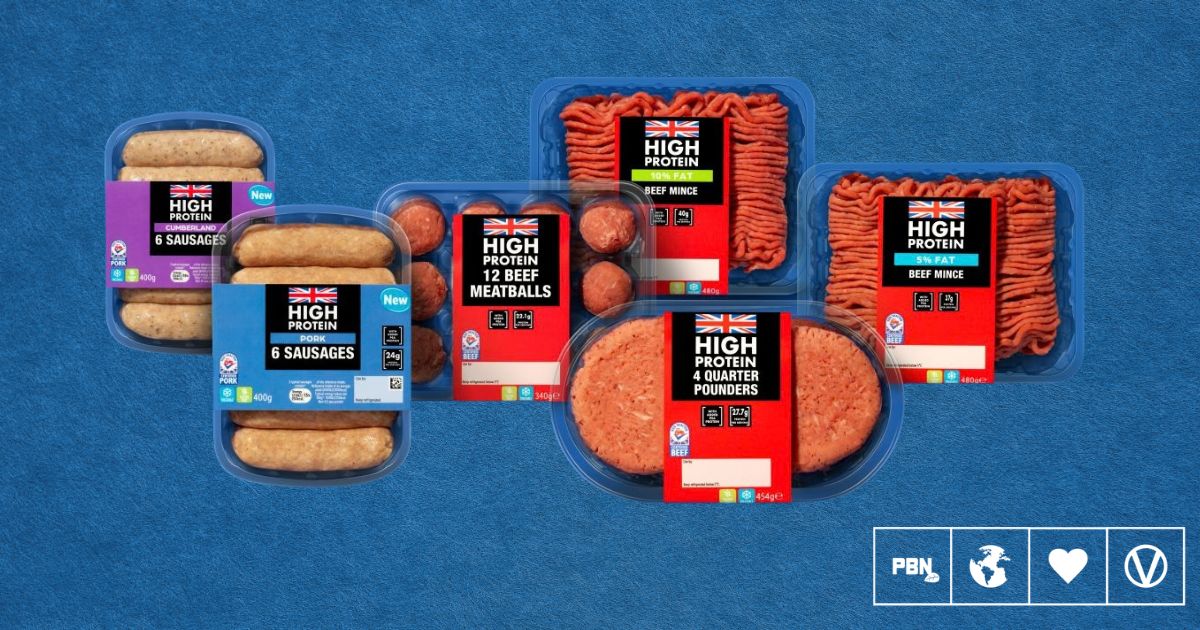
Lidl has launched a range of blended meat products that incorporate plant-based pea protein to enhance their protein content. The supermarket chain claims these hybrid products contain at least 20 percent more protein than their traditional counterparts.
Read More
This innovative range, labeled as “first-of-its-kind,” aims to fill the protein gap highlighted by the EAT-Lancet Planetary Health Diet. Lidl noted that there is a growing consumer demand for higher protein intake.
The High Protein range features various items, including Cumberland sausages, pork sausages, beef meatballs, and quarter pounders. Prices for these products begin at £1.99, and they are reportedly priced below average compared to similar items.
Pea protein, used in these products, is recognized for being cost-effective, sustainable, and nutrient-rich, providing approximately 80g of protein per 100g of concentrate. This makes it comparable to whey protein while avoiding the environmental impact and digestive issues associated with dairy.
Lidl emphasized that blending animal products with plant protein can positively affect both planetary health and human nutrition. However, there are suggestions that completely eliminating high-impact animal-based foods could significantly improve overall health outcomes.
In the UK and parts of Europe, rising costs of meat have led to price parity between plant-based and conventional meat and dairy. A recent report by ProVeg Netherlands indicated that Dutch consumers could save up to 30 percent by opting for plant-based products. In a separate study by the Good Food Institute Europe, plant-based mince and meatballs were found to be a third cheaper than meat at Tesco.
Nutritionally, plant-based options also hold their ground. For example, Linda McCartney sausages, made from soy, contain 15.6g of protein per 100g, surpassing the protein content of Lidl’s Deluxe Pork Sausages and other pork sausage brands.
This launch comes amidst a trend of increasing consumer interest in nutrient-dense plant proteins instead of traditional meat substitutes. A recent report hailed tofu as the top protein choice regarding nutrition, sustainability, and affordability, rating animal products poorly in comparisons.