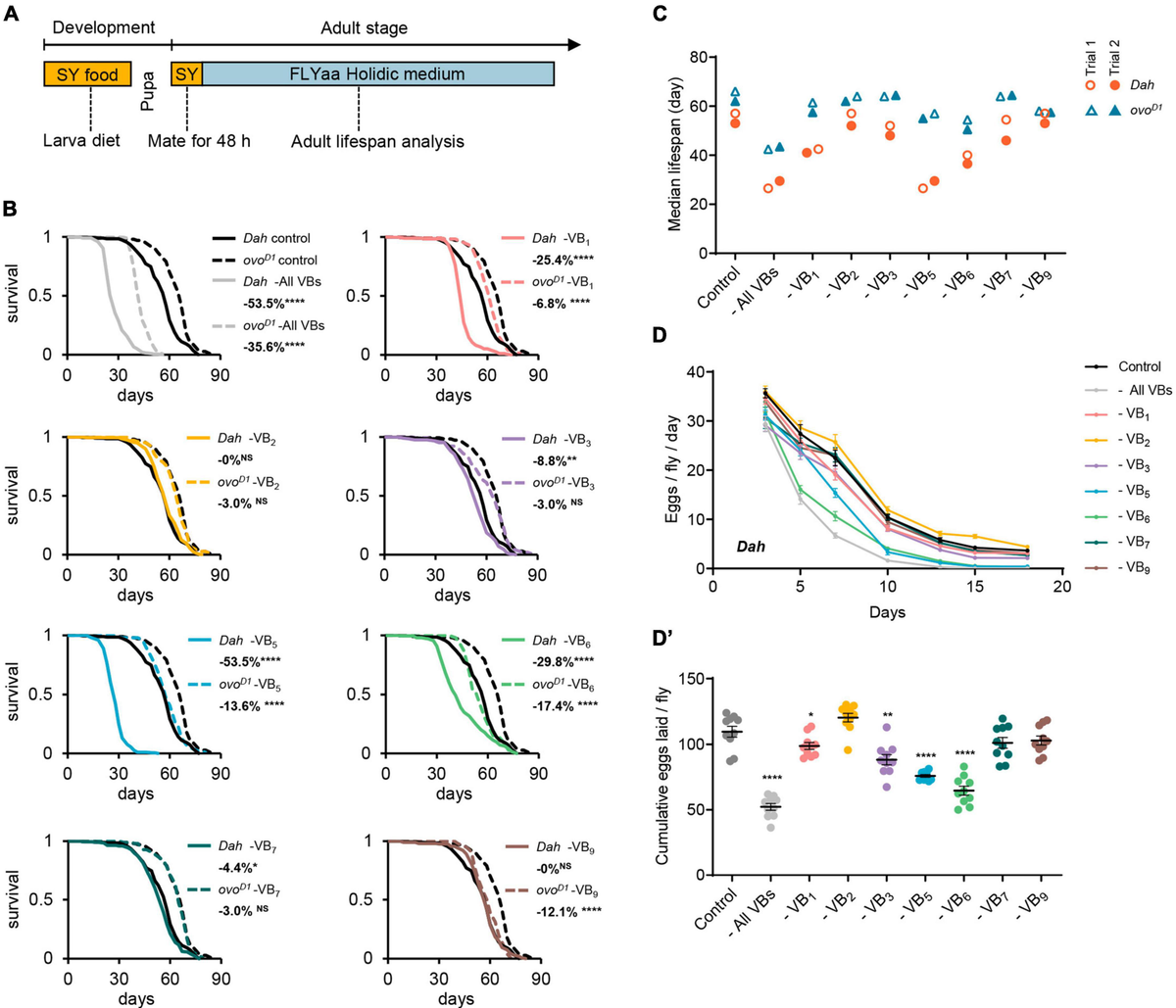
B vitamins are essential micronutrients crucial to various biological processes in animal organisms. Their deficiency can lead to significant health issues, including reproductive impairments and heightened vulnerability to age-related diseases. This study utilized Drosophila as a model organism to explore how deficiencies in specific B vitamins affect lifespan and physiological functions, noting the considerable influence of reproductive status.
Read More
Research showed that the absence of vitamins B1, B3, B5, B6, or B7 notably reduced the lifespan of wild-type female fruit flies, while similar deprivations had minimal effects on the lifespan of ovoD1 infertile mutant females. Additionally, these B vitamin deficits led to marked differences in reproductive capacity, starvation tolerance, and fat metabolism in wild-type females, with no substantial effects seen in the infertile mutants. Specifically, a lack of vitamin B1 altered how macronutrient intake affected the lifespan and health of fertile females, highlighting that reproductive status significantly modulates the physiological consequences of B vitamin deficiencies.
The study reinforces the importance of B vitamins in maintaining health across different stages of life, suggesting that these vitamins might play a pivotal role in influencing reproductive health and longevity. By demonstrating the varying impacts of individual B vitamin deficiencies based on reproductive status, findings indicate a complex interaction where the nutritional requirements change depending on reproductive capacity, a crucial insight for aging and nutrition research.