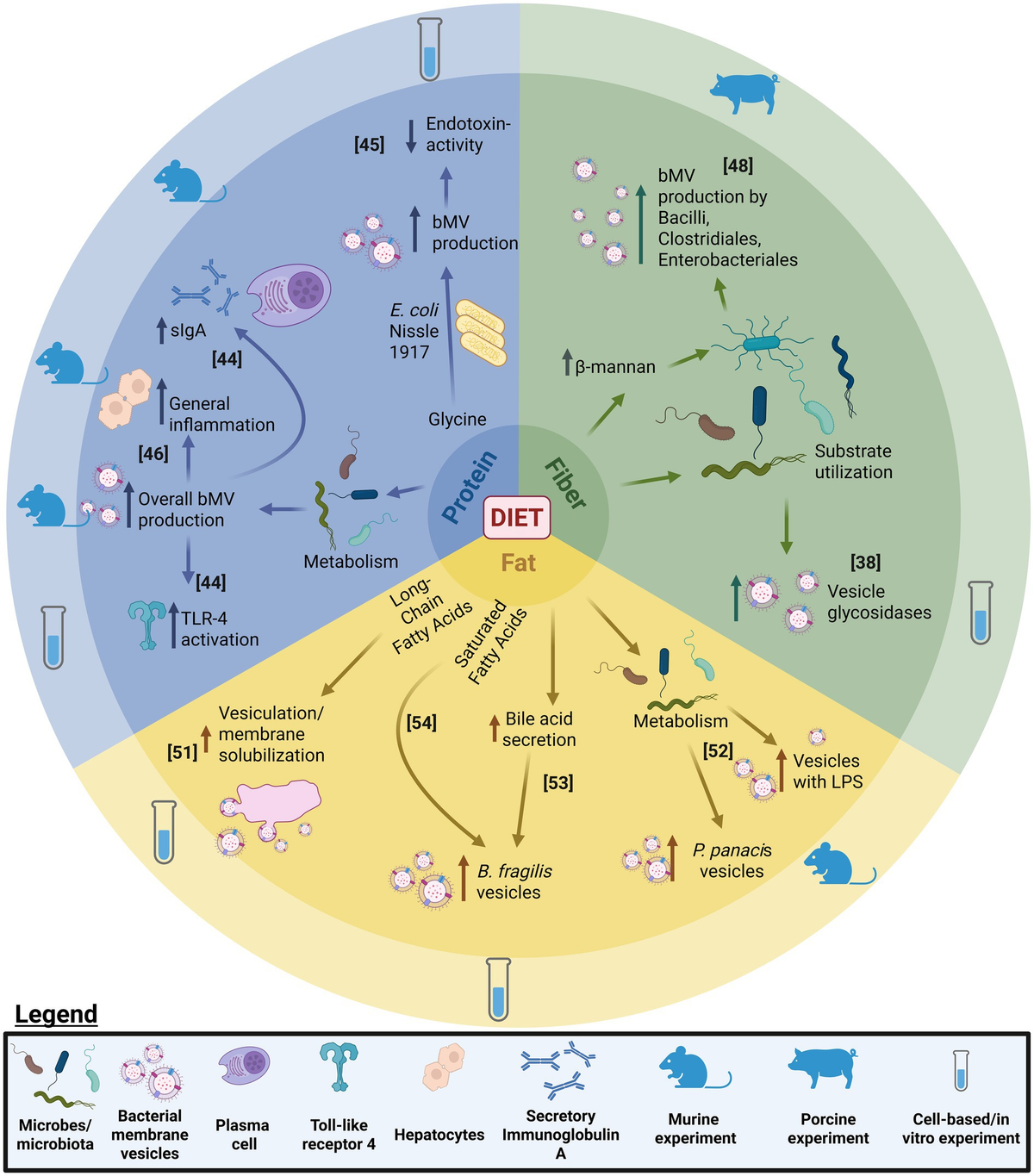
Diet significantly influences gut microbial ecology, affecting both bacterial composition and functional output. This review highlights the importance of assessing microbial metabolite production, a more informative measure than traditional compositional profiling. Bacterial membrane vesicles (bMVs) are increasingly recognized as mediators of microbial metabolism and output. These nanoparticles can carry bioactive proteins, lipids, nucleic acids, and metabolites, reflecting the activities of their parent bacteria. Notably, bMVs can trigger inflammatory responses by interacting with immune cells and pathogen recognition receptors, establishing them as key biomarkers for evaluating dietary effects on gut microbial function.
Read More
The human gastrointestinal tract hosts around 10^13 to 10^15 bacteria, which are crucial for digestion, immune training, and resistance against pathogens. Dysbiosis in gut microbiota has been linked to various diseases, including type 2 diabetes (T2D), obesity, and inflammatory bowel disease (IBD). Bacterial shifts, such as increased Pseudomonadota in patients with T2D and IBD, emphasize the need for strategies to alter the gut microbiota composition through dietary interventions.
Conventional microbiota profiling methods, such as sequencing, provide insights into community composition, but not microbial activity. As a result, complemented omics approaches—including metatranscriptomics, metaproteomics, and metabolomics—are gaining traction in gut microbiome research. The production of bMVs by bacteria in response to diet presents a potent method for assessing functional shifts in the microbiome, enabling detailed analysis of immunological responses.
Bacterial membrane vesicles can be robustly isolated from feces and provide valuable information regarding bacterial metabolism. Their biological activity encompasses a variety of bioactive molecules, potentially affecting host responses. Increased production of bMVs has been associated with dietary factors, indicating their role in shaping gut-microbe interactions and inflammation.
Different macronutrient-rich diets can significantly influence bMV properties. For instance, a high-protein diet can lead to an increase in intestinal bMVs that activate immune responses. Conversely, fiber-rich diets enhance the production of short-chain fatty acids (SCFAs), beneficial for gut health, and may affect bMV characteristics. High-fat diets, while absorbed primarily in the small intestine, can still impact gut microbiota composition and bMV biogenesis under specific conditions.
Emerging evidence suggests the potential of dietary modulation to control bMV production, which could have significant health implications. The intricate interactions between dietary elements, microbiota, and their vesicular outputs offer new avenues for therapeutic strategies aimed at improving gut health and managing inflammation. Such dietary influences on bMV profiles require further investigation to elucidate specific mechanisms of action and their implications for human health.