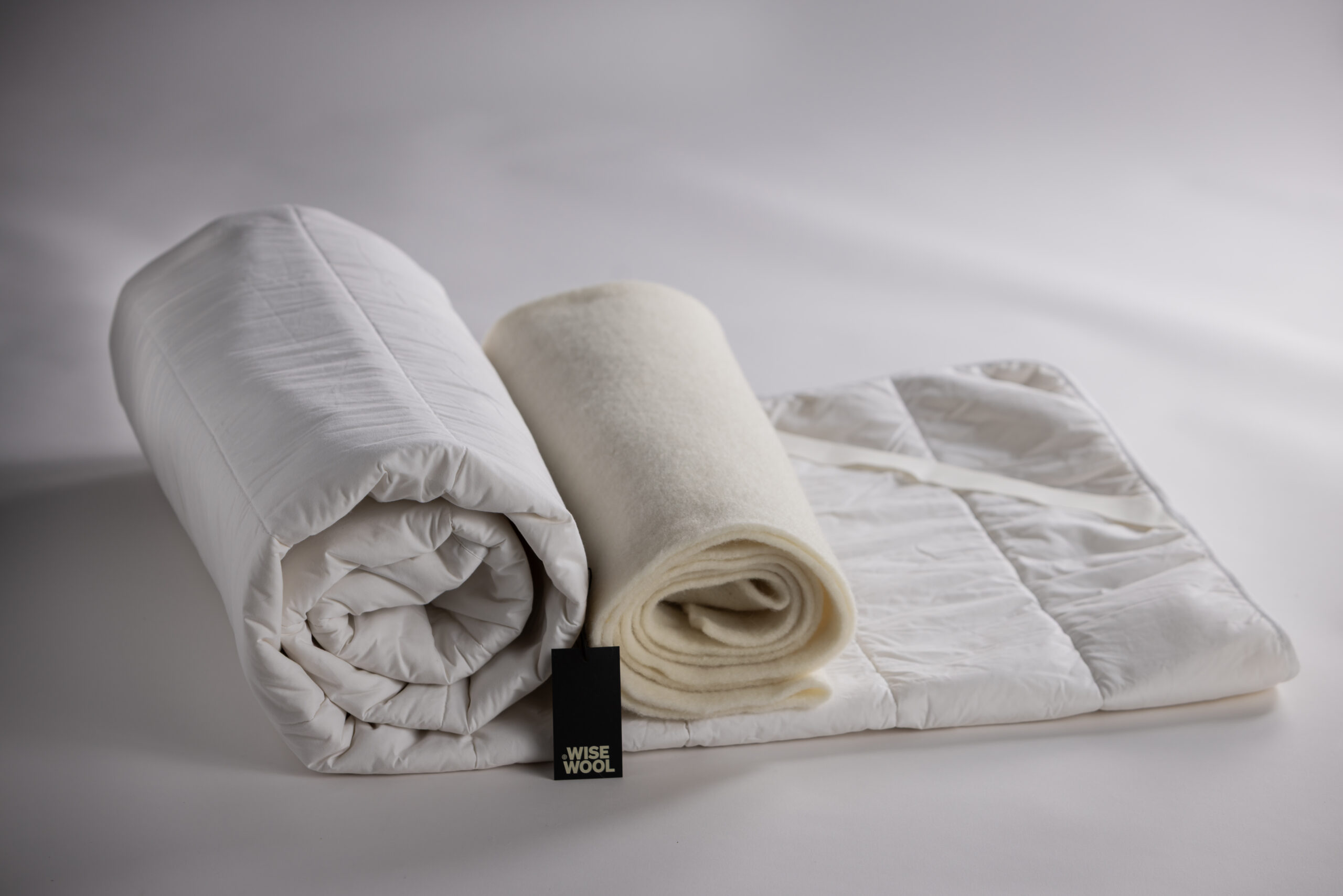
A pioneering clinical sleep trial is set to evaluate New Zealand strong-wool bedding against synthetic options. This initiative was announced by Agriculture Minister Todd McClay and Rural Communities Minister Mark Patterson, featuring a three-year research program funded by $2 million, which includes $800,000 from the Primary Sector Growth Fund. The program will be led by Wisewool.
Read More
The study will involve participants both in their homes and in sleep laboratories to measure various factors such as sleep latency, body temperature regulation, breathability, moisture management, hypoallergenic properties, and overall comfort when using strong-wool bedding compared to synthetics.
Wisewool, based in Gisborne and established in 2021, specializes in engineered natural fibers. Angus Hansen, the operations manager, noted that the company has received positive feedback globally about their bedding products under various climate conditions.
Hansen emphasized that the research grant enables Wisewool to transform customer feedback into concrete evidence. He stated, "What we want out of it is clear, credible data on how strong wool improves sleep, because better sleep means sharper minds, healthier communities and stronger economies."
McClay highlighted the significance of the project for New Zealand's wool sector, pointing out that scientifically validating the benefits of wool could help it achieve premium pricing and establish itself as a high-performance alternative to various materials.
He also mentioned that prior government support facilitated the development of Wisewool’s premium wool bud filler for furniture and bedding, which currently allows the company to pay Tairāwhiti East Coast farmers a 50-cent premium per kilogram of raw wool supplied. Wisewool aims to process 30 million kilograms of wool across New Zealand’s North Island in the next decade, necessitating the sourcing of a considerable amount of strong wool from various regions.
Patterson underscored the government’s commitment to rural communities and characterized this innovation as science-led and sustainability-driven, poised to generate significant value for farmers. He expressed optimism that demonstrating the benefits of strong wool for sleep could enhance demand and improve economic returns for all stakeholders in the sector.