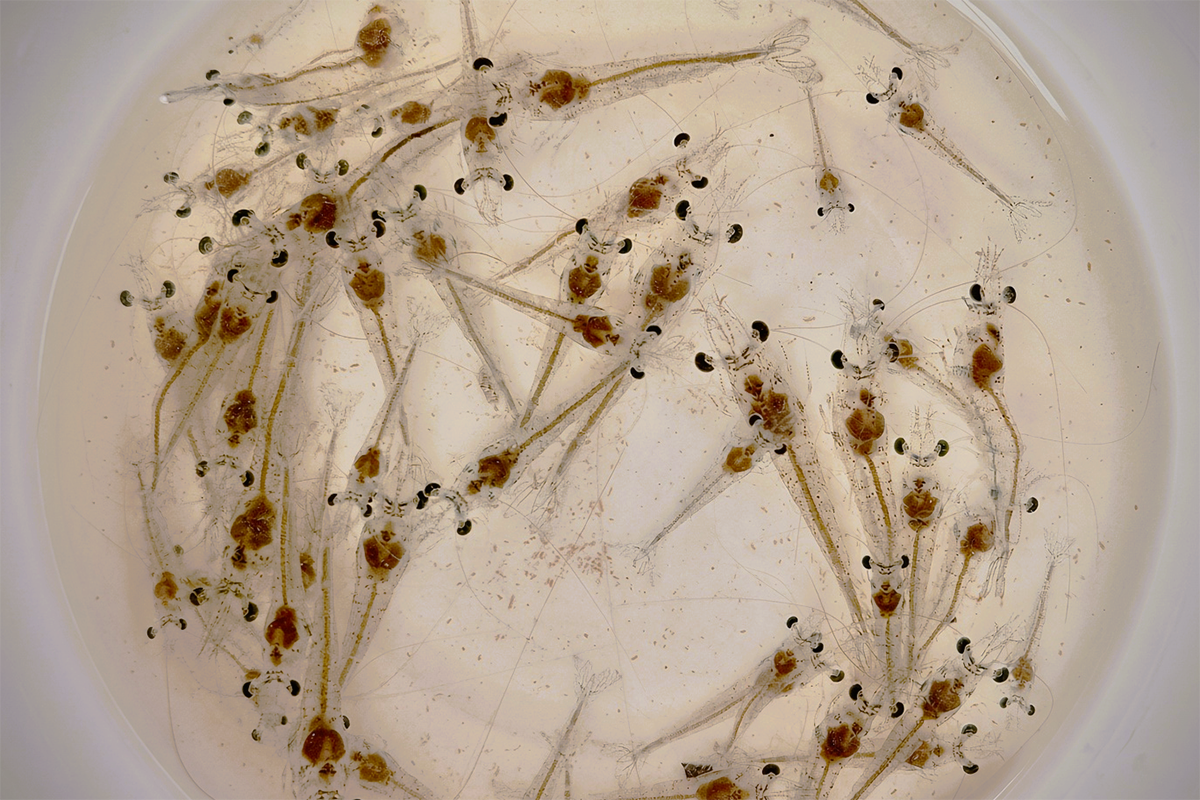
A recent review emphasizes the critical yet underdeveloped aspects of hatchery operations and larval feeding in shrimp aquaculture. The authors argue that nutrition for shrimp larvae should be stage-specific and integrated with various factors, including feeding and microbial management. Connecting research efforts with commercial practices is essential for reducing variability and promoting economic sustainability.
Read More
Despite advancements in aquaculture, shrimp larval feeding remains largely empirical, with significant deficiencies in stage-specific nutrition, including protein quality and lipid sources. Penaeid hatcheries are vital within the aquaculture production chain yet often lack systematic development in feeding strategies for larvae and early postlarvae (PLs).
The review, authored by Drs. Roeland Wouters, Daniel Lemos, and Patrick Sorgeloos, likens the shrimp industry’s evolution to poultry production, where the impact of hatchery conditions on long-term performance was recognized gradually. The industry's focus is shifting from sheer production volume to enhancing survival rates, growth, feed efficiency, and biological consistency. Given that feed costs comprise the largest operating expense, nutritional deficiencies during the hatchery phase can lead to significant downstream costs manifesting later through weak nursery performance and poor feed conversion rates.
Shrimp larviculture is complex, with high larval densities and rapid development, necessitating a nuanced feeding regimen. The current empirical practices are constrained by geographical disparities, with significant studies often conducted in regions with strong academic capacity but minimal hatchery production.
Nutritional specifications are often static, failing to account for physiological changes as shrimp develop through various stages. For instance, feed formulations that do not address the unique needs of different penaeid species can yield suboptimal results. Additionally, discussions around protein often focus too heavily on crude protein levels, neglecting amino acid balance and digestibility—essential factors for larval development.
The authors pinpoint several crucial research gaps, including the need for stage-specific nutritional requirements, comparative nutrition studies across species, and a deeper understanding of lipid functionality and microbial interactions. Recommendations include developing tailored nutritional protocols, further investigating the role of artemia, and implementing genotype-aware feeding strategies.
Improved collaboration between research and hatchery practices is essential to meet the industry's demands for robust PLs that perform consistently in nurseries and grow-out environments. Focusing on comprehensive feeding strategies that combine nutritional needs with the microbial environment will lead to better outcomes in shrimp production.
The review calls for structured approaches to hatchery feeding, advocating for a shift from merely optimizing figures to fostering robust PLs that can thrive in less controlled commercial settings.