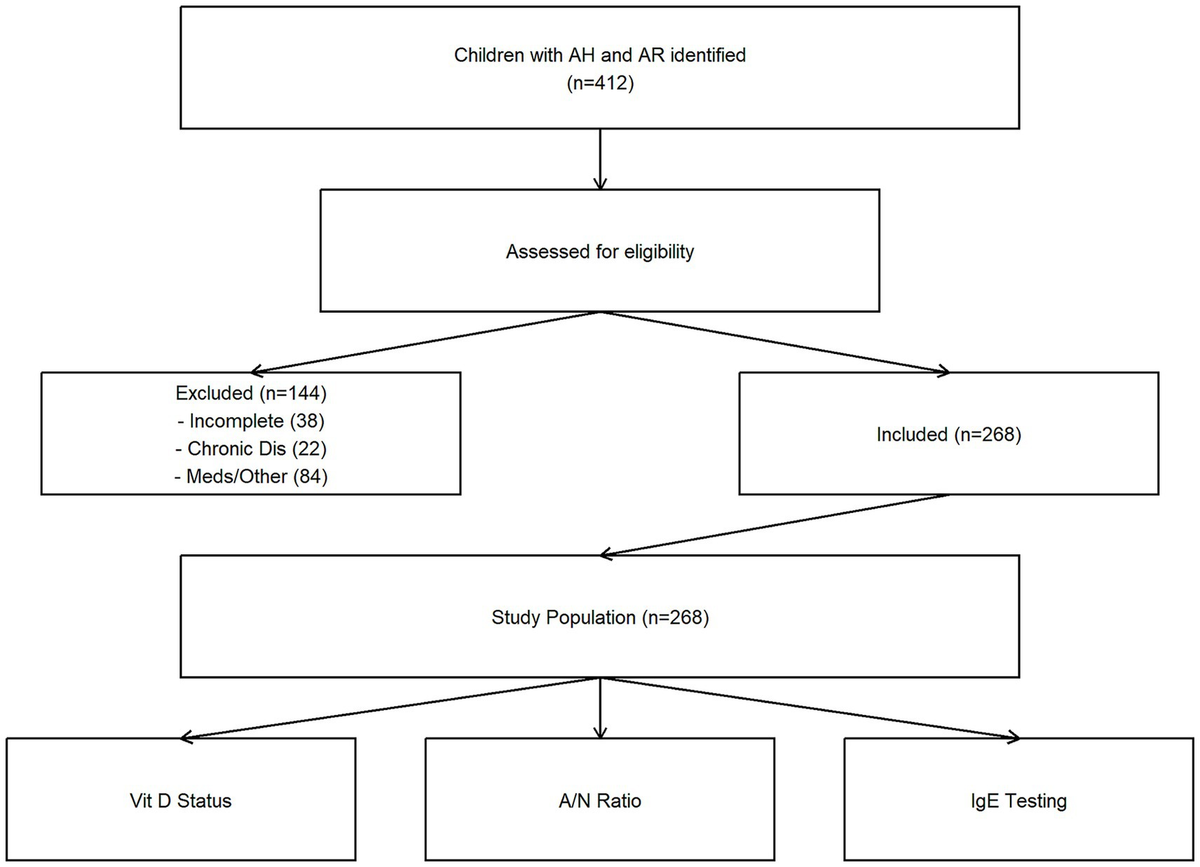
A recent retrospective observational study has revealed a strong association between vitamin D deficiency and the severity of adenoid hypertrophy (AH) and allergic rhinitis (AR) in children. Conducted at Changde Hospital, Xiangya School of Medicine in Hunan, China, the research included 268 children aged 3 to 12 with concurrent AR and AH.
Read More
The study found that the mean serum level of 25-hydroxyvitamin D [25(OH)D] among participants was 17.7 ± 6.8 ng/mL, with 70.5% classified as vitamin D deficient (levels below 20 ng/mL). Notably, Vitamin D levels demonstrated a significant inverse correlation with the adenoidal-nasopharyngeal (A/N) ratio, total IgE levels, and symptom scores. For each 10 ng/mL decrease in 25(OH)D, there was a corresponding increase in A/N ratio by 0.055 units.
The results showed that severe vitamin D deficiency (below 10 ng/mL) was associated with a 7.13-fold increase in the risk of severe AH and a 7.83-fold increase in the risk of elevated total IgE (>400 kU/L). The study highlights a nonlinear relationship, indicating that the strongest correlations with disease severity occurred at vitamin D levels below 20-25 ng/mL.
The findings emphasized the clinical implications of vitamin D in managing pediatric patients with AH and AR, particularly advocating for screening and potential correction of vitamin D deficiency to improve patient outcomes. This study adds to the evidence suggesting that vitamin D plays an important immunomodulatory role in allergic conditions and their associated complications in children.