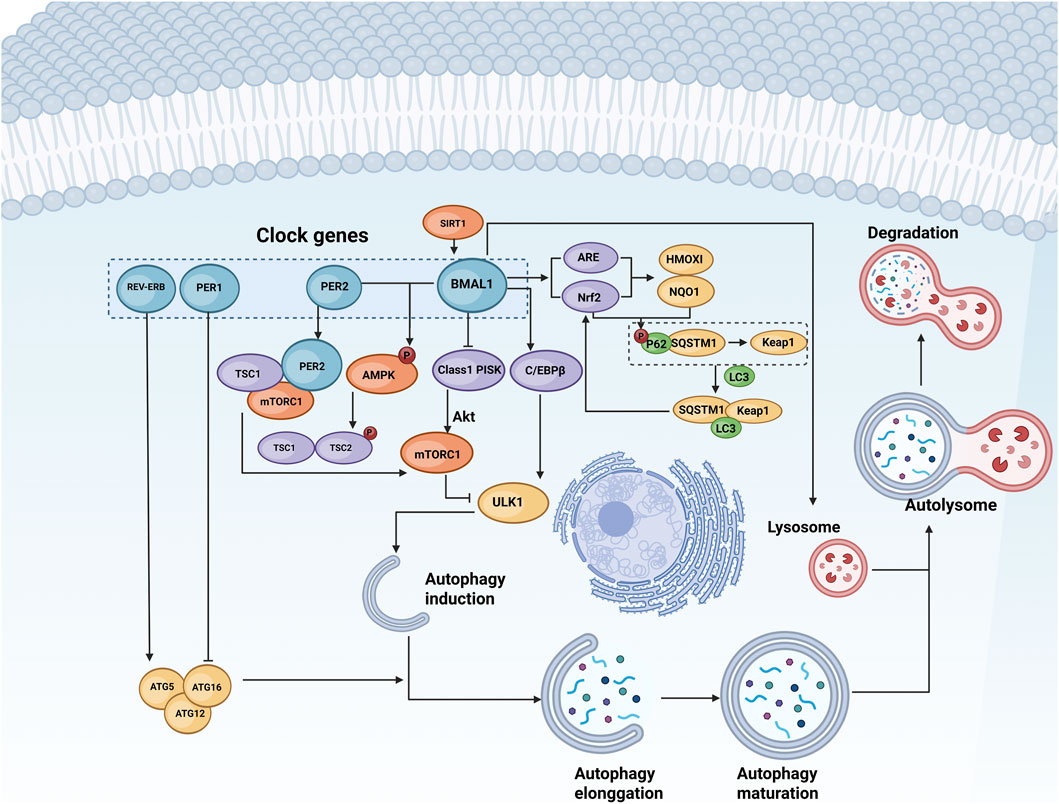
Recent investigations have revealed a complex interplay between circadian rhythms, which govern biological processes responsive to light and dark cycles, and autophagy, a critical cellular mechanism for maintaining homeostasis. Circadian clock genes, essential for regulating internal biological clocks, significantly influence autophagy by affecting the expression of related genes and modulating signaling pathways involved in autophagic processes. Notably, autophagy also plays a role in regulating circadian clock gene expression and activity. Understanding these interactions is crucial for elucidating how both systems contribute to cellular equilibrium and physiological regulation, as well as for uncovering disease mechanisms and potential therapeutic avenues.
Read More
The circadian clock is found in photosensitive organisms and regulates biological rhythms that align with geophysical time. It consists of central and peripheral components: the central clock processes both internal and external signals, affecting peripheral clocks through hormonal and neural pathways that regulate behavior and temperature in mammals. At the molecular level, the 24-hour rhythm depends on a transcriptional feedback loop featuring core proteins like BMAL1, CLOCK, and PERIOD (PER1, PER2, PER3), which collaborate in regulating gene expression.
Autophagy is described as a process comprising various stages, including initiation, nucleation, elongation, fusion, and degradation, crucial for removing damaged organelles and proteins under stress conditions. Autophagy is activated during nutritional deficiencies, functioning as a system to clear malfunctioning cellular components. The initiation of nucleation relies on the ULK1 kinase complex, and subsequent stages involve proteins like ATG14, which help form autophagic vesicles. Dysregulation of autophagy is linked to diseases such as cancer and neurodegenerative disorders.
Recent studies emphasize the synchronization between circadian clocks and autophagic activity, indicating that circadian control governs autophagy timing by regulating the expression of key autophagy proteins. For instance, research indicates that the CLOCK:BMAL1 heterodimer can activate the promoters of autophagy initiators like ULK1 and BECLIN-1. Additionally, oscillations in the expression of proteins such as p62/SQSTM1 are essential for selective autophagy and maintaining cellular health.
Moreover, autophagy can influence the degradation of circadian clock proteins, leading to potential changes in circadian rhythm dynamics. Evidence of this regulatory interplay is increasingly documented, showcasing the importance of both systems in energy balance and metabolic processes across various tissues.
An extensive review of existing literature highlights the need for further exploration of the mutual regulatory mechanisms between circadian rhythms and autophagy. Researchers must clarify the specific pathways involved and how temporal variations in autophagy affect clock function. A better understanding may lead to new therapeutic strategies aimed at treating diseases linked to dysregulation of circadian and autophagic processes. Future studies should focus on organ-specific functions and develop chrono-therapeutic approaches to enhance health outcomes.