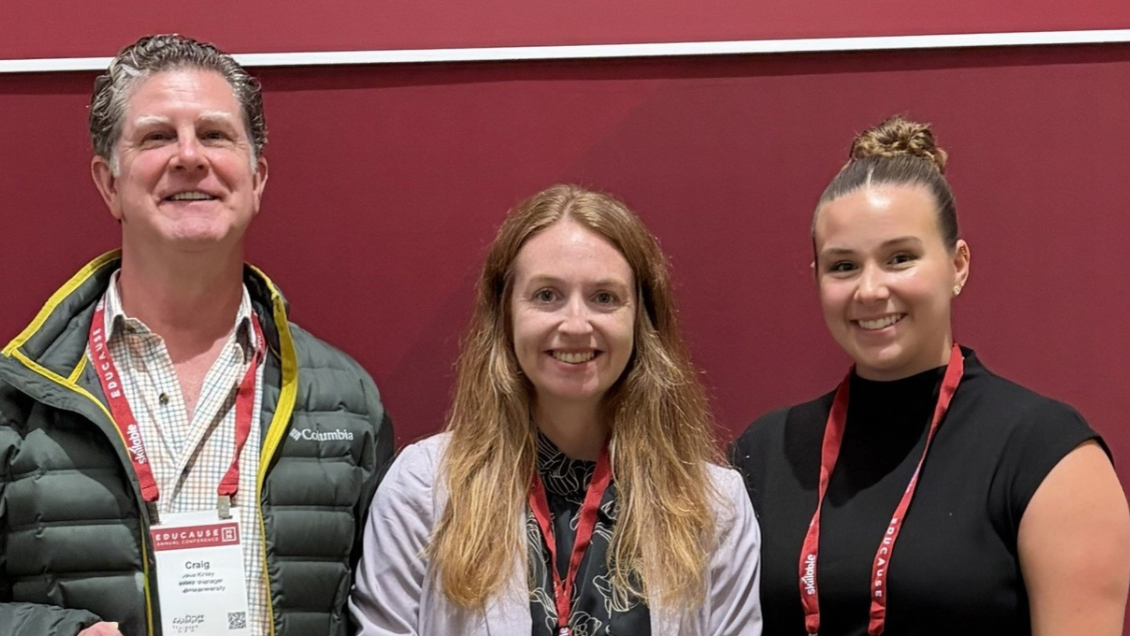
Kaileigh Byrne, the Wallace R. Roy Distinguished Associate Professor of Psychology at Clemson University's College of Behavioral, Social and Health Sciences (CBSHS), has created a mobile application called MyAtlasU. This app provides evidence-based strategies from cognitive behavioral and acceptance-based approaches to support the well-being, resilience, and stress management of college students.
Read More
Byrne initiated the project in 2021, recognizing a growing need for virtual mental health support amid students’ struggles with isolation during the pandemic. She developed the app, originally named Airheart, within four months and conducted a two-week randomized controlled trial to assess the effectiveness of virtual agents in delivering cognitive behavioral therapy. The results showed that 68% of participants wished to continue using the app after the trial.
Following the positive outcomes of the first study, Byrne conducted a second trial to determine which features were most valued by students. The findings indicated that animation was a key element enhancing user experience.
According to Byrne, students appreciated the app’s accessibility, immediate support, and integration into their daily routines. "MyAtlasU expands the support available to students and serves as an evidence-based resource they can turn to when traditional care is less accessible," she stated. She views the app as a complementary tool alongside existing mental health services at universities.
The success of this project is largely attributed to the students in Byrne's undergraduate Creative Inquiry course, who assisted in participant recruitment, data collection, analysis, and follow-up interviews.
After demonstrating the app’s effectiveness, Byrne aimed to take the project beyond academia. With encouragement from CBSHS associate dean for research Bryan Miller, she applied for the Simulating Translation of Research via Intentional Development and Ecosystem (STRIDE) Accelerating Research Translation (ART) Academy, a program funded by a National Science Foundation grant.
The STRIDE ART Academy helped Byrne explore commercialization options, which led to the establishment of a MyAtlasU spinout company and the protection of technology copyrights. This model is intended to connect academic research with entrepreneurship, providing faculty and graduate students the opportunity to engage in research while developing business skills.
“Translational research is a priority for CBSHS, and Dr. Byrne exemplifies this innovative approach,” Miller said. He also highlighted the unique opportunities for students to acquire skills that facilitate taking discoveries from lab to real-world applications.
Additionally, Byrne's team was accepted into the national NSF Innovation Corps (I-Corps) Teams training program, aimed at assisting the transition from invention to commercialization. During the regional program, she conducted 30 customer discovery interviews, with plans for 100 more during the national phase, along with participation in two entrepreneurial conferences.
MyAtlasU has also been designated as a member company of the South Carolina Research Authority (SCRA), an organization that provides funding and support to advance translational research; acceptance rates for SCRA membership are below 40%.
Now available for users with .edu email addresses, MyAtlasU will be piloted at four universities across the U.S. to evaluate its effectiveness in retaining students, reducing drop-out rates, and improving grade point averages.
Clemson’s Department of Psychology, part of CBSHS, aims to build people and communities through work across seven disciplines including communication, nursing, parks and recreation, political science, psychology, public health, sociology, anthropology, and criminal justice.