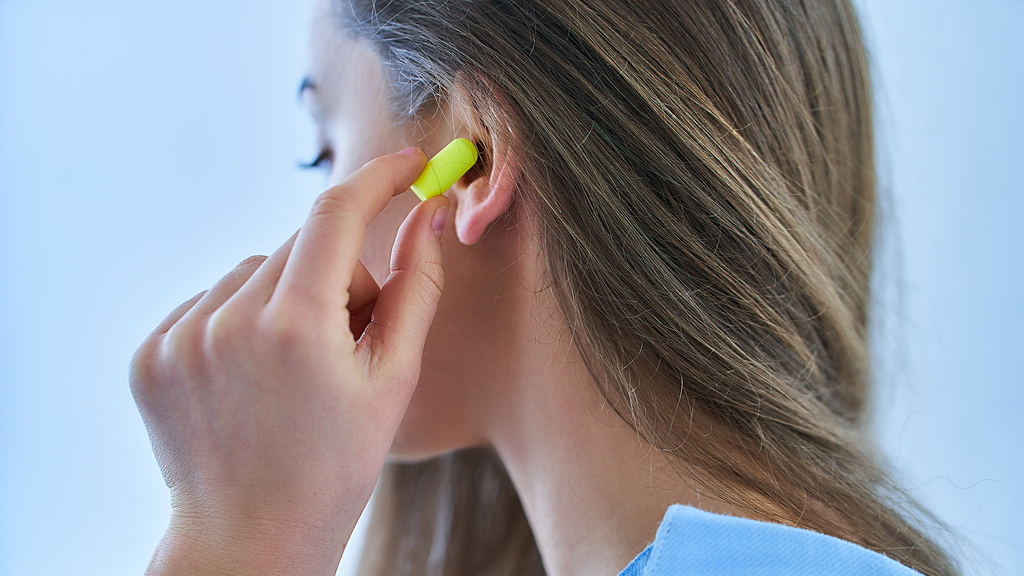
Research from the University of Pennsylvania Perelman School of Medicine suggests that pink noise, often used to aid sleep, may actually reduce restorative REM sleep and hinder sleep recovery. The study, published in the journal Sleep, indicates that earplugs are significantly more effective at mitigating sleep disruptions from traffic noise.
Read More
Lead author Mathias Basner, MD, PhD, emphasizes the importance of REM sleep for memory consolidation, emotional regulation, and brain development. He cautions that playing pink noise during sleep could be harmful, particularly for children who engage more in REM sleep than adults.
The study involved 25 healthy adults aged 21 to 41, none of whom had prior experience using noise for sleep or any sleep disorders. Participants engaged in eight hours of sleep over seven nights under different conditions: aircraft noise, pink noise, a combination of both, and aircraft noise paired with earplugs. They reported on sleep quality, alertness, and health effects each morning.
Deep sleep and REM sleep occur cyclically during the night, fulfilling essential roles such as physical restoration and emotional regulation. Pink noise, a type of broadband noise, presents as a continuous sound spanning various frequencies, similar to white noise and other noise types like brown and blue noise, commonly found in nature sounds and household appliances.
Findings revealed that exposure to aircraft noise resulted in approximately 23 fewer minutes of deep sleep each night compared to quieter conditions, while earplugs significantly mitigated this effect. Conversely, pink noise at 50 decibels was associated with a nearly 19-minute reduction in REM sleep. When combined, aircraft noise and pink noise further shortened both deep sleep and REM sleep while extending wakefulness by about 15 minutes compared to noise-free nights.
Participants generally felt their sleep was lighter and experienced more frequent awakenings during nights with aircraft or pink noise, unless they used earplugs. Given that around 16 percent of Americans reportedly use earplugs, the researchers highlight their effectiveness and suggest further investigation into the health impacts of pink noise as a sleep aid.
The research also underscores concerns surrounding the common practice of playing broadband noise during sleep, which has become widespread with millions relying on it. Notably, white noise platforms on Spotify gain significant daily usage, and popular "white noise" videos on YouTube have amassed over 700 million views. However, comprehensive research on the effects of broadband noise on sleep quality remains limited.
REM sleep interruptions are linked to disorders such as depression and anxiety. Basner pointed out that young children, who spend more time in REM sleep than adults, may be particularly susceptible to the negative effects of pink noise. Nonetheless, it is common for parents to use sound machines around infants in hopes of promoting better sleep.
The study warns against using broadband noise, especially for vulnerable populations like infants and toddlers, and calls for more research to explore the long-term impacts and safety of different types of broadband noise during sleep. This research was funded by the U.S. Federal Aviation Administration, with opinions expressed reflecting the views of the investigators.