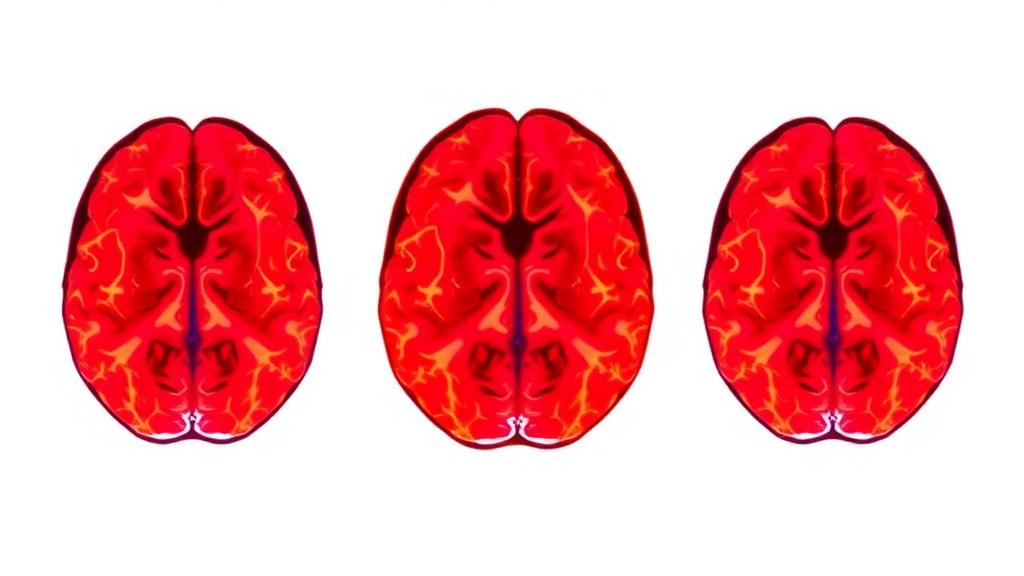
A recent neuroimaging study published in BMC Medicine indicates that major depressive disorder manifests differently in adolescents compared to adults, challenging the traditional view of depression as a single illness. Led by Qian Zhang and Baolin Wu from West China Hospital of Sichuan University, along with collaborators from China and the United Kingdom, the research analyzed the structural brain wiring of over a thousand individuals, highlighting both shared and distinct features based on age.
Read More
The study examined structural covariance networks, which reflect how brain regions that develop and function together exhibit similar physical characteristics. By constructing individualized structural covariance networks (iSCNs) for each participant, the researchers represented each brain as a unique network map, facilitating comparisons across different diagnostic and age groups.
The analysis included data from 1,057 participants, 504 of whom were experiencing their first episode of major depressive disorder without prior psychiatric medication. This group consisted of 174 adolescents and 330 adults, matched against 553 healthy controls—82 adolescents and 471 adults. The focus on drug-naïve, first-episode patients allowed the researchers to explore the brain's condition prior to treatment, emphasizing the developmental differences between adolescents and adults.
When comparing depressed patients to healthy controls, both groups revealed increased structural covariance connectivity, particularly in the frontal regions, insula, and subcortical structures, which are associated with emotional regulation, motivation, and reward. However, adolescent patients exhibited decreased connectivity among temporoparietal, limbic, and subcortical regions, which are crucial for self-referential thought and emotional memory. This suggests that adolescent depression may disrupt developing networks more significantly than in adult-onset cases.
Statistical analysis showed significant interactions between age group and diagnosis, indicating that the effects of depression on network organization are influenced by the patient's age. The findings support neurodevelopmental models of depression that highlight the need for tailored approaches in treating younger patients.
Moreover, reduced connectivity between specific brain regions correlated with greater depressive severity in adolescents, suggesting these neural markers could serve as potential indicators for the illness. The altered networks in adolescents were linked to emotional face processing and social cognition, essential during this developmental stage, while in adults, the same structures were associated with action observation and behavioral understanding.
These results underscore the heterogeneity of depression and the necessity for age-specific monitoring and treatment strategies. The study emphasizes that depression consists of a range of network disruptions influenced by the age at which the disorder manifests. With millions of adolescents experiencing depression yearly, these insights may enhance early detection and intervention strategies.