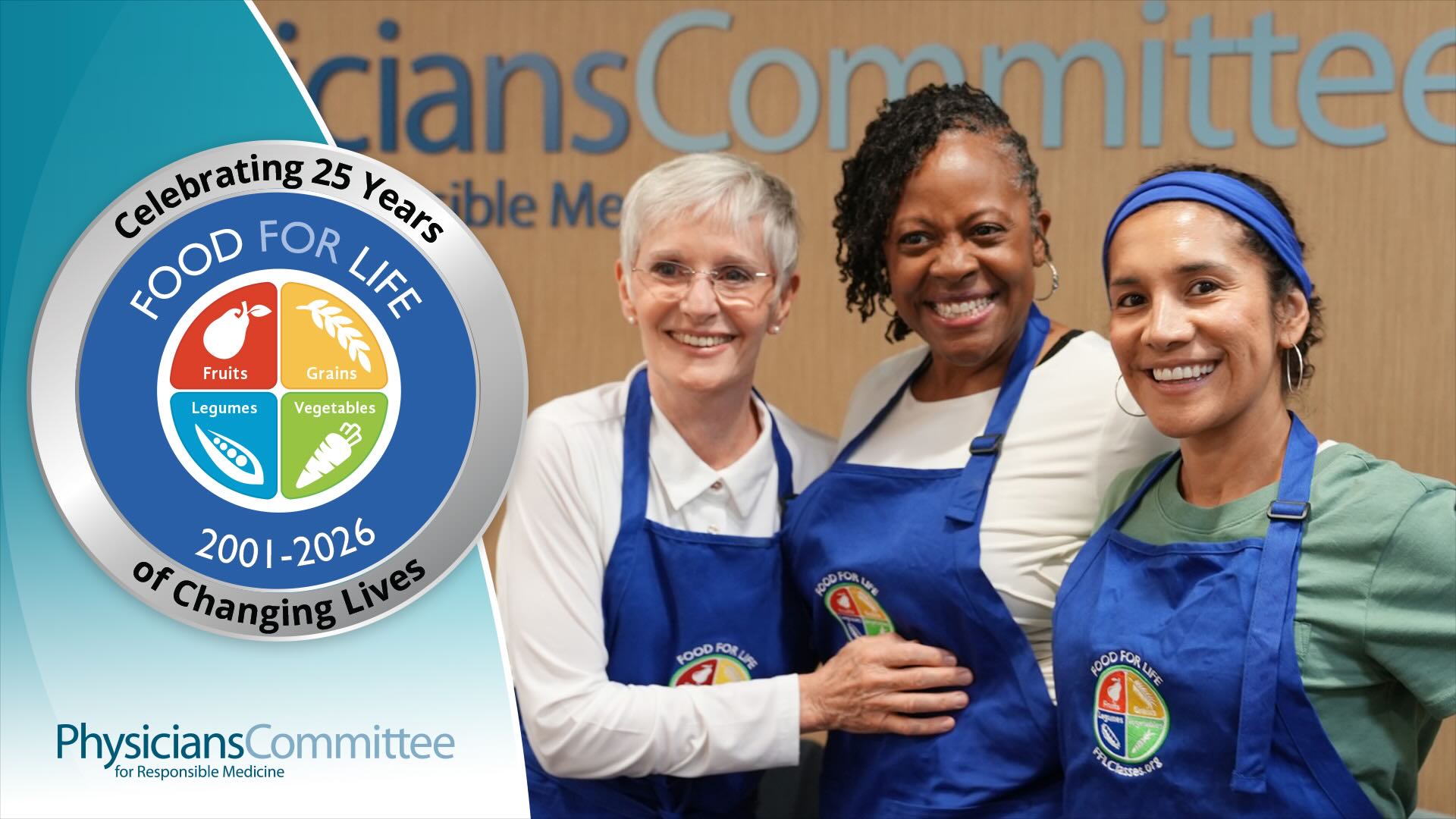
Food for Life, a program developed by the Physicians Committee, celebrates 25 years of teaching the benefits of plant-based diets. The initiative began in 2001 with a series of cancer prevention and survival classes led by Physicians Committee President Dr. Neal Barnard and other nutrition experts in Washington, D.C. Dr. Barnard noted that the original classes provided scientific evidence and practical cooking demonstrations that have since evolved into a large-scale education program.
Read More
Today, Food for Life boasts over 450 instructors worldwide, delivering thousands of classes each year to countless participants. The curriculum, developed by health professionals, promotes the health benefits of plant-based nutrition supported by current scientific research. Each class includes information about how certain foods influence health, alongside cooking demonstrations and practical tips for healthier eating.
The program offers a variety of class themes, including Cancer Project, Diabetes Initiative, Nutrition Essentials, and Kids Health. It has also translated several curricula into French, Mandarin, and Spanish to broaden its reach. Recently, it added two new classes, Eating With Purpose and Navigating Travel, based on participant feedback.
Tracy Childs, a Food for Life instructor since 2005 in San Diego, discovered the program through Good Medicine and felt an immediate connection to its mission after researching cancer prevention through diet. Childs teaches classes and runs a local support organization, PlantDiego, advocating for the impact of a plant-based diet in her community.
Diane Callaway, who lost both parents to disease, turned to Food for Life to learn about plant-based nutrition and eventually became an instructor in 2010. She emphasizes spreading awareness about plant-based diets’ benefits, encouraging her students to share their knowledge.
The Food for Life program is also committed to serving underserved communities through a grant program that supports free classes for audiences disproportionately affected by chronic diseases. This initiative has recently reached people in Brazil, Canada, Uganda, and the U.S.
Instructors like Maria Fernanda Hubeaut and Sahrah Yashaahla have taught classes that address specific health concerns within diverse populations, fostering an environment where participants feel empowered.
Looking ahead, the Food for Life program continues to train new instructors as part of its commitment to community health. The latest training cycle aims to enhance collaboration between healthcare professionals and educators, with the goal of empowering individuals to manage their health through nutrition. For more information about classes, visit PCRM.org/FFL.