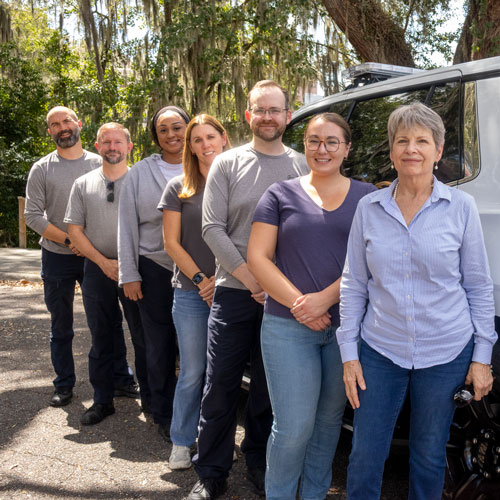
The University of Florida Police Department (UFPD) is emphasizing the growth of its co-responder program during Mental Illness Awareness Week, observed from October 4-10. This initiative aims to connect the UF community with mental health support and resources.
Read More
Launched in June 2022, the co-responder program makes UFPD one of the first campus police departments in the nation to implement this model fully. The program pairs UFPD officers with mental health clinicians to jointly respond to calls involving behavioral health issues, delivering clinical expertise directly to individuals in distress.
UFPD Chief Bart Knowles stated that the program reflects the department's commitment to addressing the diverse needs of the university community beyond traditional law enforcement. "Our responsibility to the UF community goes beyond responding to crime," Knowles said. He emphasized the importance of integrating mental health support in emergency responses.
Currently, the team consists of two clinicians who accompany six officers during their shifts, fostering trust and familiarity in handling complex situations. Officer Alex Wanzenberg noted that this collaboration enhances team cohesion, enabling them to make quick, informed decisions on-site.
UFPD's officers are available 24/7 and often respond to incidents involving individuals in distress. In the past year, the co-responder team addressed 163 calls related to behavioral health crises, including suicide-related incidents and well-being checks. When hospitalization was considered, the team successfully diverted individuals to less restrictive options 55% of the time, facilitating connections to resources such as the Counseling and Wellness Center.
The program also addresses situations that may not begin as overt mental health crises. For example, a student in distress over a stolen laptop sought help at the Disability Resource Center. After recognizing the student’s difficulties, the responding officer called for the co-responder team, who effectively de-escalated the situation, allowing the theft report to be completed.
Co-responders provide crisis intervention, lethality assessments, safety planning, and connect individuals with counseling and victim services, focusing on immediate needs rather than long-term care.
Dr. Meggen Sixbey, assistant director of UFPD overseeing the Behavioral Services Division, highlighted the importance of ongoing awareness, particularly in a constantly changing university environment. "We want people to know that support is available and that asking for help is an important first step," Sixbey said.
For those experiencing a mental health crisis or concerned about someone else, UFPD can be reached at 352-392-1111. In emergencies, individuals should call 911. Additional support is also accessible through the 988 Suicide & Crisis Lifeline.