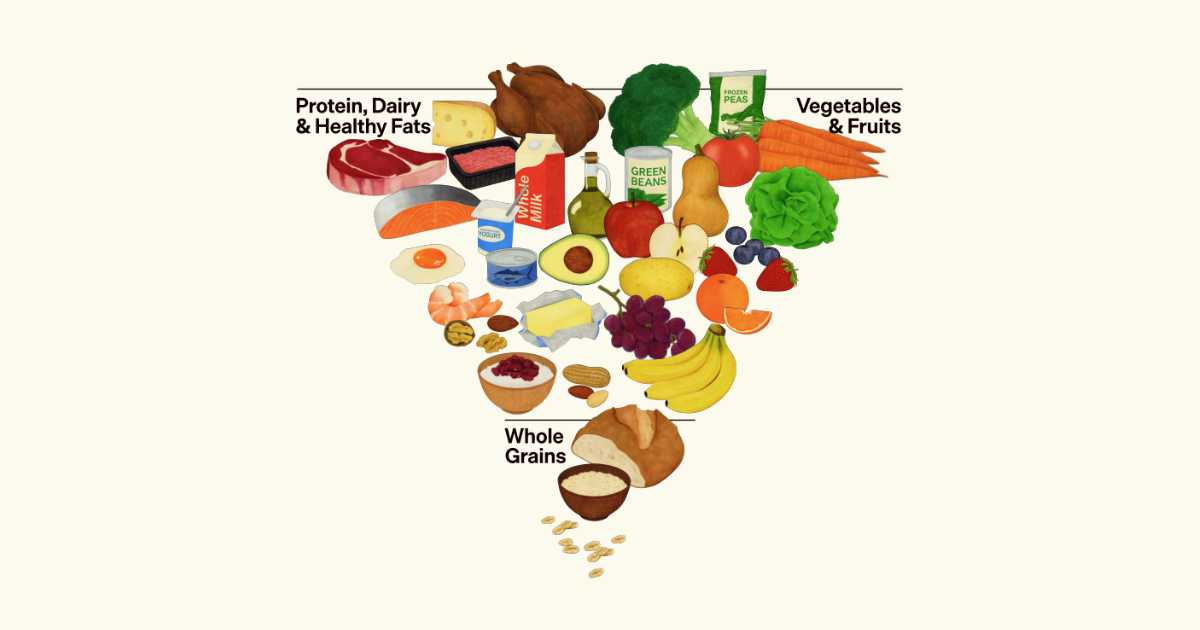
The U.S. Department of Agriculture has released new dietary guidelines aimed at promoting public health. These guidelines seek to clarify nutritional needs and encourage healthy eating habits, particularly for families teaching their children about nutrition.
Read More
The updated food pyramid replaces the 2011 MyPlate recommendations. While MyPlate effectively depicted healthy portion sizes, the new pyramid emphasizes whole, nutrient-dense foods as central to diets. Courtney Aken, a nutrition therapist at Nebraska Medicine, indicates that while the pyramid serves as the main visual guide, MyPlate remains a valuable tool for meal planning.
The new structure of the pyramid prioritizes different food groups by placing animal food sources at the top. Despite this shift, the guidelines still recommend focusing on healthy fats and limiting saturated fat intake to less than 10% of total calories. Lean meats, low-fat dairy, and fish are suggested as lower-saturated fat options.
Interestingly, full-fat dairy is gaining attention, though it poses a contradiction to the saturated fat guidelines. While ongoing research continues, Aken notes that full-fat dairy may have unique benefits and is recommended in certain diet plans. Individuals should consult a registered dietitian for personalized advice.
Alcohol guidelines have also changed; previous specific limits have been replaced with a general recommendation to limit alcohol consumption. Aken points out that reducing or avoiding alcohol can mitigate risks of chronic diseases and malnutrition.
Protein recommendations have been increased, rising from 0.8 grams to at least 1.2 grams per kilogram of body weight, adjusting for individual needs. Aken emphasizes the importance of balancing protein intake with fiber consumption.
Although fiber was less emphasized in the latest guidelines, it remains essential. Aken stresses the risks associated with insufficient fiber intake, advocating for daily consumption of 25 to 30 grams—or more for enhanced health benefits.
While certain recommendations continue to focus on preventing chronic diseases, such as consuming minimally processed foods and limiting added sugars and sodium, the guidelines serve as a general framework intended for healthy individuals. Implementing these guidelines can be challenging, and Aken encourages those needing assistance to reach out to a registered dietitian for support in maintaining a balanced diet.
The emphasis on nutrition plays a critical role in overall health. Individuals can access assistance through primary care providers who collaborate with licensed nutrition therapists to help meet dietary goals.