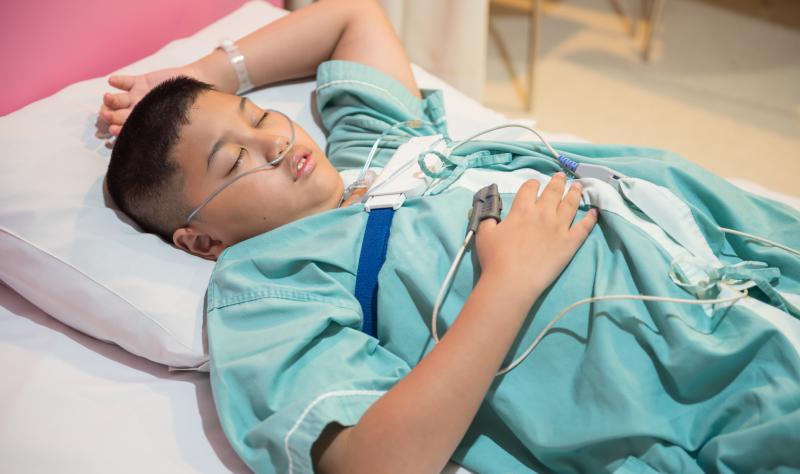
Children and adolescents with obstructive sleep apnea (OSA) are twice as likely to be diagnosed with influenza or COVID-19 compared to those without the condition, according to a study published in the Journal of Clinical Sleep Medicine. The research, conducted by a team from The Hebrew University in Jerusalem, analyzed data from 539,127 children aged 2 to 18 years with OSA, comparing it with an equal number of children without the condition over a five-year follow-up period.
Read More
Among children with OSA, 5.1% were diagnosed with influenza, compared to 2.8% in the non-OSA group, resulting in a risk ratio of 1.80. For COVID-19, the rates were 2.5% in the OSA group and 1% in the control group, yielding a risk ratio of 2.50. Additionally, OSA was associated with a significantly higher risk of severe infections, with children suffering from OSA being more than 2.5 times more likely to develop influenza-related pneumonia (risk ratio of 2.69) and having a dramatically increased risk of COVID pneumonia (risk ratio of 25.96).
OSA, which causes breathing interruptions during sleep, affects an estimated 1% to 4% of otherwise healthy children and is linked to various health issues, including impaired growth, behavioral and cognitive challenges, as well as risks for heart-related conditions and metabolic disorders. Researchers suggest that chronic upper-airway inflammation and immune changes in children with OSA may disrupt antiviral defenses. Lead author Alex Gileles-Hillel, MD, remarked that the immune system dysregulation in pediatric OSA could explain both the increased vulnerability to viral infections and more severe health outcomes.
The study also noted that adenotonsillectomy, a common treatment for OSA, did not significantly reduce infection risk. The increase in flu risk was 4.9% for children who did not have surgery, compared to 5.6% for those who did. Similarly, COVID-19 risk was marginally higher at 2.5% in untreated children versus 2.6% in those who underwent surgery. The research team speculated that immune changes related to OSA might persist post-treatment and continue to impact infection response.
The authors stress the importance of vaccinating children diagnosed with OSA against common viruses. Coauthor Joel Reiter, MD, highlighted the need for prioritizing these children for annual vaccinations due to their higher susceptibility to complications from seasonal viruses. Gileles-Hillel supported this view, suggesting that OSA could be seen as a marker for increased risk of respiratory infections and severe disease, which may help address vaccine hesitancy.