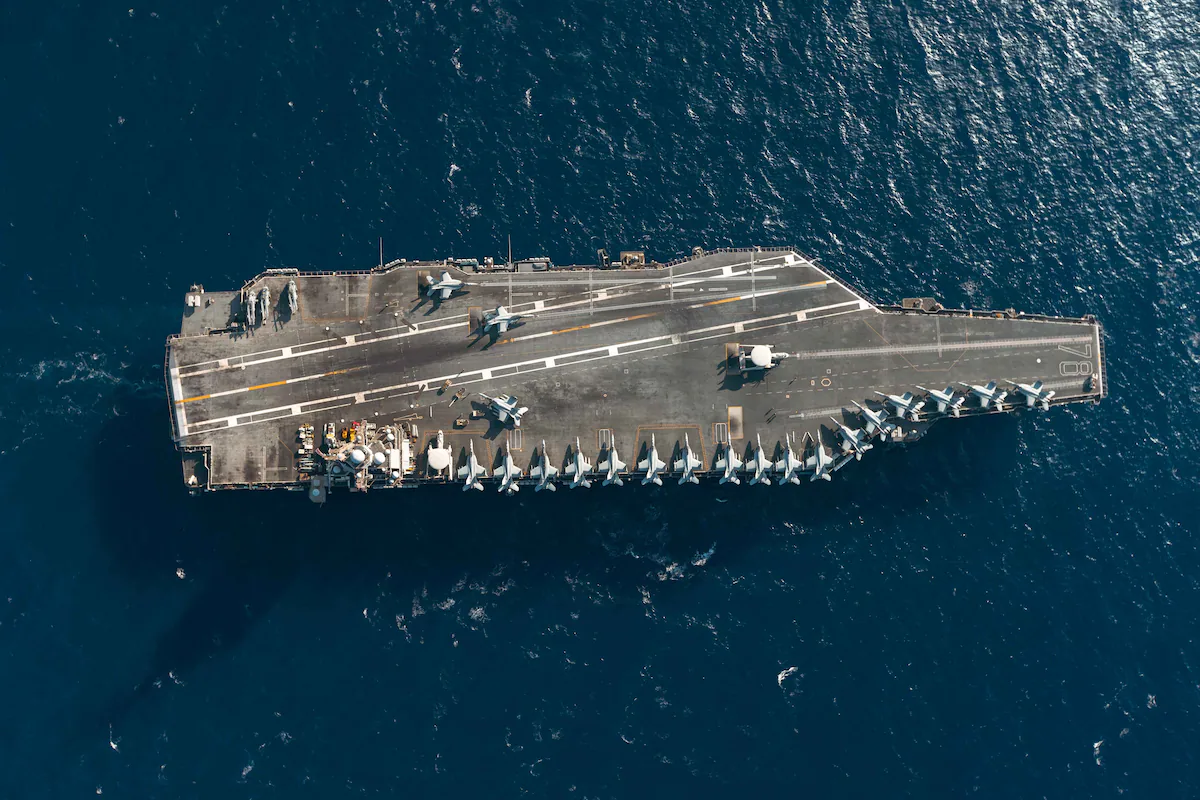
Current and former military personnel report that the U.S. Navy's mental health system aboard aircraft carriers is struggling to cope with the demands of extended combat deployments. Sailors and Navy mental health professionals shared with Military Times that they face long wait times for appointments, overwhelming caseloads for therapists, and a treatment framework ill-equipped for the mental challenges posed by prolonged military operations.
Read More
Mental health providers on ships are trained to offer consistent care, but this frequently clashes with the urgent needs of sailors requiring immediate assistance. One Navy mental health professional noted that the operational demands necessitate quick crisis interventions and longer sessions, a challenge aboard ships where resources are limited. Some personnel spoke anonymously, fearing potential repercussions from the military.
Service members often wait weeks for an appointment, which is problematic in at-sea environments that require rapid responses. The Navy sends a small number of mental health staff to support thousands of sailors on board, exacerbating wait times, therapist burnout, and care quality. The administrative workload for providers contributes to disengagement, impacting staff retention.
In August, reports surfaced of two sailors attempting to jump overboard from the USS Abraham Lincoln during its ninth month at sea. Family members raised concerns during a town hall meeting in San Diego about food shortages and diminishing morale affecting mental health. The Navy confirmed the presence of five chaplains, a clinical psychologist, a clinical social worker, three behavioral health technicians, and a prevention coordination counselor on the ship at that time.
Despite reassurances from navy officials that additional mental health professionals would be sent, a sailor onboard the Lincoln revealed that an embedded resiliency counselor left for personal reasons without being replaced during the deployment, which reached port in Thailand on September 2, 2026.
Deployed Resiliency Counselors (DRCs) are licensed mental health clinicians intended to support sailors during deployments. Following the departure of the Lincoln's DRC, 5,000 sailors were left with only two licensed mental health clinicians on board. The Navy maintains that this staffing level meets evaluated needs, but sources report that therapists often exceed their capacity, with some working 40 to 90 hours a week.
Access to mental health care is difficult, with appointments frequently taking weeks or even months. Sailors described a need to express suicidal thoughts just to receive timely access to care. One sailor remarked on the “abysmal” state of mental health services, recounting an experience of waiting months for an appointment.
Former sailor Sam Rodriguez noted that a significant number of service members seeking care at Naval Medical Center Portsmouth were there for mental health reasons. Wait times for appointments on shore were also lengthy, averaging 54 days.
Rodriguez pointed out that the military’s focus tends to be on readiness rather than individual care, stating that the emphasis is on getting personnel back to duty rather than ensuring their overall well-being.
Onboard aircraft carriers, various mental health roles provide differing levels of care. While clinical social workers offer ongoing support, they lack authority for comprehensive assessments. Navy psychologists focus on treatment rather than in-depth mental health issues. DRCs are independent contractors that provide therapy but do not address suicidal ideation.
Bureaucratic challenges further complicate mental health provision; for instance, DRCs are burdened with extensive paperwork that becomes difficult to manage at sea due to intermittent internet access. Mental health professionals expressed dissatisfaction with the system, stating that it doesn't adequately support either the providers or the sailors in need during extended deployments.
Overall, mental health professionals argue that the current framework inadequately addresses the needs of service members, particularly under the pressures of prolonged military operations.