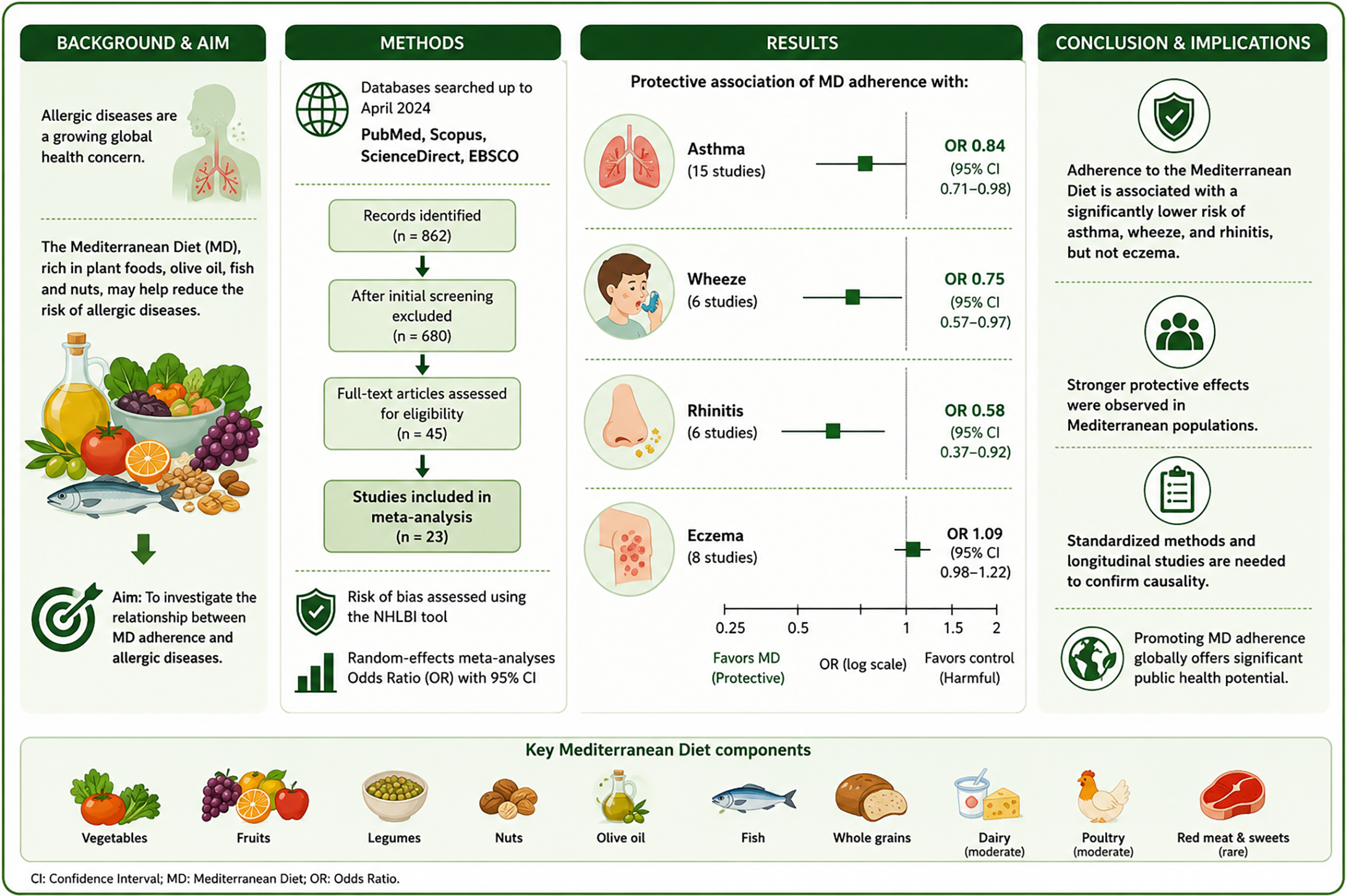
A systematic review and meta-analysis published in the Journal of Nutritional Science examined the relationship between adherence to the Mediterranean diet (MD) and the prevalence or severity of respiratory allergic conditions. The review analyzed data from electronic databases, including PubMed, Scopus, Science Direct, and EBSCO, for studies published until April 2024. The focus was on studies reporting odds ratios (OR) with 95% confidence intervals (CI) for conditions such as asthma, wheezing, rhinitis, and eczema, while the evaluation of food allergies was more qualitative due to limited data.
Read More
Twenty-three studies involving 111,583 participants met the criteria for inclusion. The analysis revealed a significant protective effect of the MD against asthma (n = 11, log OR: -0.18; 95% CI: -0.34, -0.02), wheezing (n = 6, log OR: -0.29; 95% CI: -0.56, -0.03), and rhinitis (log OR: -0.54; 95% CI: -1.00, -0.08). However, no significant correlation was found for eczema (pooled log OR: 0.09; 95% CI: -0.02, 0.20).
The study assessed potential bias using a tool from the National Heart, Lung, and Blood Institute and utilized random-effects models to accommodate the variability in study outcomes. Findings suggested that adherence to the MD may be associated with lower odds of developing asthma, wheezing, and rhinitis, particularly in populations adhering to MD principles.
Further longitudinal studies with standardized methodologies are encouraged to verify these findings and justify public health strategies promoting MD for allergy prevention. The systematic review has been registered under PROSPERO-CRD42023408724.
Allergies are increasingly prevalent, affecting over 20% of the global population and resulting in significant economic and social impacts. The study highlights potential dietary interventions that could alleviate the burden of allergic diseases by adopting a Mediterranean dietary pattern rich in fruits, vegetables, and healthy fats. The authors emphasize that while MD shows promise, further research is needed to explore its benefits and adaptability in various socio-economic and cultural contexts.