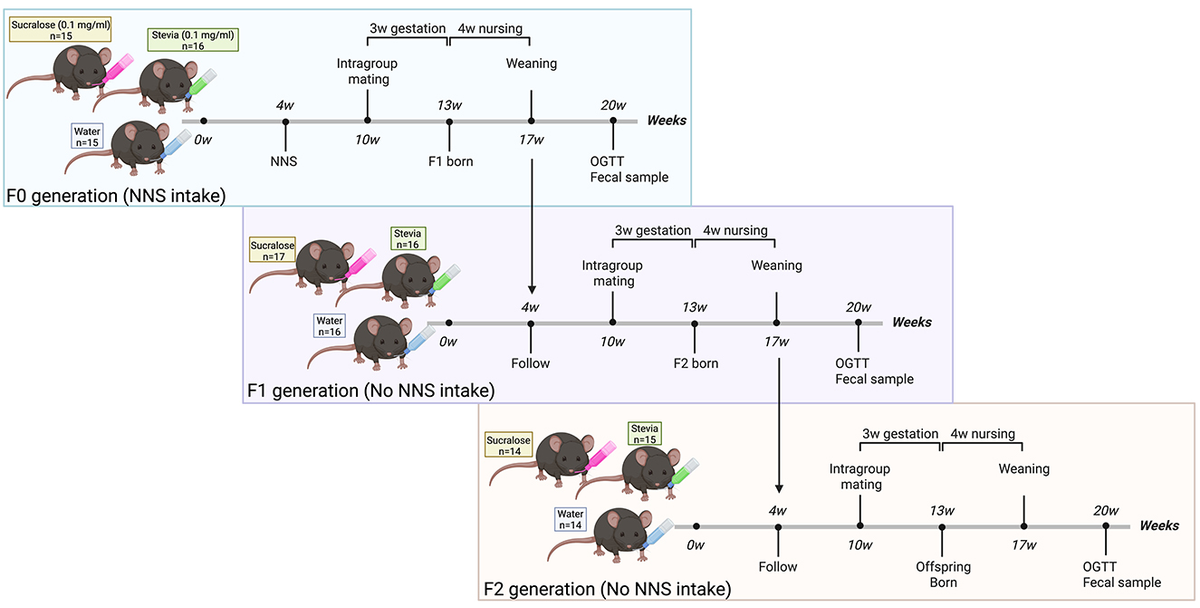
A recent study investigates the effects of parental consumption of non-nutritive sweeteners (NNS), specifically sucralose and stevia, on gut microbiota and metabolic health across generations in mice. While the role of NNS in metabolic health remains controversial, this research highlights potential inherited changes in metabolic parameters and gut microbiota composition.
Read More
Forty-seven male and female C57BL/6J mice were assigned to consume either water alone or water supplemented with 0.1 mg/ml of sucralose or stevia for 16 weeks. The offspring from these parents (F1 and F2 generations) were not directly exposed to NNS. The analysis focused on glucose tolerance, gene expression related to inflammation and metabolism, and the composition of fecal microbiota.
Results indicated that while no significant changes in glucose tolerance were observed in the parental generation (F0), males of the F1 generation consuming sucralose demonstrated altered glycemic responses. Notably, gene expression of inflammatory markers, notably Tlr4 and Tnf, was significantly elevated in F0 and F1 mice consuming sucralose, with a decrease in liver expression of Srebp1 also noted. These expressions, however, normalized in the F2 generation.
Fecal microbiota analysis revealed increased microbial diversity in the sucralose group, with distinct patterns in both F0 and F1 generations. Several genera associated with health were identified, while others linked to inflammatory states were also observed.
Fecal short-chain fatty acids (SCFAs), critical for gut health, were found to be reduced across generations in both NNS groups, with stevia exhibiting a lesser impact compared to sucralose. Throughout the study, alterations in SCFA levels persisted into the second generation, suggesting long-term consequences of NNS exposure on gut health.
This research underscores the significant impact parental consumption of NNS can have on metabolic functions and gut health across multiple generations, raising concerns regarding their long-term implications for offspring health.