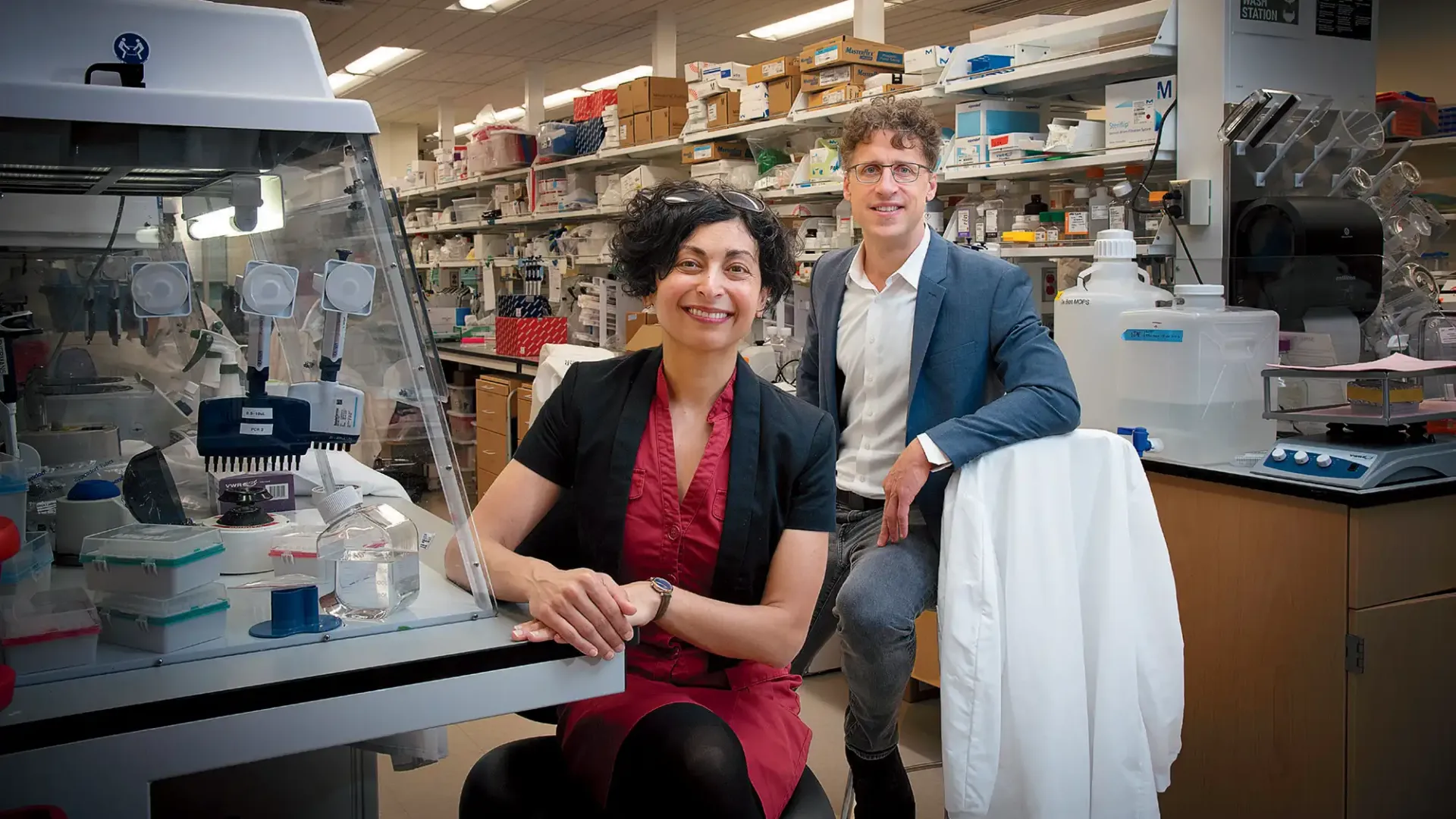
Sonia Vallabh, J.D. ’11, Ph.D. ’19, and Eric Minikel, Ph.D. ’19, have dedicated over a decade to finding a cure for prion diseases, a group of fatal neurodegenerative disorders that currently only have palliative care options. This spring, they achieved a significant milestone by enrolling patients in a clinical trial for a novel drug designed to silence the gene responsible for these diseases.
Read More
Their journey is deeply personal; in 2012, Vallabh discovered she had inherited the genetic mutation for fatal familial insomnia, a subtype of prion disease. This came shortly after her mother succumbed to the same illness, which manifested with symptoms like weight loss and memory issues and resulted in a swift decline in her health. Vallabh, having just graduated from Harvard Law School and worked in consulting, chose to shift her career towards scientific research to find a cure before it was too late for her.
Minikel, who has a background in urban planning, joined Vallabh in her quest. After earning their PhDs from Harvard in 2019, they established a laboratory at the Broad Institute, where they co-direct the Prion Therapeutic Science program following years of research on potential therapies.
The clinical trial features a new drug candidate consisting of small interfering RNA (siRNA), developed from a molecular structure by UMass Chan Medical School's Anastasia Khvorova. This siRNA targets and degrades the RNA that encodes the misfolded prion protein, which accumulates and causes brain damage.
Minikel noted that while targeting the misfolded protein is challenging, addressing the RNA is a more effective approach. Both researchers believe that finding a therapy for one subtype could potentially aid all forms of prion disease since they share the same underlying genetic cause.
The most prevalent human prion disorder, Creutzfeldt-Jakob disease, affects about 500 people in the U.S. annually and shares symptoms with fatal familial insomnia, including dementia and motor control issues. Vallabh emphasized the importance of early diagnosis and genetic testing, particularly as many patients develop the disease spontaneously and may not recognize their condition until symptoms manifest.
Minikel stated that the therapies they are developing aim to lower prion protein levels in the brain, potentially preventing or delaying the onset of disease for those at risk and slowing progression for those already symptomatic. Their trial, funded by NeuroNEXT—an initiative of the National Institutes of Health—focuses on symptomatic patients.
Vallabh highlighted their commitment to advancing effective treatments and noted that the evolving technological landscape offers new possibilities. Both researchers are sharing much of their data publicly to facilitate collaboration and accelerate progress in the field. Vallabh described their work as "building a runway" for testing drug technologies efficiently to derive clear answers in the fight against prion diseases.