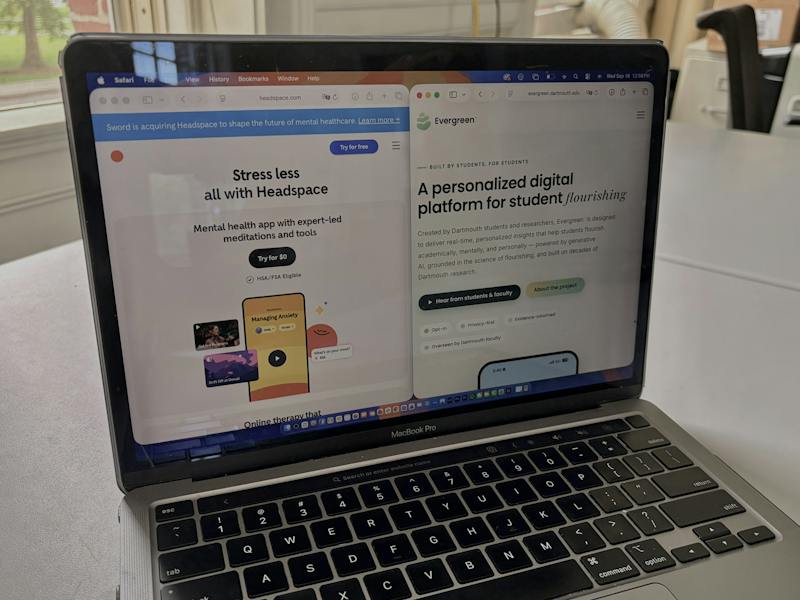
On September 9, Dartmouth students were informed via email that the College had terminated its partnership with Headspace, a mental health app providing guided meditation, sleep aids, and breathwork, thus ending their institutional subscriptions. The decision to end the subscription, which began in 2022, reflects the College's intention to prioritize its own mental health initiatives, including the Mindful Dartmouth project and the Commitment to Care plan, as stated by Caitlin Barthelmes, executive director of the Student Wellness Center.
Read More
Mindful Dartmouth aims to foster a campus culture focused on “mindful resilience, authentic connection, and compassionate leadership,” offering various mindfulness experiences. The Commitment to Care plan, launched in 2023 by President Sian Leah Beilock and former Provost David Kotz, features five strategic steps to enhance overall wellness within the College. This plan focuses on improving student well-being, building an inclusive community, and supporting those facing mental health challenges. Mark Reed, the chief health and wellness officer, reported that most of the plan's 73 action items have been completed over the last three years.
Barthelmes noted that a decrease in Headspace usage among students and an increase in the College's own mental health offerings influenced the decision not to renew the contract, which was up this year. She remarked on the initial goal for widespread engagement with Headspace, which ultimately did not materialize as expected. Despite some decline in usage, she clarified that there was no significant drop-off in interactions with the app.
Julia Zichy, a former health and wellness chair in the Dartmouth Student Government, expressed disappointment over the decision, arguing that access to in-person therapy and meditation is not universally available. She criticized the move, especially considering the College's stated Commitment to Care strategy.
Zichy also expressed concerns regarding the introduction of artificial intelligence in mental health services through Evergreen, a student-created AI wellness platform. She emphasized the importance of peer-to-peer interactions for effective mental health support.
Reed reiterated that student wellness is a high priority for Beilock, and noted growth in wellness initiatives. He explained that while Headspace remains a valuable resource, the College has developed various alternative wellness programs in response to changing student preferences.
Evergreen, while distinct from the Student Wellness Center's offerings, could serve as a supplemental resource for students. Reed clarified that it is not meant to replace traditional therapy options. The College intends to continue providing online resources for students interested in app-based support, and Barthelmes highlighted the availability of additional materials on the Student Wellness Center's website.
Though the partnership with Headspace has concluded, students can access an extra year on the platform by contacting the Student Wellness Center for a code. Headspace and Evergreen staff have not responded to requests for comment as of the time of publication.