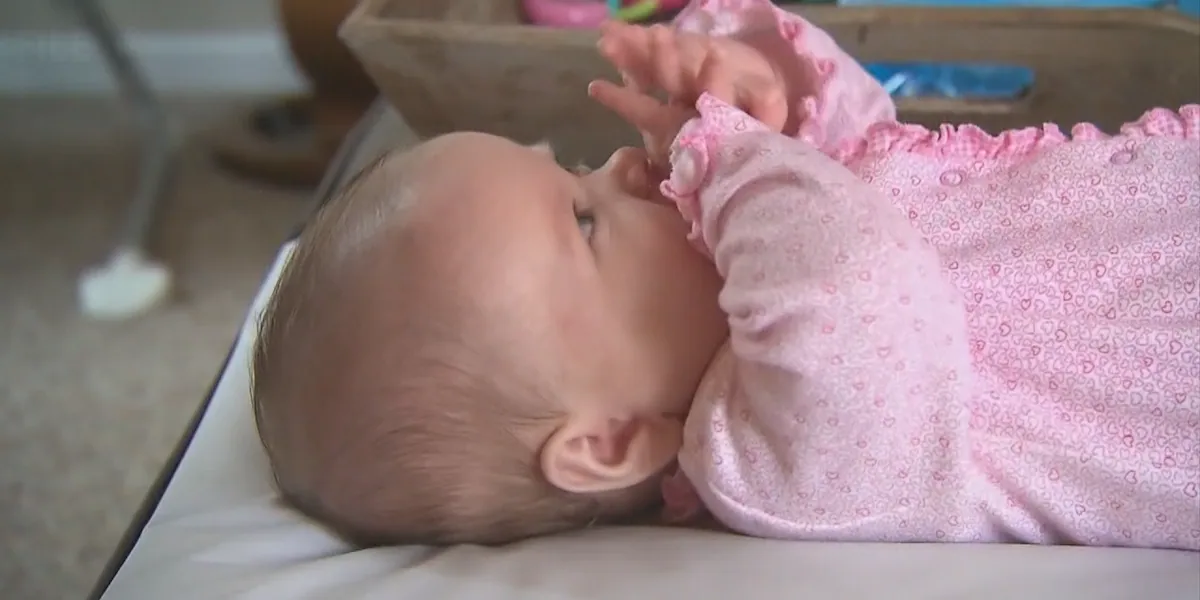
HARRISONBURG, Va. (WHSV) - New research from Jennie Rosier, an associate professor at James Madison University, challenges the commonly accepted practice of allowing infants to “cry it out” for developing healthy sleep habits. In her book, “Dispelling Cry-It-Out Sleep Training Myths and What to Do Instead,” Rosier and a team of scholars assert that waking during the night is a normal and expected behavior in infants, not a behavioral issue.
Read More
Drawing from her experiences as a mother and discussions with fellow parents, Rosier became interested in the cry-it-out method after being advised to use it by respected peers. She recounted feeling regret after trying it once, which led her to explore the rationale behind its popularity.
In her research, Rosier contends that societal expectations for infants to sleep through the night align more with adult convenience than biological norms. She argues, “We don’t expect infants to behave like adults in any other way except sleeping,” emphasizing the need for empathy toward natural infant behavior.
Rosier suggests that being present to help children fall asleep is more beneficial than relying on self-soothing, which she describes as a myth. According to her findings, infants cannot learn to self-soothe independently. Instead, co-regulation with a supportive adult is crucial for developing sleep skills.
She explains, “The only way any human can learn to self-soothe is through co-regulation with a safe adult.” Rosier cautions that abandoning infants to manage their emotions can hinder their emotional development. She emphasizes the long timeline required for mastering self-soothing, noting that it often doesn't fully develop until a person's mid-20s.
Rosier encourages parents to assist their children in settling down without leaving them alone, acknowledging that this process can be time-consuming and frustrating. Ultimately, she believes it is the parent's responsibility to guide their children in learning to fall asleep comfortably.