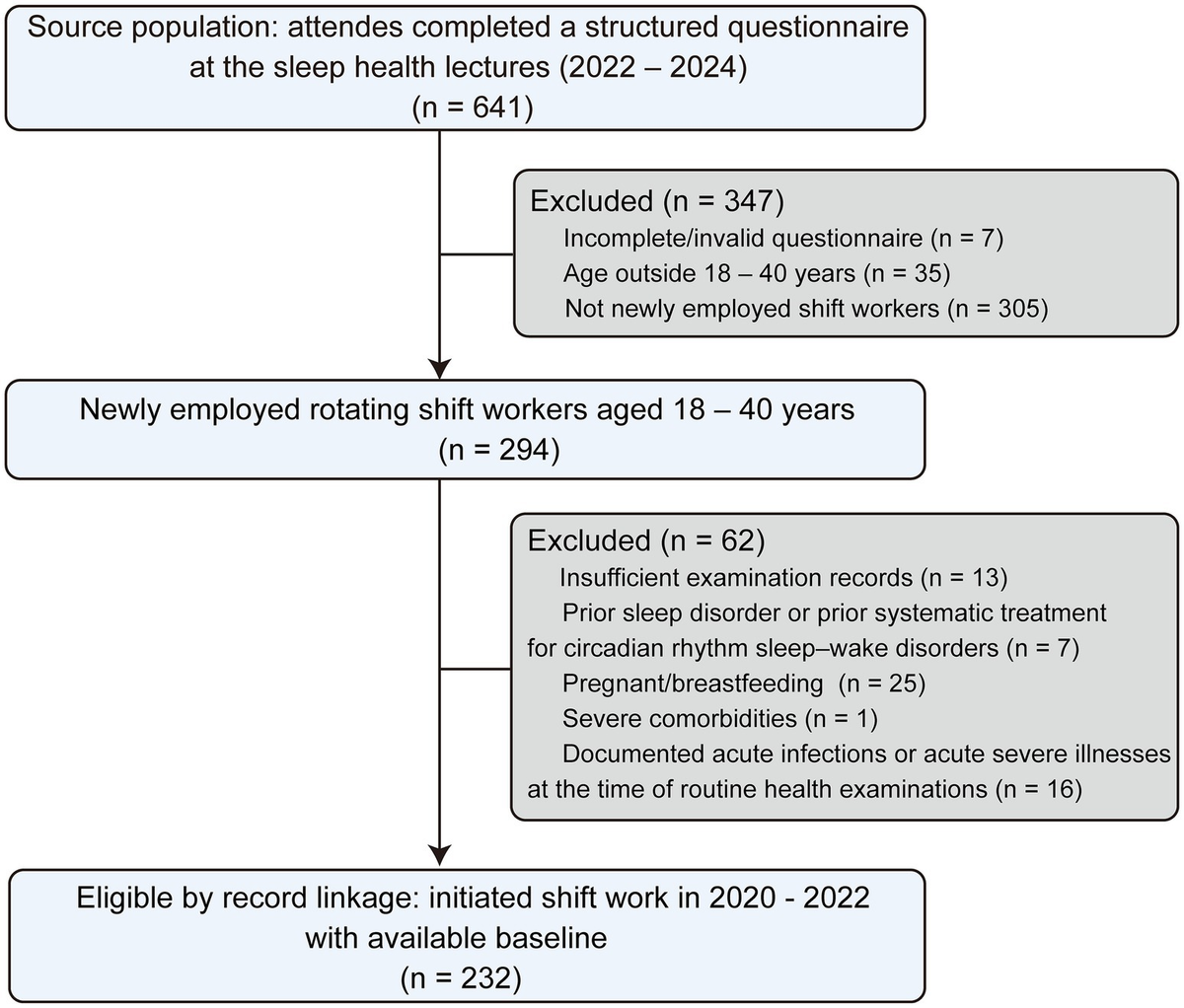
A recent cross-sectional study examined the relationship between shift work sleep disorder (SWSD) and inflammatory markers in rotating shift workers over a three-year period. The study found that those suffering from SWSD experienced significantly higher increases in neutrophil counts in their second year of work, while noteworthy changes in monocyte levels were observed by the third year. Both male and female participants with SWSD demonstrated elevated composite inflammatory indices, indicating a prevalent trend of increased inflammation associated with their sleep disorders.
Read More
The study involved a total of 232 rotating shift workers, aged 18-40, who completed at least three consecutive years of shift work. Researchers employed linear mixed-effects models to analyze blood cell counts (BCCs) and inflammatory indices, including the neutrophil-to-lymphocyte ratio and systemic immune-inflammation index. Results showed a significant and consistent rise in these indices within the SWSD group, with all p-values less than 0.05 after adjusting for false discovery rates.
The study established that 20-30% of shift workers experience sleep-related issues, which can exacerbate chronic low-grade inflammation and subsequently contribute to various health risks, including metabolic syndrome and cardiovascular diseases. The findings underscore the potential for using inflammatory indices as indicators of health risks in shift workers, suggesting they should be monitored as part of preventive health strategies in this population. Additionally, the research advocates for future interventions targeting sleep disorders among shift workers to help mitigate these health risks.
This work contributes to ongoing research about the long-term impacts of shift work on health and provides a data-driven approach to understanding the dynamics of inflammation in the context of sleep disorders.