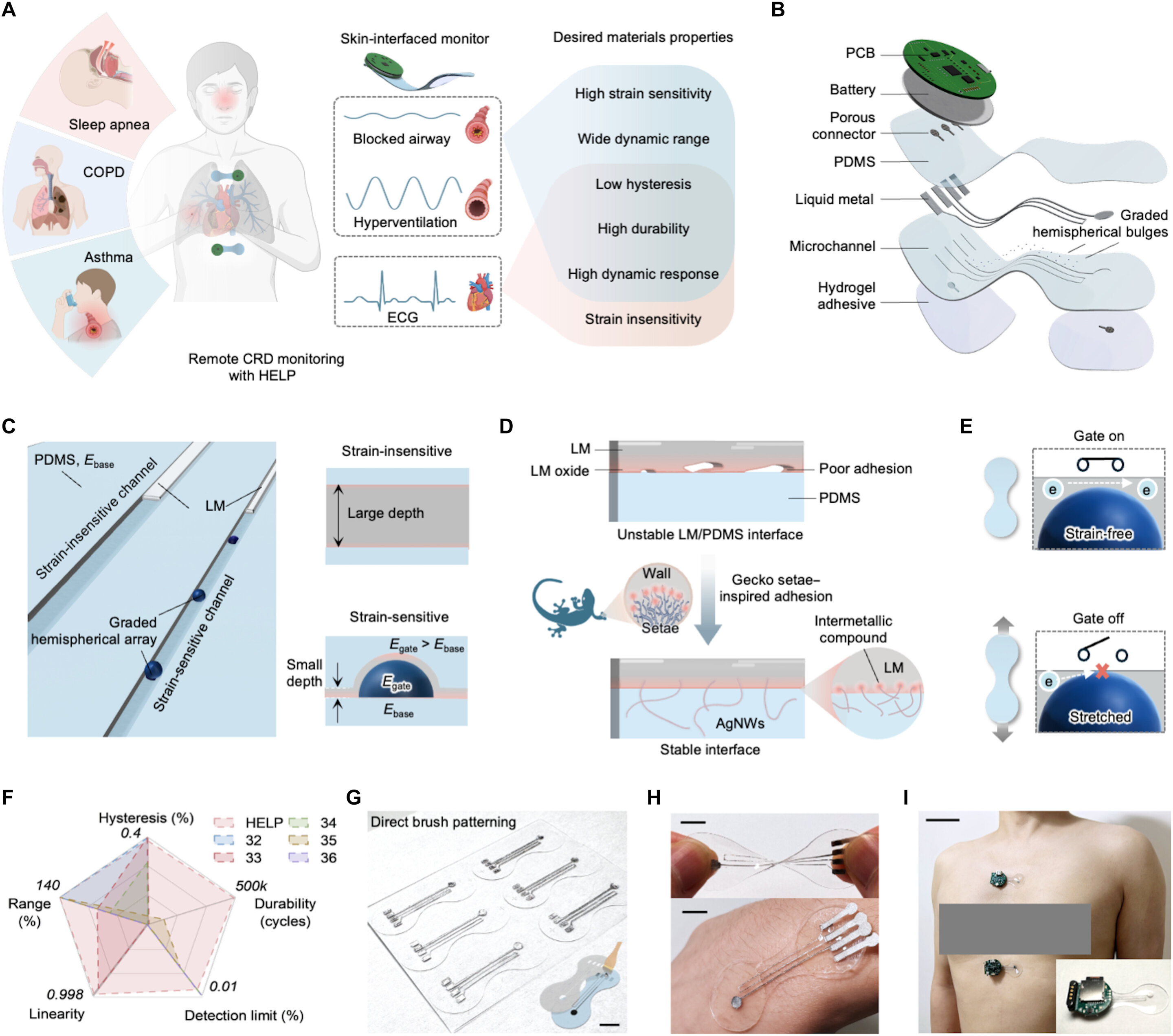
A team of researchers led by Hnin Yin Yin Nyein, a professor in the Department of Chemical and Biological Engineering at The Hong Kong University of Science and Technology (HKUST), has introduced a device named "HELP" (heteromodal epidermal liquid-metal patch). This skin-like patch utilizes liquid-metal technology to monitor breathing and heart activity simultaneously. The development represents a significant advancement in continuous health monitoring for patients with chronic respiratory and heart diseases.
Read More
The findings were published in the journal Science Advances and describe the patch as a noninvasive solution that could transform how chronic respiratory diseases are monitored at home. Currently, conditions such as asthma, chronic obstructive pulmonary disease (COPD), and obstructive sleep apnea (OSA) often require cumbersome and expensive tests in clinical settings. These tests, including spirometry for lung function and polysomnography for sleep disorders, are not practical for regular home use.
Wearable health sensors offer a potential alternative for continuous monitoring. However, engineers have faced challenges in ensuring these sensors are both sensitive enough to detect small body movements and stable during prolonged wear. Liquid metals have emerged as promising materials due to their flexibility and low mechanical fatigue but previously had limitations in adhering to elastic substrates, which could affect signal reliability.
The HKUST team addressed these issues by developing a bioinspired anchoring strategy. They created a microscopic network of silver nanowires on a flexible silicone base, mimicking gecko feet's interlocking structures. This design effectively keeps the liquid metal in place, maintaining consistent electrical performance even after extensive stretching.
Furthermore, the researchers designed an "analog constriction gate" architecture that allows the patch to monitor varying breath sizes by constricting the liquid metal path during breathing. This enables the device to accurately capture both shallow and deep breaths without distortion.
The HELP patch features a dual-channel design. One channel is engineered for clear electrocardiogram (ECG) signals, while the other monitors chest and abdominal movement. Notably, the patch is cost-effective and can be mass-produced using a simple stencil-brushing method for liquid metal application.
Initial pilot studies demonstrated the patch's effectiveness in a clinical setting, showing it could reliably detect sleep apnea events comparable to traditional hospital monitoring methods. Patients were able to apply the patch themselves in under a minute, avoiding the discomfort of conventional sleep studies that often involve numerous wires. Additionally, the patch effectively monitored asthma patients in real-time, indicating rapid improvements in their breathing post-treatment.
The continuous monitoring capability of the HELP patch can identify crucial physiological changes that routine clinic visits might overlook. Nyein emphasized the importance of these abilities, particularly for COPD patients, where daytime assessments may not reveal underlying issues that manifest during sleep.