Obstructive Sleep Apnea (OSA) is a prevalent sleep disorder marked by the intermittent blockage of the upper airway during sleep, leading to apnea and hypopnea episodes. This condition can cause intermittent hypoxia and chronic inflammation, potentially fostering harmful changes in lung tissue and heightening the risk of developing pulmonary nodules. This article offers a systematic review of the epidemiological data, underlying mechanisms, diagnostic difficulties, and treatment implications pertaining to the connection between OSA and pulmonary nodules.
Read More
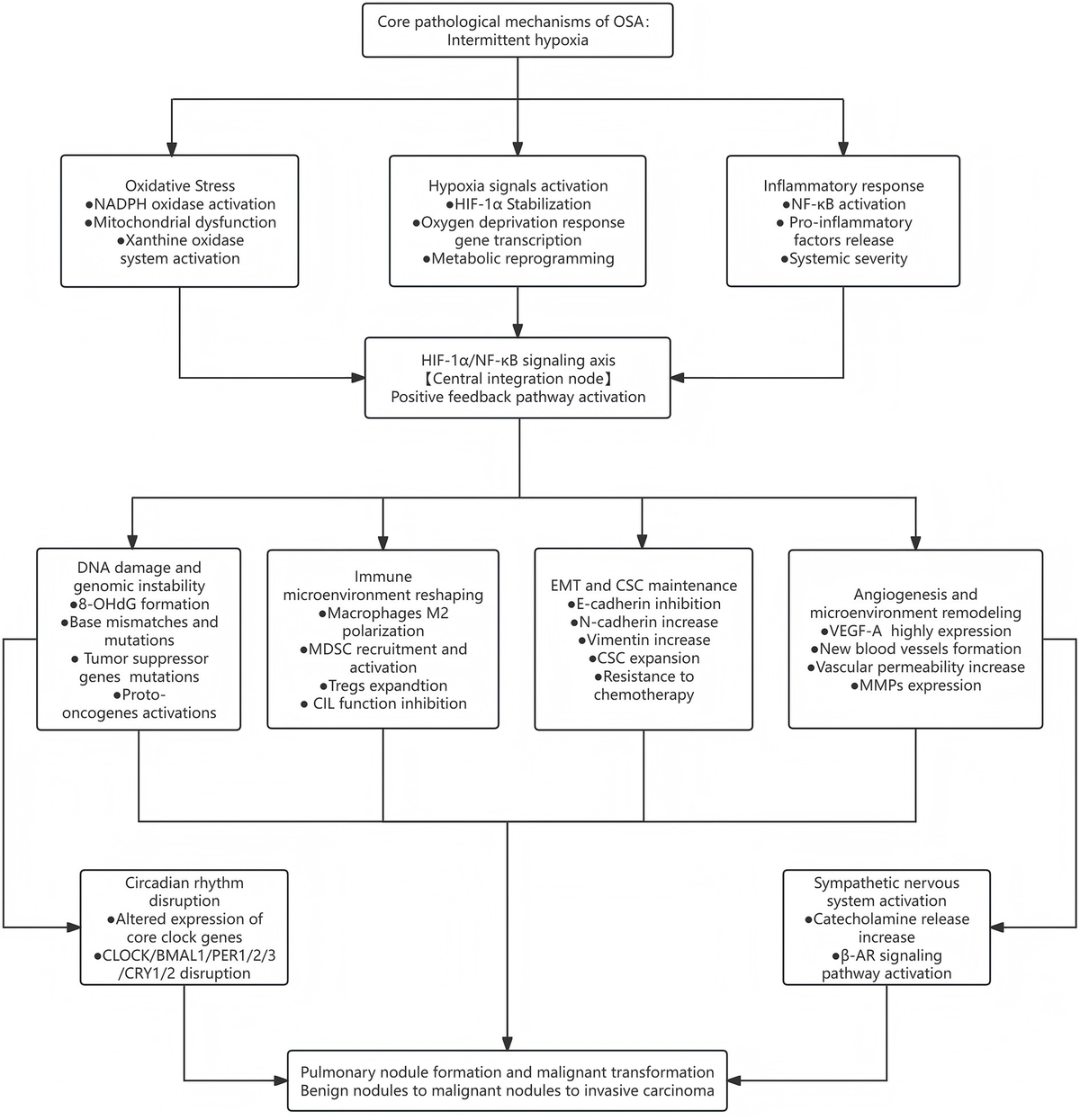
Observational studies reveal a significant increase in the incidence of pulmonary nodules among patients with OSA, and findings indicate a positive correlation between the severity of OSA and the risk of malignant nodules. The activation of oxidative stress and inflammatory pathways, particularly through the HIF-1α/NF-κB signaling pathway, is posited as a fundamental mechanism linking OSA to the development of pulmonary nodules. Continuous Positive Airway Pressure (CPAP) treatment may decrease inflammatory markers and could potentially delay the malignancy of pulmonary nodules; however, existing studies largely depend on observational data with limited control for confounding variables, necessitating further validation of causal relationships.
Research conducted has categorized pulmonary nodules—shadows less than 3 cm on imaging—into several types including tuberculous, granulomatous, and neoplastic nodules. Their characteristics, such as density and edge features, influence their classification and assessment. Risk factors for pulmonary nodules include smoking, air pollution, and certain infections. Notably, there is growing evidence that OSA may significantly contribute to various lung diseases, emphasizing the need for ongoing investigation into its role in pulmonary nodule formation.
Special groups such as patients with Overlap Syndrome, where OSA coexists with chronic obstructive pulmonary disease (COPD), exhibit heightened risks for pulmonary complications due to increased nighttime hypoxia. This necessitates greater clinical attention for this patient population.
On the molecular level, mechanisms such as oxidative stress, systemic inflammation, and immune alterations induced by OSA contribute to tumorigenesis. Intermittent hypoxia promotes oxidative stress and recruitment of immunosuppressive immune cells, such as tumor-associated macrophages and myeloid-derived suppressor cells (MDSCs), ultimately fostering an environment conducive to tumor progression. Disruption of circadian rhythms, characteristic of OSA, is also linked to increased genomic instability and potential cancer susceptibility.
Imaging studies show that nodules in OSA patients may present with unique features, complicating evaluations. Elevated tumor markers, such as carcinoembryonic antigen (CEA), in these patients may stem from chronic hypoxia and inflammation, complicating their clinical interpretation.
Therapeutically, CPAP remains the primary treatment for OSA. Evidence suggests that long-term CPAP use may correlate with lower lung cancer incidence in OSA patients. Adherence to CPAP therapy, however, significantly impacts treatment outcomes and further research into optimized interventions is necessary. A multidisciplinary approach is crucial for identifying and managing OSA in patients presenting with pulmonary nodules to enhance overall treatment efficacy and patient quality of life.
Despite indicating a potential relationship between OSA and increased pulmonary nodule risk, current studies suffer from methodological limitations. Causality remains ambiguous due to factors such as smoking, obesity, and other confounding variables often inadequately controlled in observational studies. Future research should aim for higher-quality randomized controlled trials to clarify the relationship between OSA and pulmonary nodules, verify biological mechanisms, and explore the efficacy of multidisciplinary screening approaches. This ongoing exploration is essential for establishing effective clinical preventive strategies.