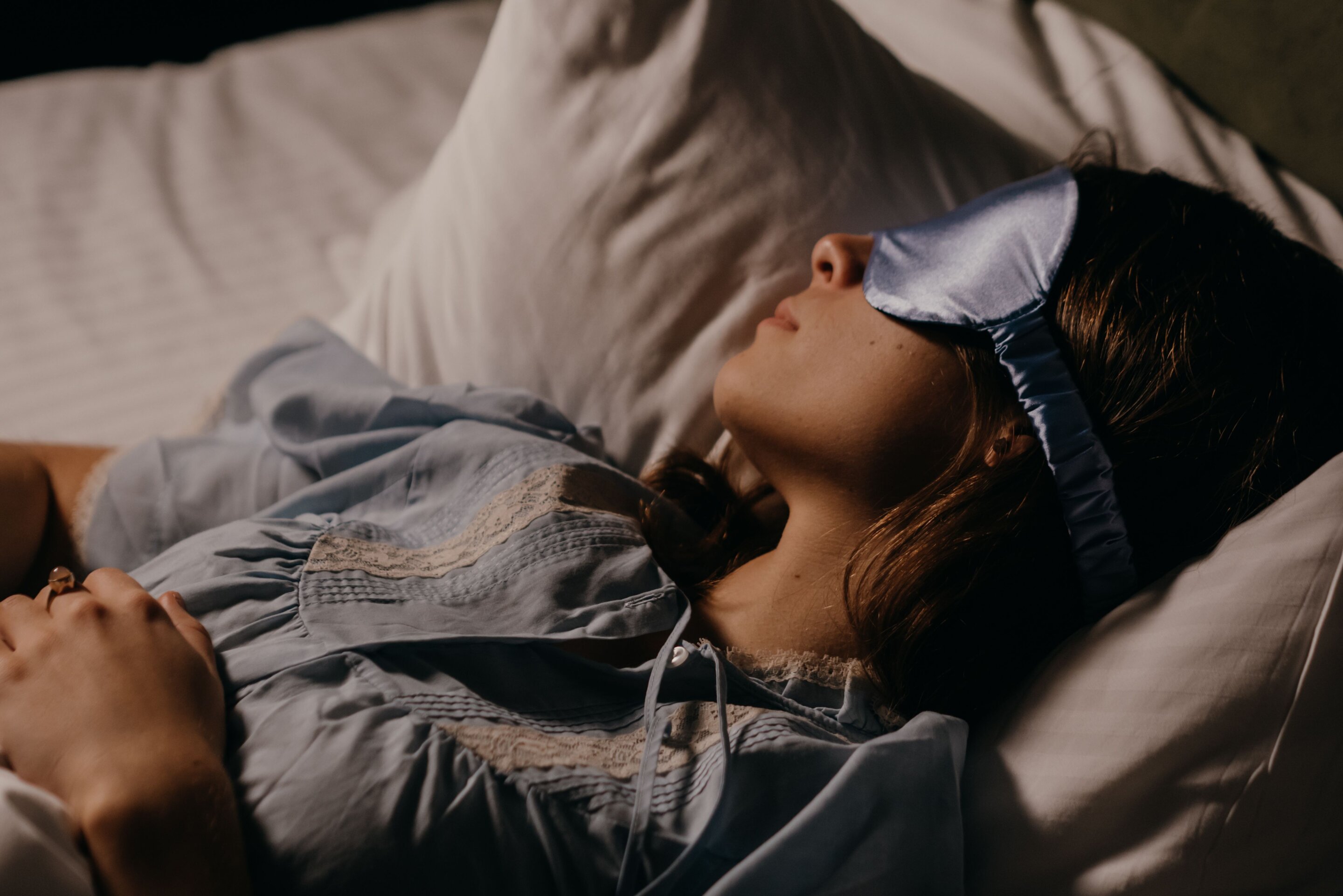
A new wearable device designed for home use can enhance sleep quality by tracking brain activity and applying neurostimulation techniques. Developed by William Coon, a sleep scientist at the Johns Hopkins Applied Physics Laboratory, the patch, which resembles a Band-Aid, aims to foster deep, restorative sleep.
Read More
Coon explains that the device uses real-time data to personalize and optimize sleep, drawing parallels to how large language models assess language. The team first needed to measure brain sleep signals accurately without relying on traditional clinical equipment, which typically involves labor-intensive polysomnography. This method can achieve only about 85% accuracy under its scoring rules, established in the 1950s.
Previous consumer wearables have struggled with balancing comfort and accuracy. Bulky headband EEG devices can track brain activity, but are often uncomfortable for nightly use, while more comfortable options like the Apple Watch don’t measure brain signals at all, relying instead on motion tracking.
To address this, Coon's team trained an AI model on over 11,000 overnight recordings from the National Sleep Research Resource. The resultant model can read brain signals from the forehead patch, accurately identifying sleep stages without needing a technician’s manual intervention.
The patch employs sound and cooling as its primary interventions. It detects natural deep, slow-wave brain activity and uses audio cues to enhance these signals. However, as people age, their natural production of slow waves tends to decline. To counteract this, Coon’s team introduced a second intervention that lowers body temperature, ideally used in conjunction with a cooling mattress system that responds in real time to sleep data rather than preset schedules. This approach optimizes temperature control to promote deeper sleep at the right moment.
Initial pilot data suggest that using sound and cooling together significantly boosts slow-wave sleep compared to using either intervention alone. Coon asserts that it is indeed possible to alter brain operations during sleep positively.
Beyond improving sleep quality, the technology may have broader health implications. Deep sleep naturally declines with age, which is associated with increased risks of cognitive decline, such as Alzheimer’s disease. Coon notes that reducing the deposition of misfolded proteins during sleep could have long-term health benefits.
Additionally, the AI models can estimate an individual’s "brain age" based on sleep quality, a measure correlated with health outcomes as effectively as an MRI, despite only using a simple forehead patch. Coon emphasizes the intricate relationship between sleep and overall health, suggesting that understanding sleep patterns offers insights into one’s entire physiological state.
Coon collaborates closely with medical professionals, including Matthew Reid, who studies the connection between sleep and psychedelics, and Michael Smith, who researches pain in relation to psychiatry. In June 2026, the federal Advanced Research Projects Agency for Health initiated a six-year project named REST (Restorative and health-Enhancing Sleep Time), inspired by the same principles as Coon’s lab. This program highlights the significance of quality sleep, as nearly half of Americans report sleep issues, with insomnia affecting an estimated 86 million adults and costing about $400 billion annually in lost productivity and health-related expenses.
Coon’s team has secured support under this initiative to further develop their intervention system, with new prototypes anticipated later this year leading into a comprehensive clinical study. "There’s no more exciting time to be in sleep science than now," he says, highlighting the potential for impactful advancements in sleep technology.