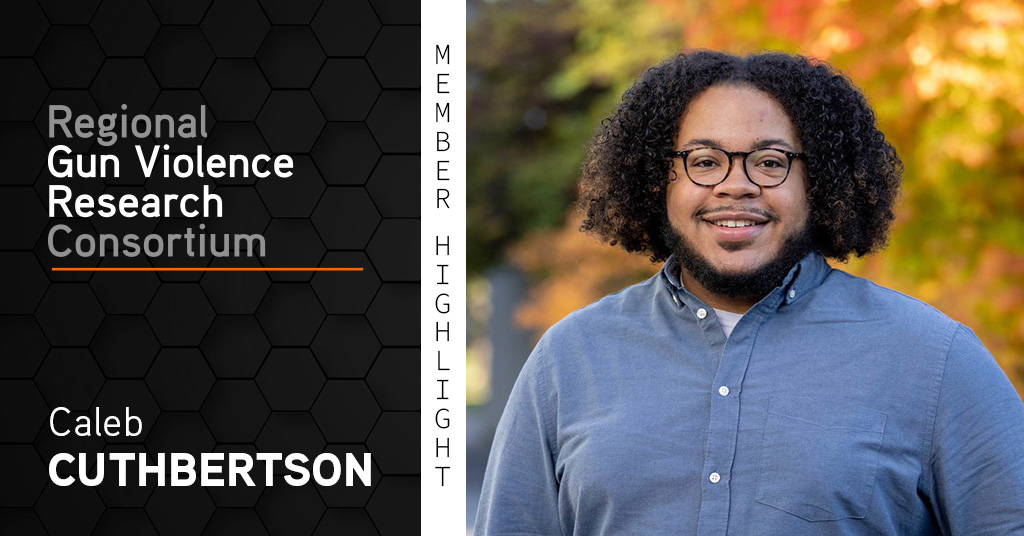
Caleb Cuthbertson has joined the Regional Gun Violence Research Consortium (RGVRC) as a postdoctoral research fellow. The RGVRC explores various aspects of firearm violence, and Cuthbertson's personal experience with gun violence informs his research.
Read More
Cuthbertson's interest in studying gun violence is deeply personal. His cousin survived a shooting in 2016, which profoundly impacted him and shaped his path in the field. During his master's program in rehabilitation mental health counseling at North Carolina Agricultural and Technical State University, he interned at the Addiction Research and Clinical Health (ARCH) Program, where he provided counseling to survivors of traumatic injuries. This experience helped him remember his own family's struggles and motivated his research into gun violence.
Cuthbertson emphasizes that gun violence is fundamentally a family issue. His research addresses the mental health effects of non-fatal gun violence on family systems, an area he notes is underexplored in existing literature. He seeks to highlight the experiences of families navigating mental health challenges after a firearm injury, showcasing their emotional and relational dynamics.
His current research investigates the psychological impact of firearm injuries on survivors and their families, considering their intertwined mental health outcomes. Cuthbertson recently completed a dissertation focusing on the stories of both a gun violence survivor and a supporting family member, examining the relational effects of such trauma. He plans to expand this research to further understand how families collectively deal with recovery from firearm-related trauma.
In his new role, Cuthbertson aims to contribute to ongoing RGVRC projects while advancing his focus on policy influences regarding psychological support for families affected by firearm injuries. He is particularly interested in how hospital violence intervention programs and community organizations meet these families' needs. His foundational research will inform his goal of developing a family-based intervention for firearm injuries.
Cuthbertson hopes to elevate the stories of families impacted by gun violence, arguing that understanding these narratives can enhance the overall view of gun violence's effects. He advocates for a shift from an individual-focused perspective to one that considers the broader familial context, aiming for interventions that support the psychological needs of entire family systems impacted by firearm violence.