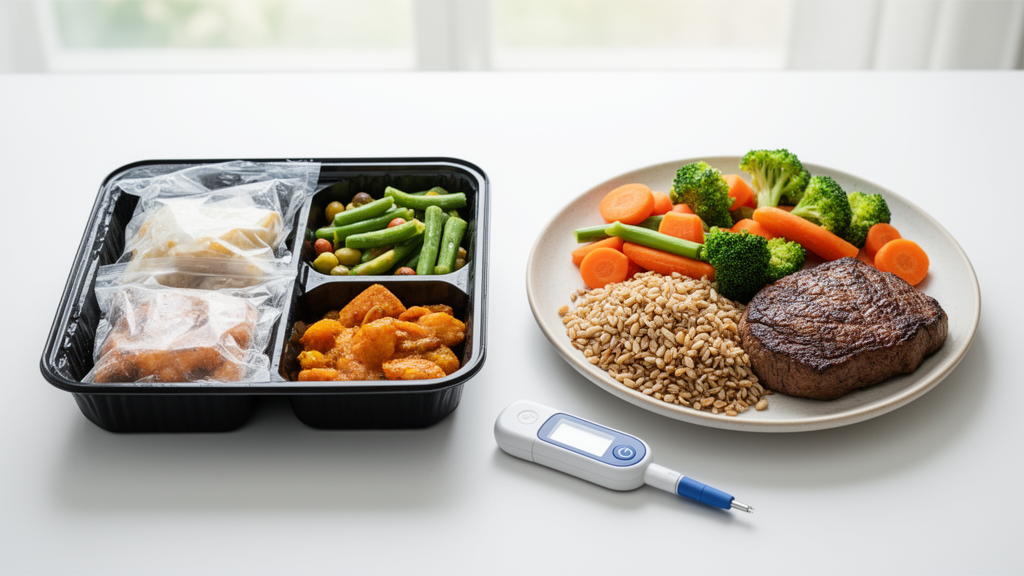
A new study published in *Nature Metabolism* highlights the impact of ultraprocessed foods on insulin response, even when nutritional values are similar to minimally processed alternatives. The research team from Virginia Tech’s Fralin Biomedical Research Institute, led by Zach Hutelin and Alexandra DiFeliceantonio, conducted a randomized, controlled crossover study involving 57 healthy adults aged 18 to 45. The participants' diets reflected the national average, consisting of roughly 54 percent ultraprocessed foods.
Read More
The study involved two metabolic testing sessions where participants consumed 300-kilocalorie meals, either ultraprocessed or minimally processed, with precise matching on various nutritional metrics. Remarkably, while blood glucose levels remained consistent across both meal types, the insulin response was significantly higher after consuming the ultraprocessed foods, peaking between 40 and 120 minutes post-meal. Participants also had a higher post-ingestive metabolic rate after the ultraprocessed meal, indicating different metabolic processing.
The findings suggest that ultraprocessed foods might alter the body's usual metabolic pathways, causing a blunted transition from fat to carbohydrate oxidation. This phenomenon may be linked to how these foods are processed, leading to rapid digestion and changes in nutrient absorption.
In addition to metabolic effects, the study examined the neural responses to food cues using functional magnetic resonance imaging (fMRI). During the imaging sessions, participants viewed pictures of both food types and engaged in an auction to assess food value. While bidding amounts were similar for both categories after controlling for perceived healthiness, brain activity highlighted significant differences. The neural encoding of value diverged, showing positive responses for non-ultraprocessed foods and negative responses for ultraprocessed ones in reward-related brain regions.
Researchers acknowledged limitations, such as differences in protein sources between meal types and the small meal size used in the study. They also noted that the acute nature of the study in healthy-weight adults does not establish the long-term effects of repeated ultraprocessed food consumption. Despite these caveats, the study adds to the growing body of evidence suggesting that the degree of food processing has meaningful physiological implications, influencing both metabolic health and brain responses to food.