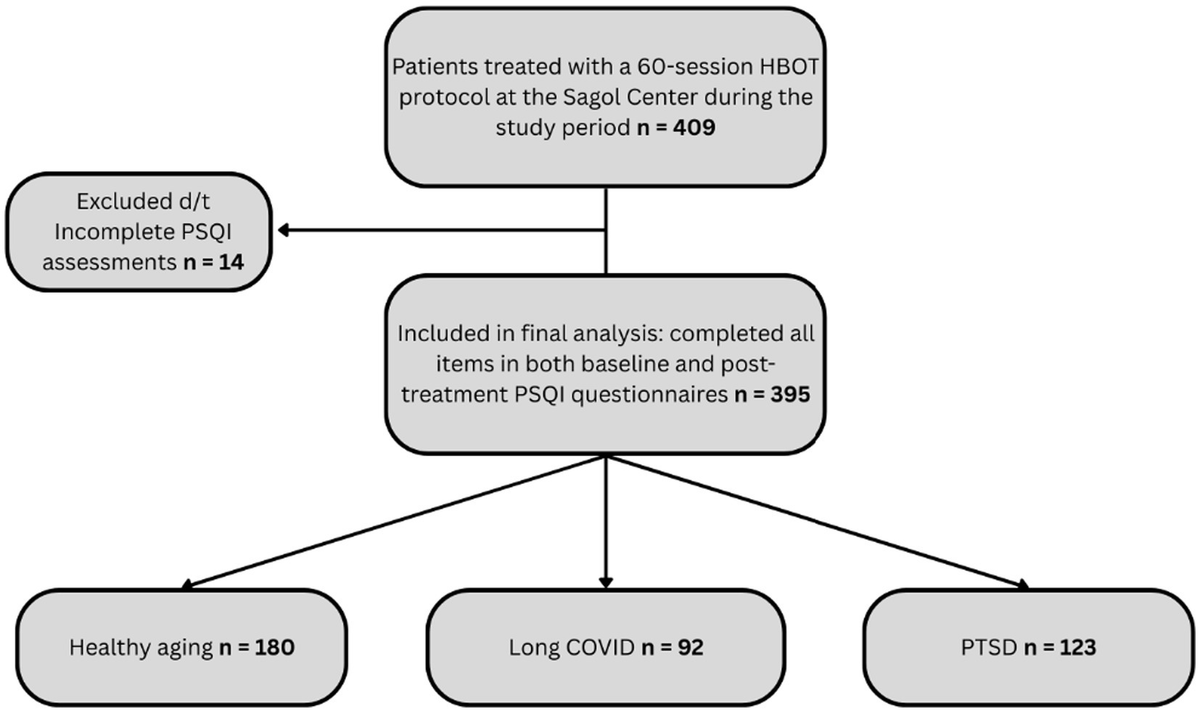
A recent study published in *Frontiers in Neurology* examines the effects of hyperbaric oxygen therapy (HBOT) on sleep quality among different patient populations, including those with aging-related issues, post-traumatic stress disorder (PTSD), and long COVID. This retrospective longitudinal study involved 395 participants who underwent 60 HBOT sessions at the Sagol Center for Hyperbaric Medicine, using a standardized treatment protocol.
Read More
The study assessed changes in sleep quality using the Pittsburgh Sleep Quality Index (PSQI) before and after treatment. Participants included 180 individuals in the healthy aging category, 92 with long COVID, and 123 diagnosed with PTSD. Initial PSQI scores indicated the highest sleep disturbances in the PTSD group. After treatment, significant improvements were noted across all groups, with overall PSQI scores declining from 9.0 to 8.2 (p < 0.001).
Specific enhancements were observed in subjective sleep quality, sleep latency, and sleep disturbances, while daytime dysfunction showed improvement in the aging and long COVID groups but was unchanged in PTSD. The study highlighted that those with significant baseline sleep disturbances (PSQI > 5) experienced the most substantial gains, suggesting that those with poorer initial sleep quality may benefit most from HBOT.
Additionally, the study pointed to the potential mechanisms behind the observed improvements, which may include enhanced neuroplasticity, reduced inflammation, and improved brain function associated with HBOT. However, the authors cautioned that the study's retrospective nature limits the ability to establish causal relationships. The findings underscore the need for controlled trials to further explore HBOT’s role in sleep modulation and identify patient populations that may benefit the most.
This study spans data collected from January 2017 to January 2025 and raises significant implications for treating sleep disturbances in diverse clinical contexts, highlighting HBOT as a potential intervention worth further investigation.