Shift work disrupts circadian rhythms, leading to poor sleep, increased cardiometabolic risks, and cognitive impairment, particularly in safety-sensitive occupations. While exercise is known to enhance sleep and cognitive function in the general population, its effects on shift workers remain unclear. This review evaluates randomized controlled trials (RCTs) to understand the impact of structured exercise on sleep and cognitive outcomes among shift workers and explores intervention specifics, possible mechanisms, and challenges in implementation.
Read More
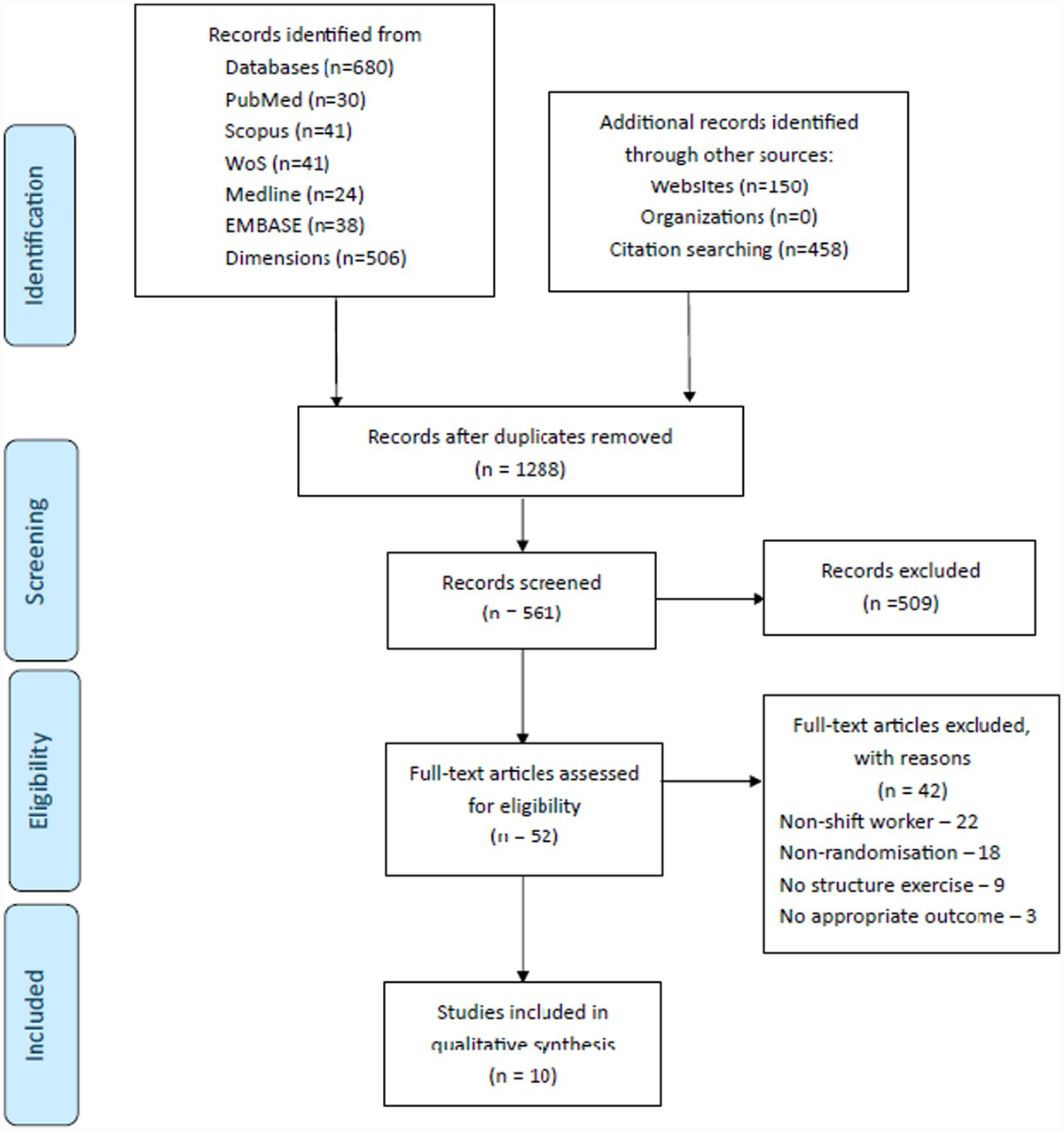
Using PRISMA and Cochrane guidelines, six databases were searched up until January 2025 for RCTs involving adult shift workers and various structured exercise types, including aerobic and resistance training. Key outcomes included sleep metrics assessed by the Pittsburgh Sleep Quality Index (PSQI) and cognitive performance measured by the Psychomotor Vigilance Task (PVT). Risk of bias and methodological quality were assessed, but due to variability in interventions and outcome measures, results were synthesized narratively.
The review included ten RCTs with a total of 420 participants, 60% of whom were from healthcare settings and predominantly engaged in aerobic or mixed modalities. Eight studies showed significant improvements in sleep quality and duration, although the clinical relevance varied. Three RCTs reported enhancements in alertness, reaction times, and short-term memory, particularly when exercise occurred post-shift or was supervised at the workplace. Mechanistic insights indicated improvement in circadian alignment and reductions in inflammation, but 80% of studies displayed high or medium risk of bias, with common hurdles in adherence linked to fatigue and irregular schedules.
Concluding, structured exercise programs customized to individual schedules and chronotypes could potentially enhance sleep and cognitive function in shift workers. Supervised, workplace-based interventions offer better adherence and practical applicability. Future studies should feature larger samples with consistency in outcome measures and should capture diverse sectors for more robust recommendations.