Maddie, now 23, reflects on her experiences with severe bullying during her childhood, including being the target of a cruel photo manipulation that portrayed her in a humiliating way. Growing up in Houston, Texas, she struggled with significant bullying and panic attacks while feeling stigma around mental health within her community, particularly as a Black individual. To cope, she accessed support through the Crisis Text Line, which provided her with counseling and coping techniques.
Read More
At 12, Maddie made a promise to herself: if she lived to see 18, she would volunteer for the Crisis Text Line. However, when she entered college at the University of Texas at Austin, the academic pressures exacerbated her mental health issues, linked to undiagnosed bipolar disorder. Despite being encouraged to drop out by academic advisers, she persevered. In 2023, Maddie faced a critical moment when she created a suicide plan, coincidentally witnessing a fellow student die by suicide that same night. After several hospitalizations, she began to acknowledge the seriousness of her situation, realizing the need for help despite her previous resistance. She processed her trauma through poetry, expressing the weight of her struggles.
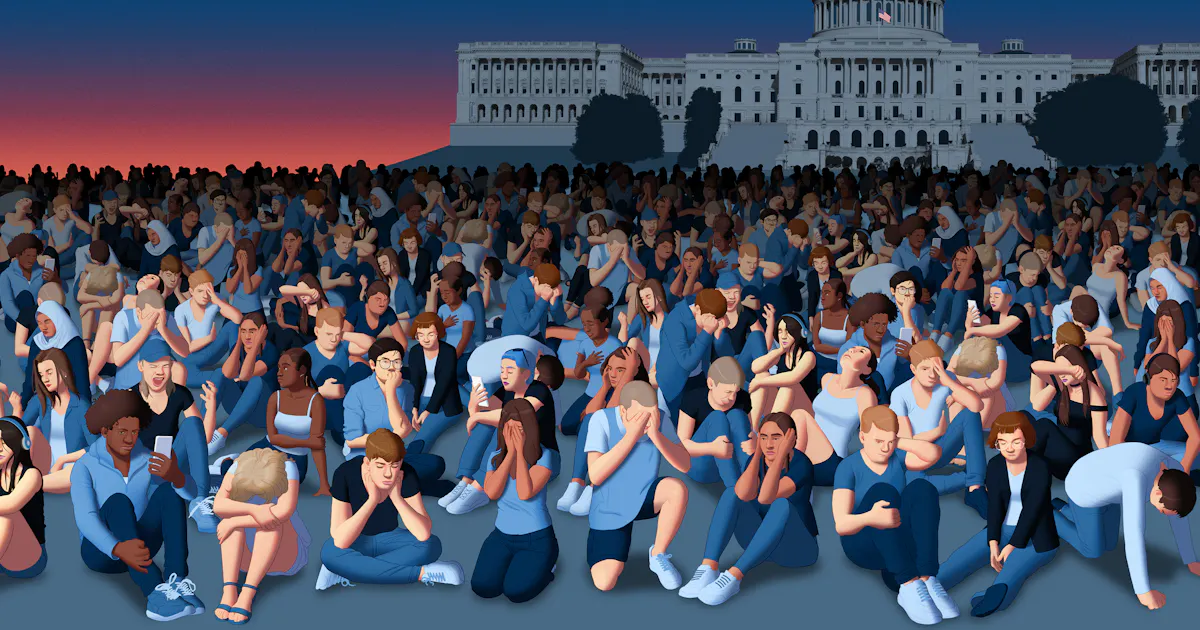
Maddie's story exemplifies a broader crisis among young Americans facing isolation, academic pressures, and cyberbullying. Experts note that since the pandemic, mental health concerns among youth have escalated. According to Courtney Gallo Hunter of Crisis Text Line, many young people report heightened anxiety, depression, and stress, tied to both personal and societal challenges.
Though a decrease in suicidal ideation has been noted since 2021, the current state of mental health among youth remains dire. Suicide ranks as the second leading cause of death among individuals aged 10 to 34, with 15% of youths aged 12 to 17 reporting major depressive episodes. Access to mental health care is a major issue, particularly in rural areas, where nearly half of nonmetropolitan counties lack mental health professionals.
Dr. Maria Rahmandar emphasized that many mental health issues stem from systemic discrimination and socioeconomic challenges, particularly affecting marginalized youth. For instance, Asheton Medlin, a college graduate from a low-income rural area, described the significant hurdles she faced when transitioning to college life. This mirror the struggles experienced by young people in urban environments where food insecurity and housing instability also affect mental health.
Amid legislative advocacy for improved mental health resources, many young people, including Saanvi Arora from the Youth Power Project, argue for youth involvement in decision-making processes. They promote legislation intended to enhance mental health awareness and resources on campuses.
Yet, despite ongoing efforts, several proposed changes could face challenges due to political opposition. Historical cuts to mental health funding by the previous administration and current congressional debates over Medicaid threaten essential services.
As the mental health crisis among youth deepens, numerous young advocates, including Keontè Lewis, share their experiences to push for necessary policy changes. Their personal narratives highlight the urgent need for young people to be heard in discussions about mental health support, tolerance of their struggles, and access to care. Addressing the pervasive stigma and creating supportive environments is paramount as they strive for a future where mental health is prioritized, and young lives are protected.