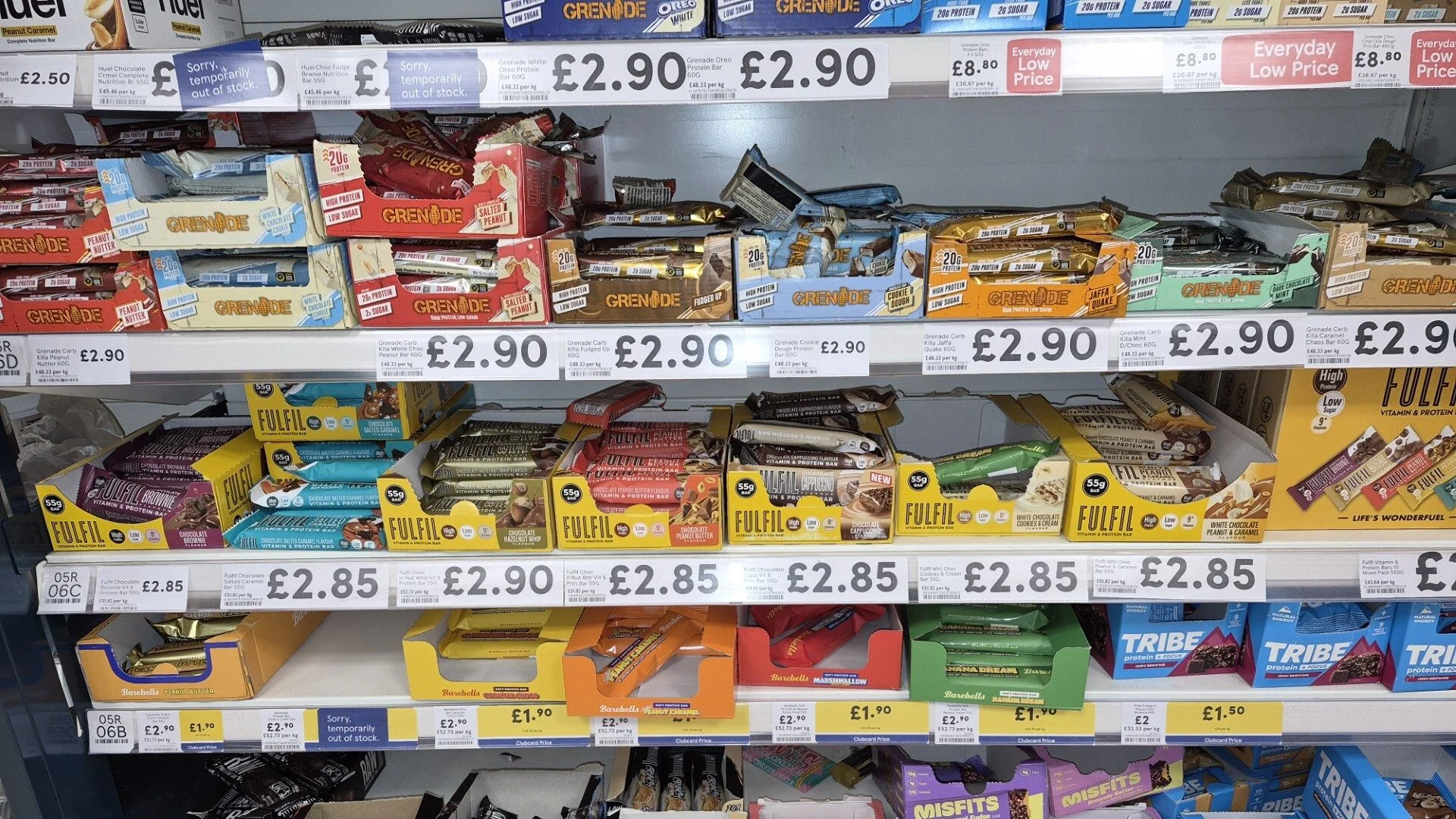
The European protein-bar market may be facing challenges similar to those observed in the plant-based meat sector, with concerns about market saturation leading to potential consolidation and business failures.
Read More
Supermarkets are filled with various protein bar brands, signaling increased competition among producers. Price promotions in stores further suggest that attracting consumers has become difficult as interest in protein-based snacks rises.
Initially marketed as a convenient snack for gym enthusiasts seeking on-the-go protein, protein bars have gained popularity among mainstream health-conscious consumers, influenced in part by the rise of GLP-1 weight-loss drugs. In UK supermarkets, there is a wide assortment of protein bars, ranging from high-protein sports nutrition varieties to cereal and nut bars, which often feature front-of-pack protein labels.
Leading players in the UK sports bar market include Grenade, Barebells, SIS, and Fulfil, with numerous other brands in the cereal-bar segment like Nature Valley and Kind. However, unlike their US counterparts, these bars are not displayed alongside candy, which may cause confusion among consumers due to the fragmentation in categories.
Despite some consolidation among major brands, the abundance of similar products prompts speculation about upcoming mergers and acquisitions within this crowded market. Stefano Di Napoli, founder of Consumer Products Growth Strategy, noted that innovation in the protein-bar sector has stalled, with established brands dominating the market and product volume remaining flat. He emphasized that without innovation, further consolidation might be inevitable as consumers struggle to differentiate between products.
Currently, the protein bar segment is viewed as profitable for manufacturers and retailers, remaining on trend as consumers seek convenient alternatives to traditional snacks. Garyth Stone, managing director at Houlihan Lokey, posited that the protein trend is likely to persist, bolstered by a growing recognition of protein's benefits over high-carbohydrate diets.
As the experience with plant-based meat illustrates, a crowded marketplace with minimal product differentiation can lead to a decline in growth and brand disappearances. Rabobank's Cyrille Filott pointed out that initial excitement may wane as market growth decelerates, potentially resulting in a consolidation of brands under a few major companies.
Rabobank's analysis of Tesco shows an increase in protein bar products from around 100 in 2021 to 190 in the current year. Filott indicated that as growth slows, some brands will likely face challenges while others succeed.
Consolidation in co-manufacturing may also become more prevalent, as brands opt to partner with contract manufacturers rather than operate their own facilities. John McMullen, CEO of Wholebake, noted a high demand for contract manufacturing services, suggesting that many brands start small before scaling up.
The protein trend drives both health-conscious choices and economic concerns among consumers, as not everyone is willing to pay premium prices simply for a product labeled as high-protein. Consumers navigate a variety of options, balancing price, health benefits, and ingredient quality.
While some protein bars might appear healthy, a closer inspection of ingredient lists often reveals otherwise. Di Napoli warned that brands cannot assume that protein labelling alone will attract buyers as they seek higher-quality ingredients. He proposed that the future of the category could hinge on innovations that enhance nutritional profiles, such as incorporating fiber alongside protein.