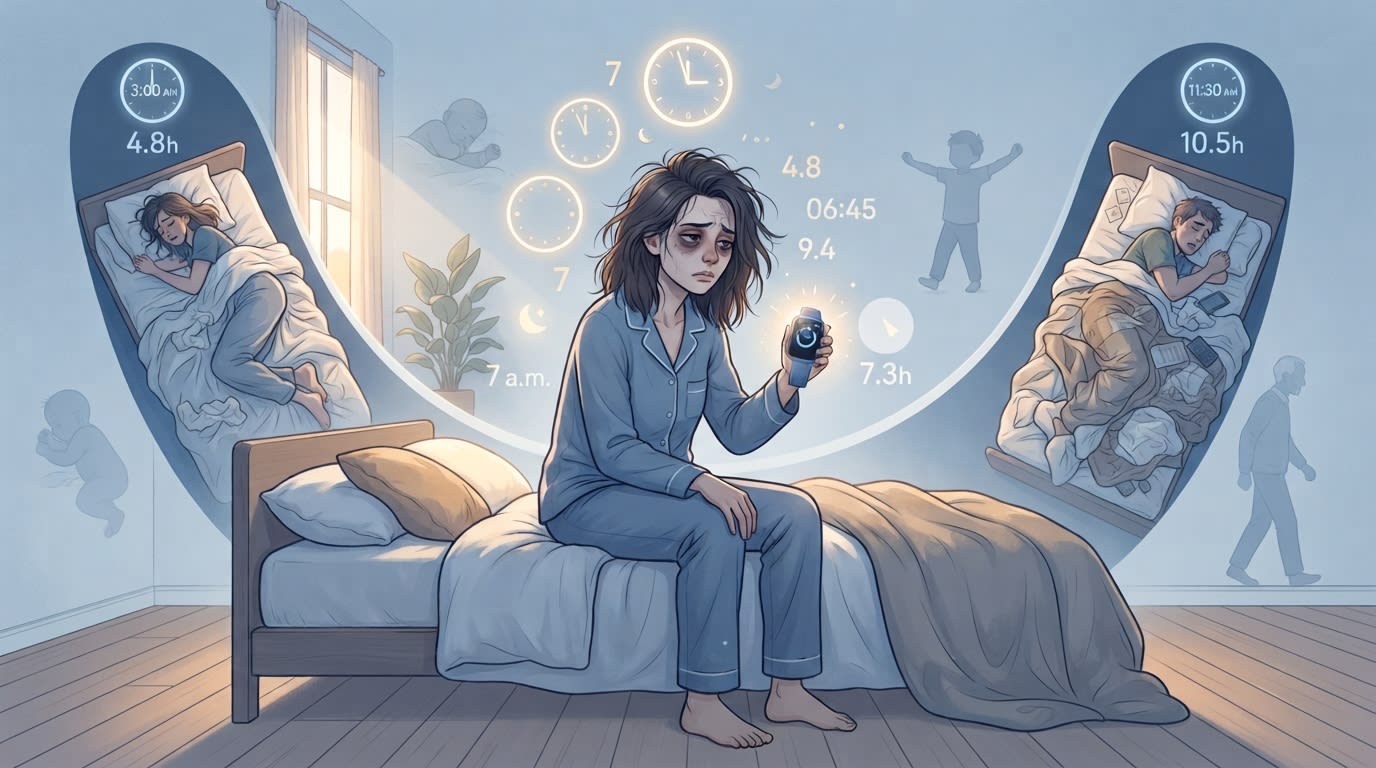
When you wake up and check your sleep report, it reads 7 hours 12 minutes, indicating 1 hour 48 minutes of deep sleep and several awakenings during the night. You may wonder, once again, how you missed the typical 8-hour sleep target. Concerns about sleep debt begin to weigh on your mind, leading to questions about whether your smartwatch is accurate.
Read More
The recommended sleep duration has seen changes over the years. While it was once commonly believed that 8 hours was optimal, new guidelines suggest that the best sleep duration might be closer to 7 hours or even range from 6.4 to 7.8 hours. This evolving guidance has left many feeling confused.
Research indicates that around 7 hours is deemed a low-risk range based on several large population studies. It is important to note that these findings refer to groups at large, rather than prescribing sleep duration for individuals.
For instance, a study published in npj Aging in 2026 involved over 18,000 middle-aged and older adults over nearly a decade. Their findings revealed a U-shaped relationship between sleep duration and frailty risk, with the safest duration around 7.1 hours. Similar results were observed in a 2026 study from Nature, which included nearly 500,000 individuals and found that sleeping less than 6 hours increased mortality risk by 50%. Conversely, those sleeping over 8 hours had a 40% higher risk.
Additional studies reinforce these findings. A 2026 BMJ subjournal study identified an optimal sleep duration of 7.32 hours for metabolic health, and a 2023 BMC Neurology study highlighted that the lowest cardiovascular risks occurred with 7 to 8 hours of sleep.
However, the public perception of an ideal sleep duration continues to shift. This occurs partly due to how research is reported. Media often simplifies complex studies into numerical standards, sometimes leading to anxiety when individuals feel compelled to meet specific targets that may not apply to them.
Furthermore, sleep needs vary by age. For instance, infants require much more sleep compared to older adults. The National Patriotic Health Campaign Committee in China published relevant ranges in 2025 suggesting that adults aged 18 to 64 should aim for 7 to 8 hours, while those 65 and older should target 6 to 7 hours.
It’s essential to recognize that individuals experience different sleep patterns. Some may function well with less than 7 hours, while others might need 9 or 10 hours. Sleep duration should not be viewed as a rigid requirement but rather as part of a broader understanding of one's health and well-being.
There are several traps to avoid in the pursuit of optimal sleep. First, considering the 7.1-hour figure as a strict guideline can be misleading, as it is based on population averages rather than individual needs. Second, variations in sleep measurement methods can lead to inaccurate representations of sleep quality and duration. Age and individual health conditions significantly impact sleep needs and should be accounted for. Lastly, anxiety stemming from fluctuating advice can negatively impact sleep quality.
Ultimately, a trend in sleep quality and duration is more telling than a single measurement. Rather than obsessing over the exact number of hours of sleep, pay attention to how you feel when awake. If you feel refreshed and functional during the day, that is likely a better indicator of sufficient sleep than any number displayed on a device.
Experts recommend maintaining a consistent sleep schedule, creating a restful environment, and monitoring changes in your sleep patterns. If concerns about sleep persist, consulting a healthcare professional is advised.
In conclusion, there is no one-size-fits-all answer to sleep needs. Be aware of your body and how sleep impacts your daily functioning, rather than focusing solely on hitting a specific target recommended by studies or media.