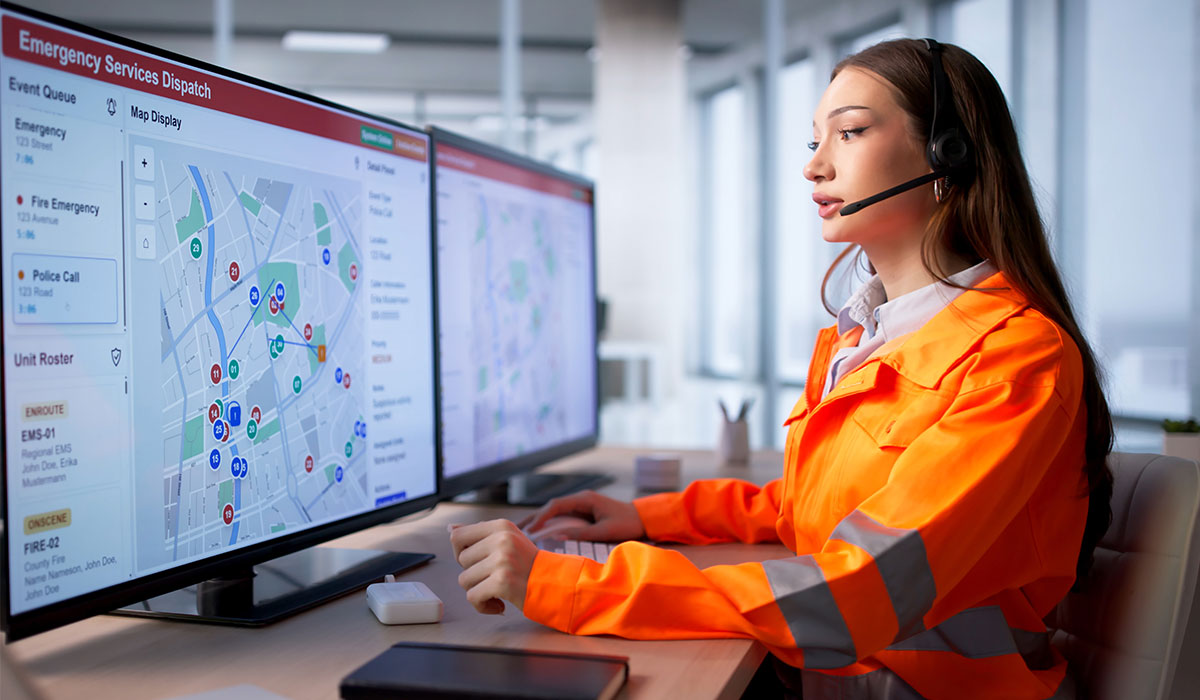
A study from the University of Texas at San Antonio (UTSA) has highlighted the correlation between the language choices made by emergency call takers and dispatchers and their mental health, particularly regarding depression and anxiety. Published in the journal PLOS One, this research utilized natural language processing to assess the psychological well-being of this critical but often overlooked workforce.
Read More
The study, led by psychology professors Vivian Ta-Johnson and Sandra B. Morissette, involved analyzing written narratives from 106 emergency communications personnel in collaboration with the San Antonio Police Department and Bexar Metro 911. Morissette emphasized the importance of this collaboration in enhancing the well-being of 911 telecommunicators.
Emergency call takers and dispatchers are frequently exposed to indirect trauma from managing high-call volumes that often involve violence and death. Despite being the first point of contact in emergencies, they do not receive the same support or classification as first responders, which can limit their access to wellness resources.
Ta-Johnson noted the unique psychological burden these workers carry because they often lack resolution regarding the outcomes of calls. The study examined how chronic stress affects mental health by having participants complete assessments for depression, anxiety, and stress before describing a particularly stressful event.
Using natural language processing, researchers analyzed the language used in these narratives. They focused on two dimensions: valence, which assesses emotional tone from positive to negative, and arousal, which measures emotional intensity. The results indicated that narratives containing a higher number of negatively valenced words predicted more severe symptoms of depression and anxiety. Follow-up analyses confirmed that those meeting clinical thresholds for depression and anxiety symptoms used more negative language than those below the threshold.
Interestingly, the intensity of the language did not correlate with anxiety or depression levels. Ta-Johnson explained that while the events described were emotionally intense, the choice of negatively valenced words reveals the dispatchers' subjective processing of their experiences.
Despite the predominance of negative language, the absence of positive words was not necessarily an indicator of poor mental health, suggesting that the context of their work inherently constrains positive expression rather than reflecting mental health issues.
The researchers hope to use these findings to create unobtrusive wellness tools that can be integrated into regular workplace protocols, allowing dispatchers to engage in brief written reflections that could be screened for mental health support needs. This approach aims to address the reluctance among first responders to seek help, often due to workplace stigma and workload demands.
In future research, Ta-Johnson and Morissette intend to investigate whether altering narrative styles—such as adopting a more positive or past-tense perspective—can influence psychological responses to trauma. They are also looking to collaborate with other police departments and telecommunications divisions to broaden the scope of this research.
Co-authors of the study include UTSA psychology doctoral students Isabella M. Swafford and Paige Lindsey, postdoctoral fellow Liliane D. Efinger, and Assistant Professor of Instruction Janelle Kohler, along with contributors from the San Antonio Police Department, the Warriors Research Institute, Baylor Scott & White Health, Texas A&M University, and the Baylor College of Medicine.