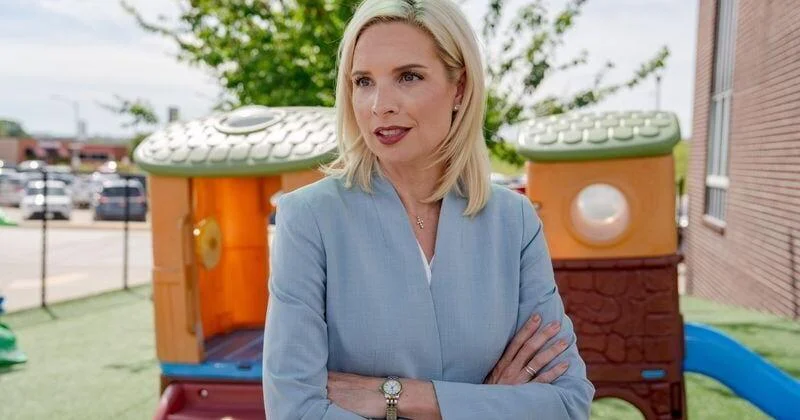
Representative Ashley Hinson, R-Iowa, addressed questions on September 10 outside Sprouts Early Learning Academy in Carlisle.
Read More
For years, discussions about the mental health crisis in America have highlighted the shortage of providers, the lack of inpatient beds, and the challenges faced by families trying to navigate a fragmented system. As a lifelong Iowan and advocate for mental healthcare reform, I have witnessed the detrimental effects of these issues firsthand.
Hinson has publicly stated her support for expanding mental healthcare, especially for veterans. However, her voting record presents a stark contrast to her statements. A strong supporter of former President Donald Trump, Hinson voted for the One Big Beautiful Bill Act in 2025, which implemented significant cuts to the national healthcare safety net, including mental health services.
This legislation has resulted in reductions to the Substance Abuse and Mental Health Services Administration and its Center for Mental Health Services, with their workforce decreasing by over half. Medicaid changes under this law could adversely impact those with serious mental illnesses due to increased administrative burdens and more frequent eligibility checks.
In Iowa, the law is anticipated to strain the state budget as limits on federal Medicaid funding growth may compel states to either absorb additional costs or curtail services even further. This reduction will be especially detrimental for rural communities and vulnerable populations already facing obstacles in accessing care.
Iowa ranks poorly in mental healthcare resources, sitting at 51st in the nation for state psychiatric beds per capita and approximately 45th and 46th for the availability of psychiatrists and mental health providers.
As someone who frequently reports on mental health issues, I am overwhelmed with inquiries from individuals seeking guidance on acquiring adequate help for loved ones battling mental illness. Unfortunately, the options in our state are diminishing.
Many of Hinson's constituents are likely affected by mental health issues themselves or have loved ones struggling to receive proper care. These Iowans deserve to understand how Hinson reconciles her claims about prioritizing mental healthcare with her votes that appear to undermine access for those in need.