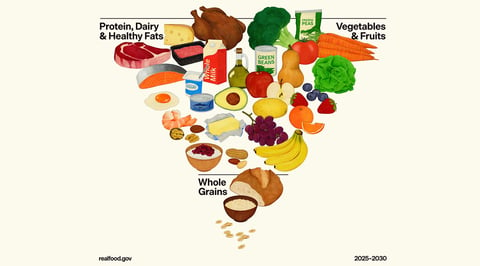
On January 13, 2026, Robert Post, former USDA nutrition policy leader, provided insights into the newly released Dietary Guidelines for Americans (DGA) for 2025-2030 during an event hosted by the U.S. Department of Health and Human Services (HHS) and the USDA in Washington, D.C.
Read More
Post, who served from 2007 to 2013 as a senior executive at the USDA’s Center for Nutrition Policy and Promotion, was instrumental in introducing significant changes in previous dietary guidance, such as the transition from the Food Pyramid to MyPlate. He noted that while the new guidelines retain some familiar recommendations, they feature a new visual symbol—a so-called "upside-down triangle"—as indicated by U.S. Secretary of Agriculture Brooke Rollins.
Post praised the initiative for aligning with the Make America Healthy Again campaign and acknowledged its potential to raise awareness about dietary health and chronic illness. He highlighted the simplicity of the guidelines, which are now encapsulated in a nine-page document available at realfood.gov. This approach encourages healthier dietary choices and emphasizes consuming nutrient-dense whole-food proteins, dairy, healthy fats, fruits, vegetables, and whole grains, while advising against added sugars.
However, Post expressed concerns regarding the scientific foundation behind the new guidelines, noting that the report revising the Scientific Report of the 2025 Dietary Guidelines Advisory Committee was not open for public comment. He pointed out the lack of clarity regarding research gaps that underpin the guidelines and the absence of an explicit link between healthy eating patterns and food safety, which is critical yet overlooked.
Post also criticized the brevity of the guidelines, suggesting that they may leave consumers without sufficient context—for instance, clear examples of what a healthy 2,000-calorie diet looks like are not provided. He emphasized the need for definitions of terms like "highly processed" and called for a more defined connection between dietary recommendations and food safety.
Looking ahead, Post noted that the HHS and USDA plan to host events that will engage the public in discussing the implications of the new DGA, encouraging collaboration through a socioecological framework to make the guidelines more relevant to consumers.
A community conversation is scheduled for January 15, 2026, from 1:00–2:00 p.m. CST, to discuss the impacts and challenges associated with the new dietary guidelines.