This study addresses the growing stress levels among adolescents and young adult students (AYAS), influenced by factors such as academics, social life, and career planning. Accurate prediction of stress and understanding its key contributors is essential for effective interventions.
Read More
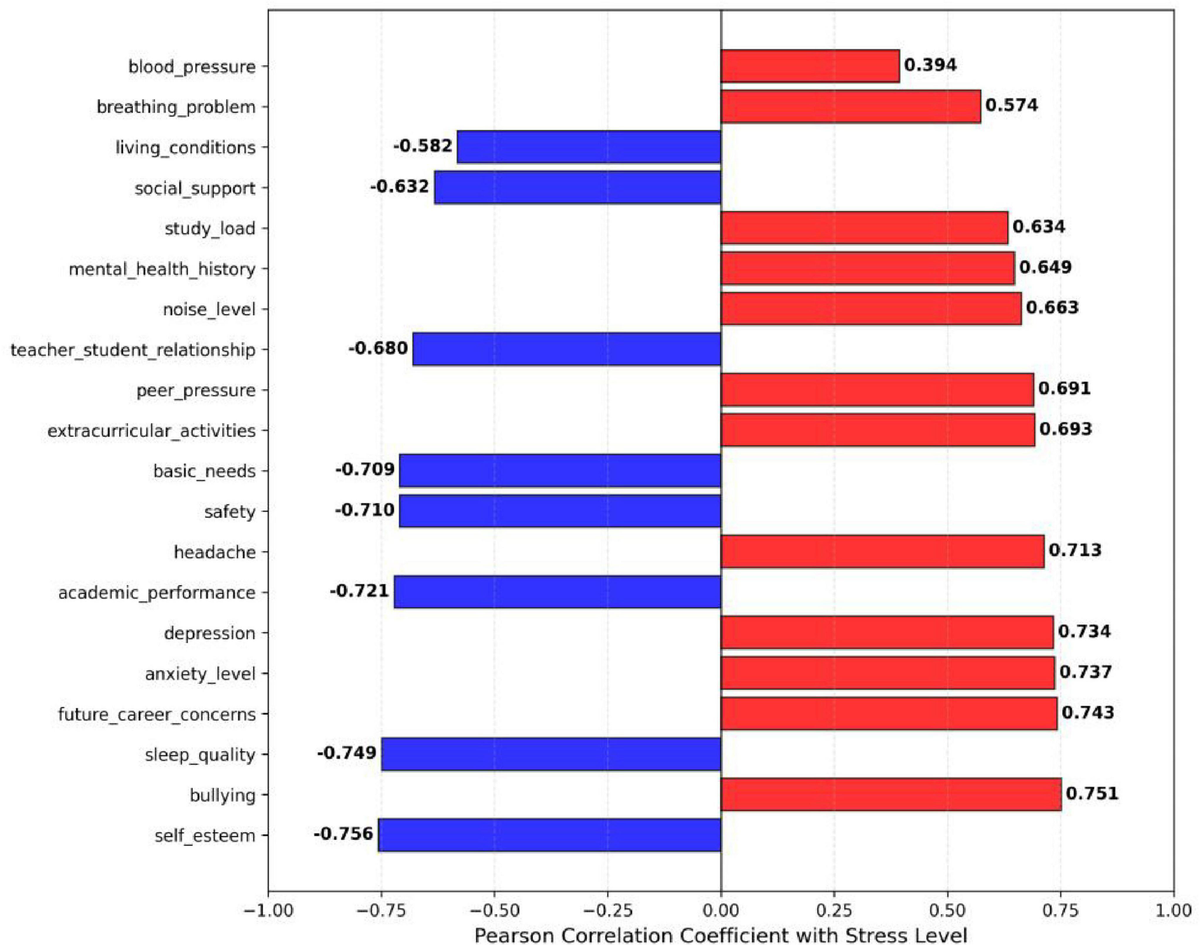
A predictive model was developed using an enhanced decision tree (DT) algorithm, which involved comparing nine machine learning techniques, including logistic regression (LR) and DT, to identify the most effective model. To improve performance, a Harris Hawks Optimization (HHO) algorithm was introduced, optimizing the DT model’s prediction accuracy, which increased from 0.909 to 0.927 after optimization. The Shapley Additive Explanations (SHAP) model was utilized for interpreting the prediction results, identifying key factors impacting student stress levels, with blood pressure, social support, and depression being significant contributors.
The findings suggest that the DT model outperformed other algorithms, emphasizing the importance of both physiological and psychological factors in stress prediction. Enhanced social support systems and mental health interventions based on these insights may alleviate student stress, promoting better physical and mental health outcomes.
The dataset employed comprised 1,100 samples from high school and college students in Dharan, Nepal, and included variables related to psychological, physiological, social, environmental, and academic dimensions of stress. It was collected from June to October 2022. Key findings indicated that students generally face high stress, with significant levels of anxiety and a high proportion of individuals reporting a history of mental health issues.
Further evaluation showed that DT effectively captures nonlinear relationships within the data and this research illustrates the potential of combining machine learning with optimization algorithms for improved stress prediction and analysis. By highlighting critical stress factors, the study aims to inform educators, parents, and mental health professionals to implement targeted support strategies.